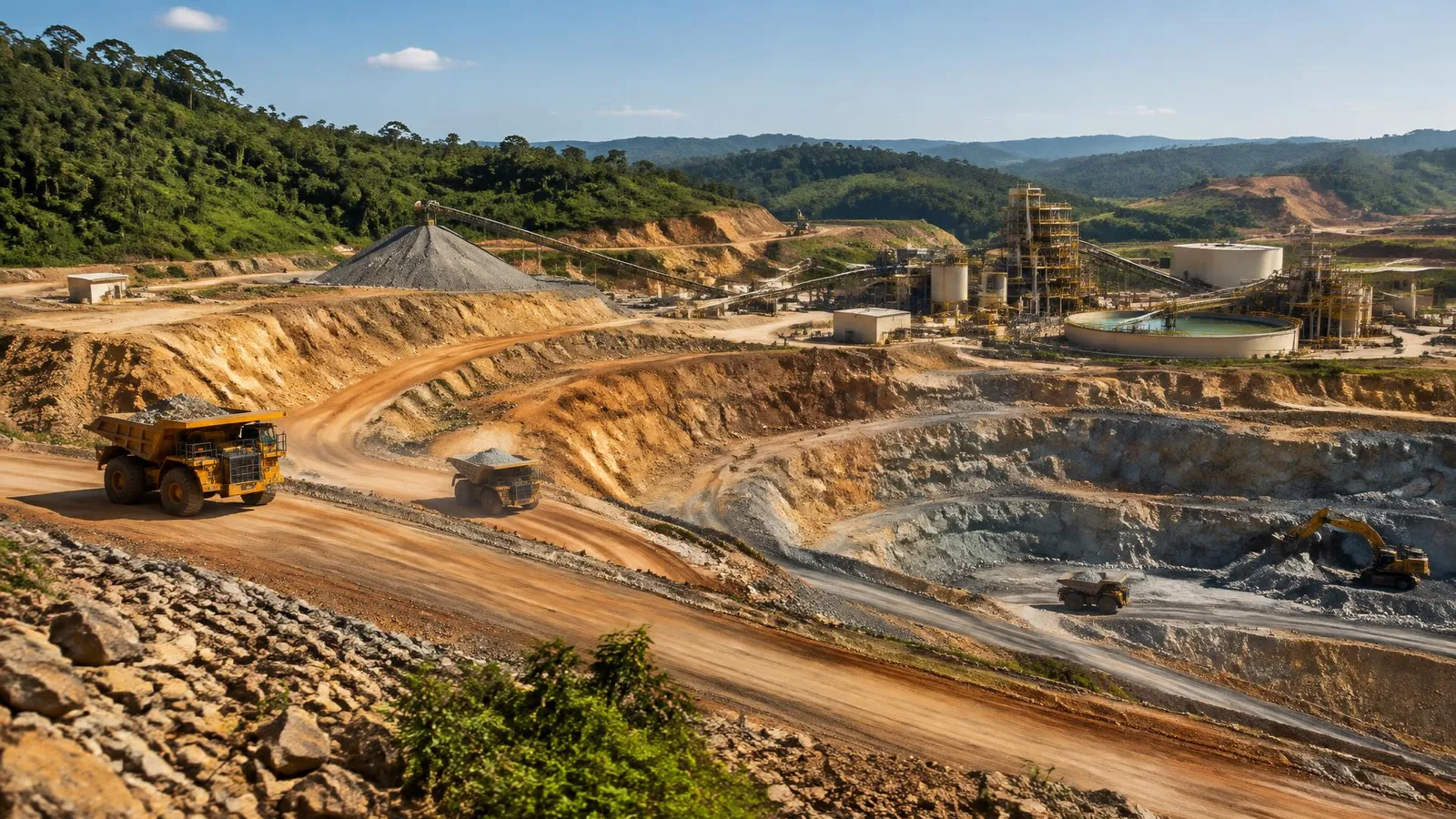
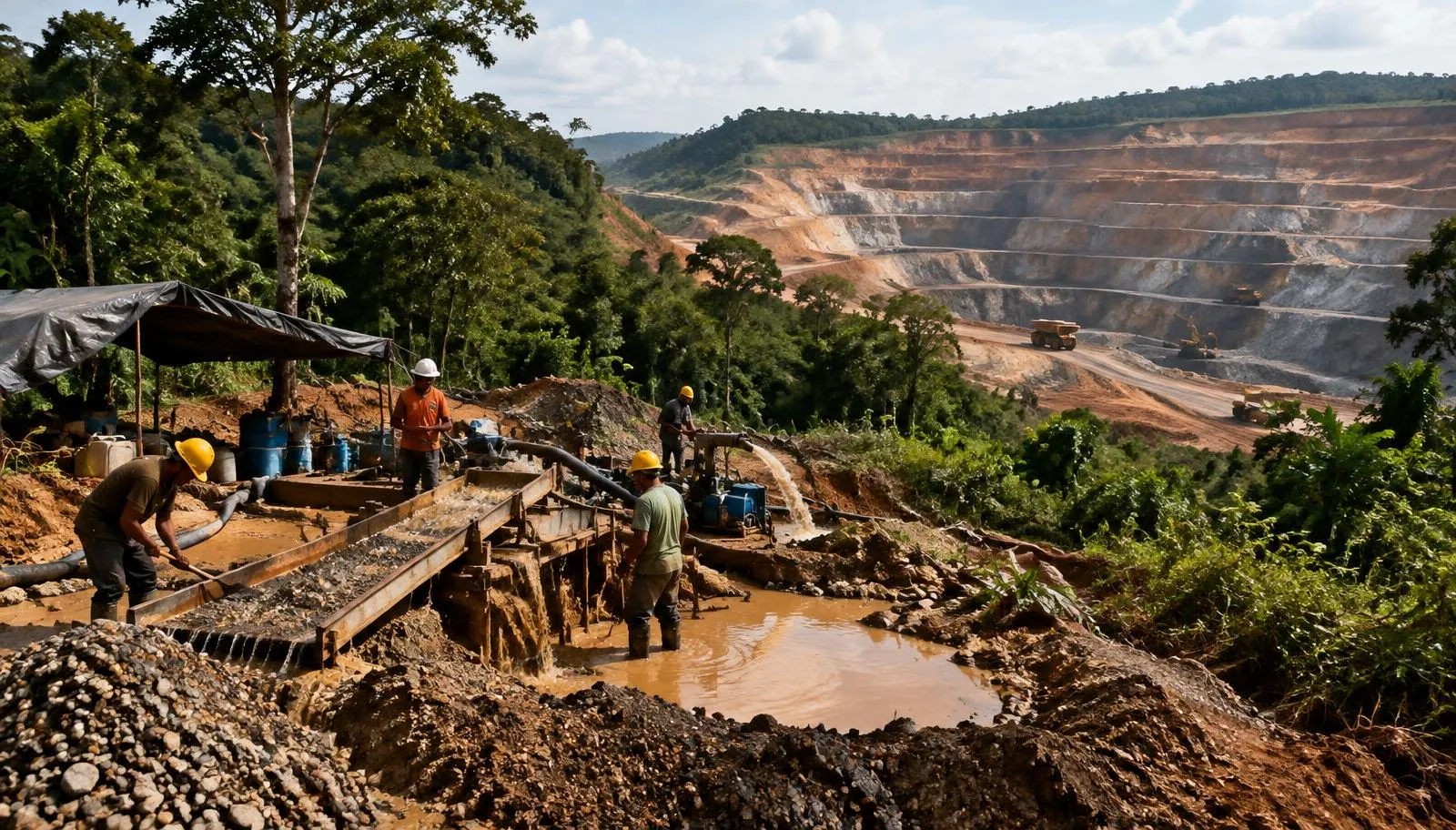
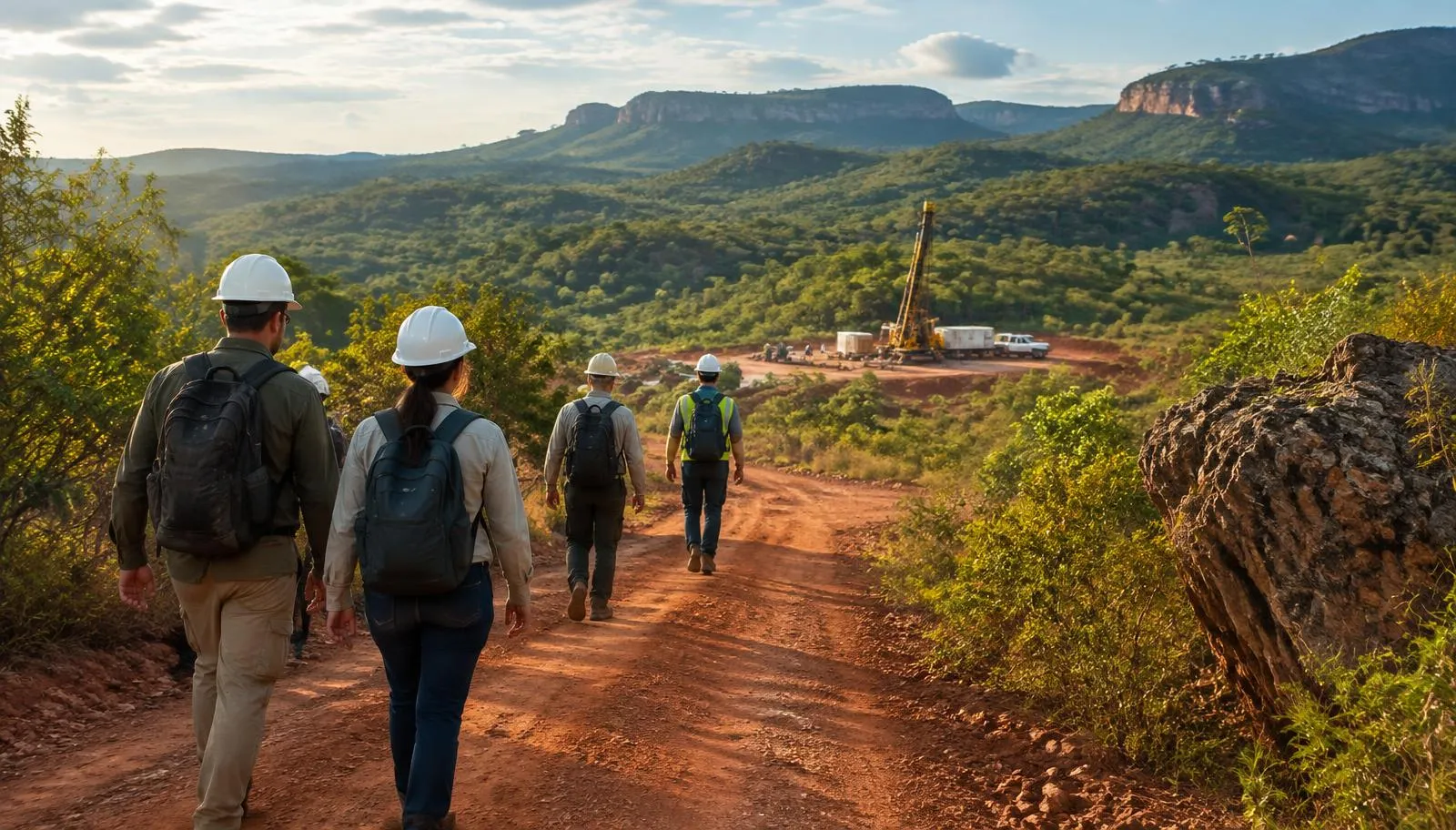
Gold · United States · Canada · Australia · Gulf · explorers, producers and investors
Brazil's gold belts explained: Tapajós, Alta Floresta, Quadrilátero Ferrífero, Goiás and beyond
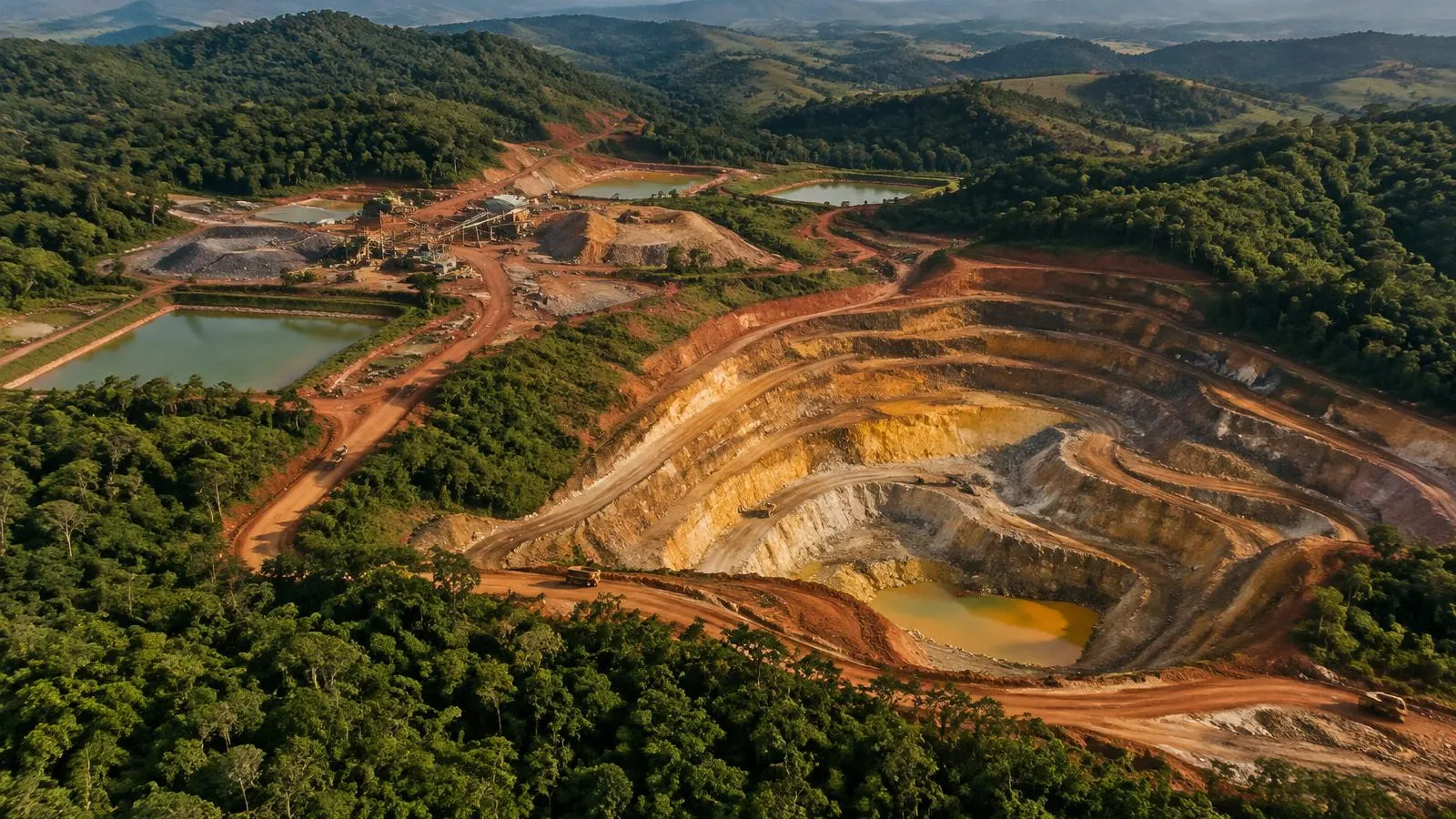
Brazil's gold belts fall into three broad groups: the historic underground districts of Minas Gerais such as the Quadrilátero Ferrífero, the greenstone belts of Goiás, Bahia and the northeast, and the Amazon provinces of Tapajós, Alta Floresta and Carajás, where industrial mines sit beside widespread garimpo activity. Each group has its own geology, its own type of mine, its own regulators and its own risks. Knowing which belt an asset sits in tells a buyer half of what to ask.
Key takeaways
- The largest producing mine is Paracatu in Minas Gerais, operated by Kinross, with about 588,000 ounces in 2023 according to GlobalData.
- Minas Gerais combines the historic Quadrilátero Ferrífero underground mines with the bulk-tonnage Paracatu deposit.
- Goiás, Bahia, Maranhão and Tocantins host greenstone-belt and shear-zone deposits mined by companies such as AngloGold Ashanti, Pan American Silver and Equinox Gold, whose Brazilian mines CMOC agreed to buy in 2025.
- Tapajós and Alta Floresta are Amazon provinces with large historic garimpo production, new industrial projects and significant environmental and social risks.
- The belt sets the checklist: dam rules and depth in Minas Gerais, licensing and indigenous-land proximity in the Amazon, metallurgy in sulphide-rich greenstone ores.
In this article
Gold built colonial Brazil. In the 1700s the rush to Minas Gerais made it, for a time, one of the world's largest gold producers, and towns like Ouro Preto, “black gold”, still carry the name. Three centuries later, gold is mined across much of the country, from deep underground mines near Belo Horizonte to open pits in the northeast and the Amazon frontier.
For a foreign buyer reading a teaser, the location line often gets the least attention. It deserves the most. The same word, “gold mine”, can describe a modern underground operation with hundreds of employees or a single excavator working a riverbank under a small-scale permit. A mine in the Quadrilátero Ferrífero, one in the Crixás greenstone belt and one in the Tapajós are different businesses with different regulators, different ore and different risks. This guide maps the main belts and what each means for a buyer.
§ 01 · Overview
Where are Brazil's gold belts, and how do they differ?
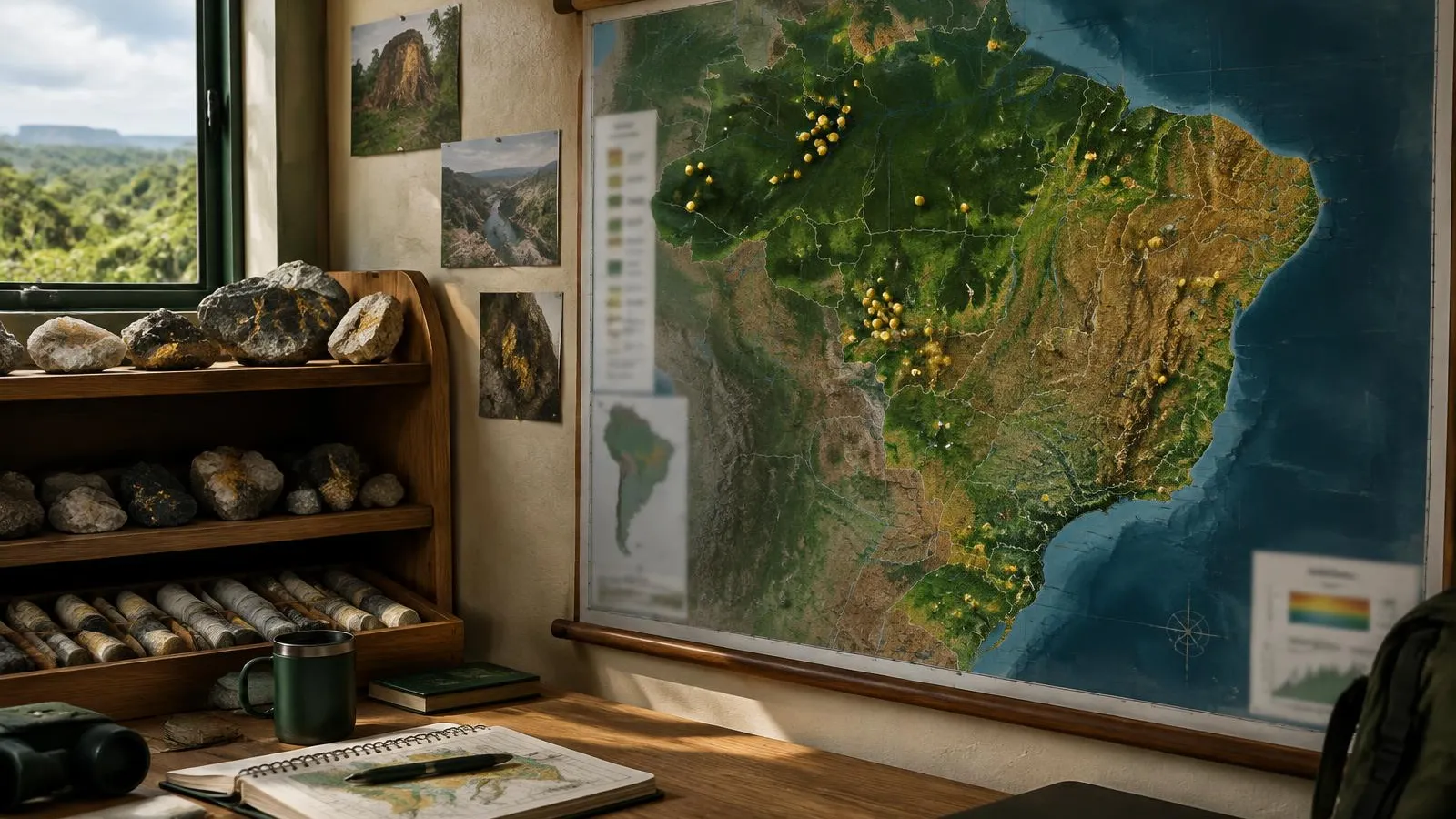
Brazil's gold belts stretch from Minas Gerais in the southeast to Amapá in the far north. The table below groups the main regions by setting and lists representative operations. It is a starting map, not a complete inventory.
| Region | State(s) | Setting | Representative operations |
|---|---|---|---|
| Quadrilátero Ferrífero | Minas Gerais | Archean greenstone belt; historic underground mines | Cuiabá (AngloGold Ashanti); Jaguar Mining's operations |
| Paracatu | Minas Gerais | Large low-grade deposit in phyllites | Paracatu (Kinross), Brazil's largest gold mine |
| Crixás and Goiás belts | Goiás | Archean greenstone belts | Serra Grande at Crixás (AngloGold Ashanti); Pilar de Goiás area |
| Rio Itapicuru and Jacobina | Bahia | Greenstone belt and conglomerates | Jacobina (Pan American Silver); Fazenda and Santa Luz (Bahia complex) |
| Gurupi belt | Maranhão and Pará | Shear-zone hosted gold | Aurizona |
| Carajás | Pará | Iron-oxide copper-gold and gold deposits | Salobo (Vale), copper with gold |
| Tapajós | Pará | Amazon province; large historic garimpo production | Tocantinzinho (G Mining Ventures) |
| Alta Floresta (Juruena–Teles Pires) | Mato Grosso | Amazon province of granite-hosted and vein deposits | Many garimpos and junior projects |
| Tocantins | Tocantins | Shear zones and greenstone remnants | Almas (Aura Minerals); Monte do Carmo (Hochschild) |
| Amapá | Amapá | Greenstone belt | Tucano |
Production is concentrated. In 2023, according to GlobalData, the five largest gold mines were Paracatu (about 588,000 oz), Salobo (about 360,000 oz), Jacobina (about 230,000 oz), Cuiabá (about 150,000 oz) and Aurizona (about 125,000 oz). Below them sits a long tail of mid-size and small mines, many privately owned, which is where most acquisition opportunities for new entrants lie.
Geology shapes the kind of mine each belt produces. Greenstone belts and shear zones tend to host gold in veins and structures that may start as open pits and continue underground, with grades that vary along the structure. Large low-grade deposits such as Paracatu suit bulk open-pit mining at very high tonnages. Amazon provinces include both hard-rock deposits and secondary gold in soils and river gravels, which is what most garimpos work. When you read a teaser, ask which of these the asset is, because each implies different capital, costs and risks.
§ 02 · Minas Gerais
What should buyers know about gold in Minas Gerais?
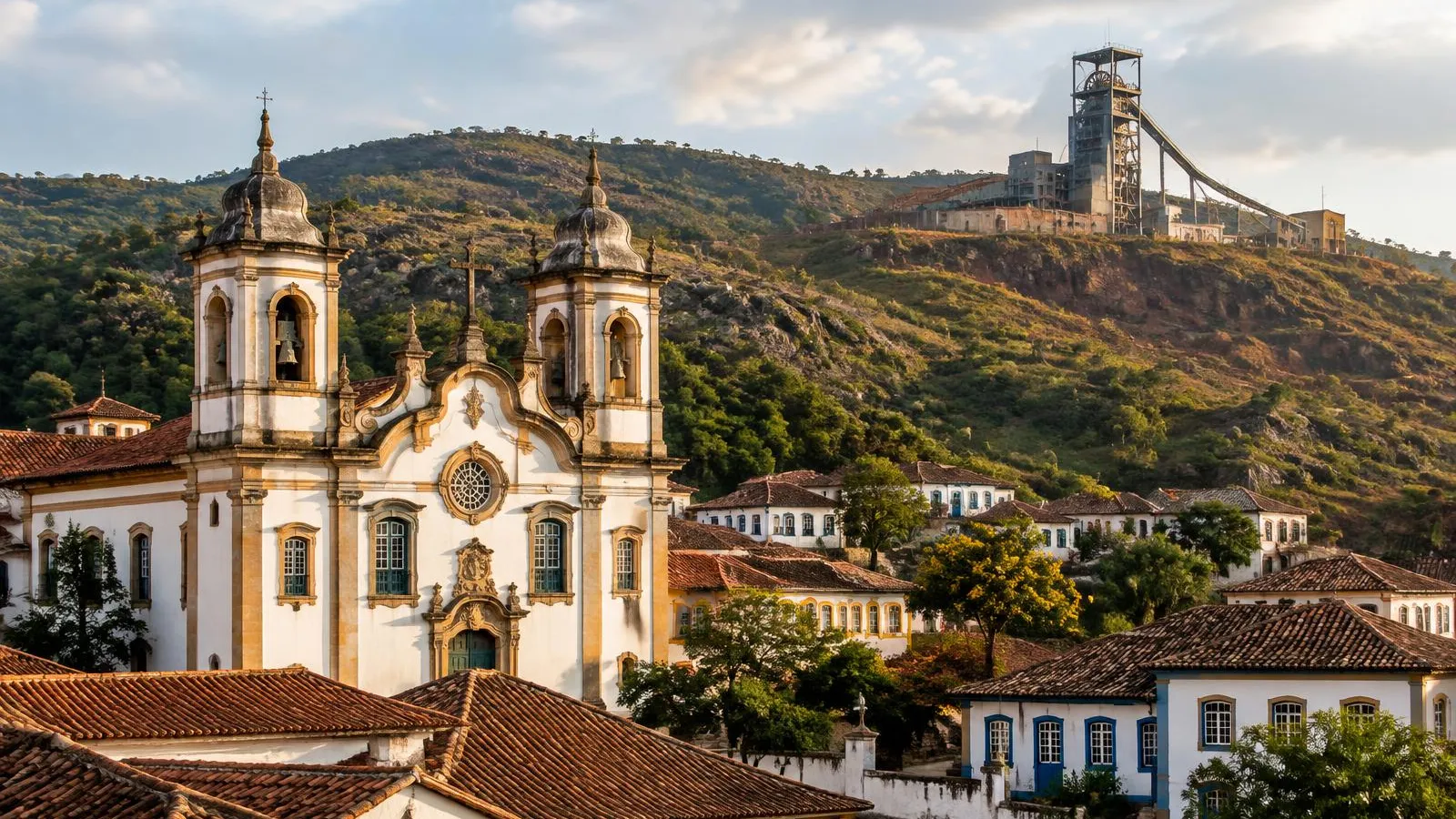
Minas Gerais offers two very different kinds of gold: deep, high-grade underground mines in the Quadrilátero Ferrífero around Belo Horizonte, and the bulk-tonnage open pit at Paracatu in the northwest. Both benefit from good infrastructure, an experienced workforce and a long mining culture. Both face the strictest dam environment in the country, because the Mariana and Brumadinho disasters happened in this state.
Deep and historic
Gold has been mined here since colonial times. Modern operations are often underground, at depth, with higher grades and higher costs per tonne.
Big and low grade
Brazil's largest gold mine works a large low-grade deposit at scale, a very different business from the underground mines nearby.
Dams under scrutiny
The state environmental system and the ANM watch tailings dams closely. Upstream-raised dams are banned and being decommissioned.
Roads, power, people
Proximity to Belo Horizonte, the grid and skilled labour lowers operating risk compared with the Amazon.
For a buyer, the Quadrilátero means looking hard at depth, ventilation, ground conditions and the remaining life of underground workings, as well as the dam. Historic mines often have long records, which helps, but also old workings and legacy liabilities. Environmental licensing in Minas Gerais is handled by the state system, with SEMAD at its centre.
Smaller assets exist here too. Alongside the large operators, Minas Gerais has private concessions, old mines that closed when gold prices were low, and tailings from centuries of mining. Some of these can be revived with modern methods and capital. Because the state's records are long, a careful buyer can often reconstruct an asset's history in more detail than in newer regions, which helps both valuation and negotiation.
Minas Gerais is also where the Lithium Valley sits, in the northeast of the state, and where many coloured gemstones are mined. Investors sometimes combine interests across minerals within the same state.
§ 03 · Greenstone belts
What makes the gold belts of Goiás, Bahia and Tocantins attractive?
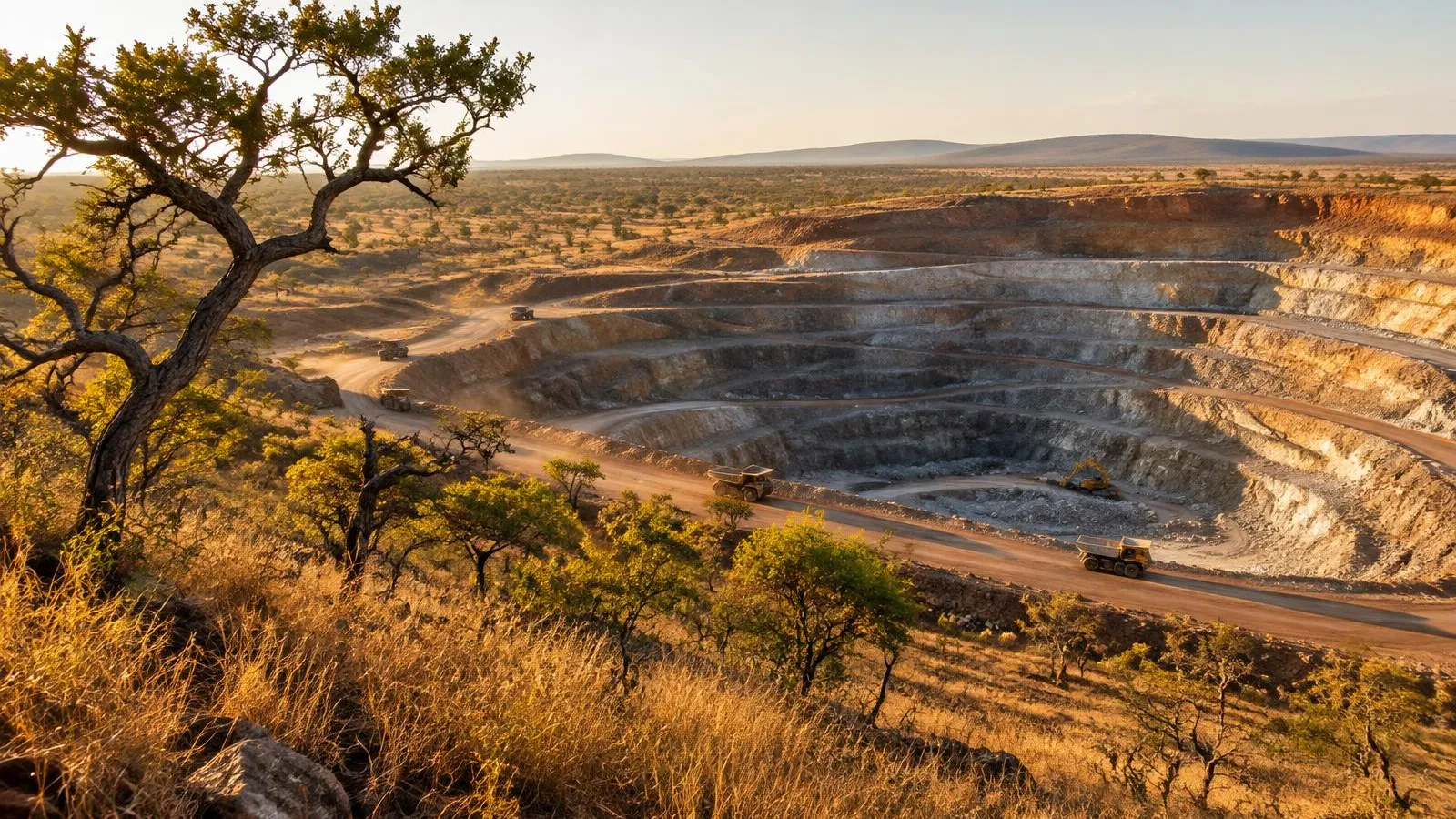
The gold belts of Goiás, Bahia and Tocantins are attractive because they combine proven geology, established operators and better access than the Amazon. Most deposits sit in Archean greenstone belts and shear zones, the same kind of geology that hosts major gold mines in Canada, Australia and West Africa, which makes them familiar to international geologists.
- Goiás. The Crixás greenstone belt hosts AngloGold Ashanti's Serra Grande operation, and the Pilar de Goiás area has seen further development. Mining culture and cerrado access make operations practical.
- Bahia. Jacobina, operated by Pan American Silver, mines gold from conglomerates; the Rio Itapicuru greenstone belt hosts the Fazenda and Santa Luz mines of the Bahia complex included in CMOC's agreed purchase of Equinox Gold's Brazilian assets.
- Tocantins. Aura Minerals' Almas mine and Hochschild's Monte do Carmo project, bought in 2024 for US$60 million, have brought new attention to a state with a long history of small-scale gold mining around Natividade and Almas.
- Maranhão. The Gurupi belt hosts Aurizona, also part of the CMOC–Equinox agreement.
Metallurgy is the recurring technical question in these belts. Oxide ore near the surface is often easy to treat; deeper fresh rock can be sulphide-rich and refractory, needing different processing. A mine that has produced well from oxides may face falling recovery as it goes deeper. Our guide to gold mines with processing plants explains how to test whether a plant fits the remaining ore.
The centre of the country also has a logistics advantage that is easy to overlook. The BR-153 highway runs north–south through Goiás and Tocantins, and the region has grid power, regional airports and towns that can house a workforce. For a mid-size operation, that infrastructure lowers costs and makes a restart or expansion more practical than in remote parts of the Amazon.
§ 04 · Amazon
What should investors know about the Tapajós and Alta Floresta gold provinces?
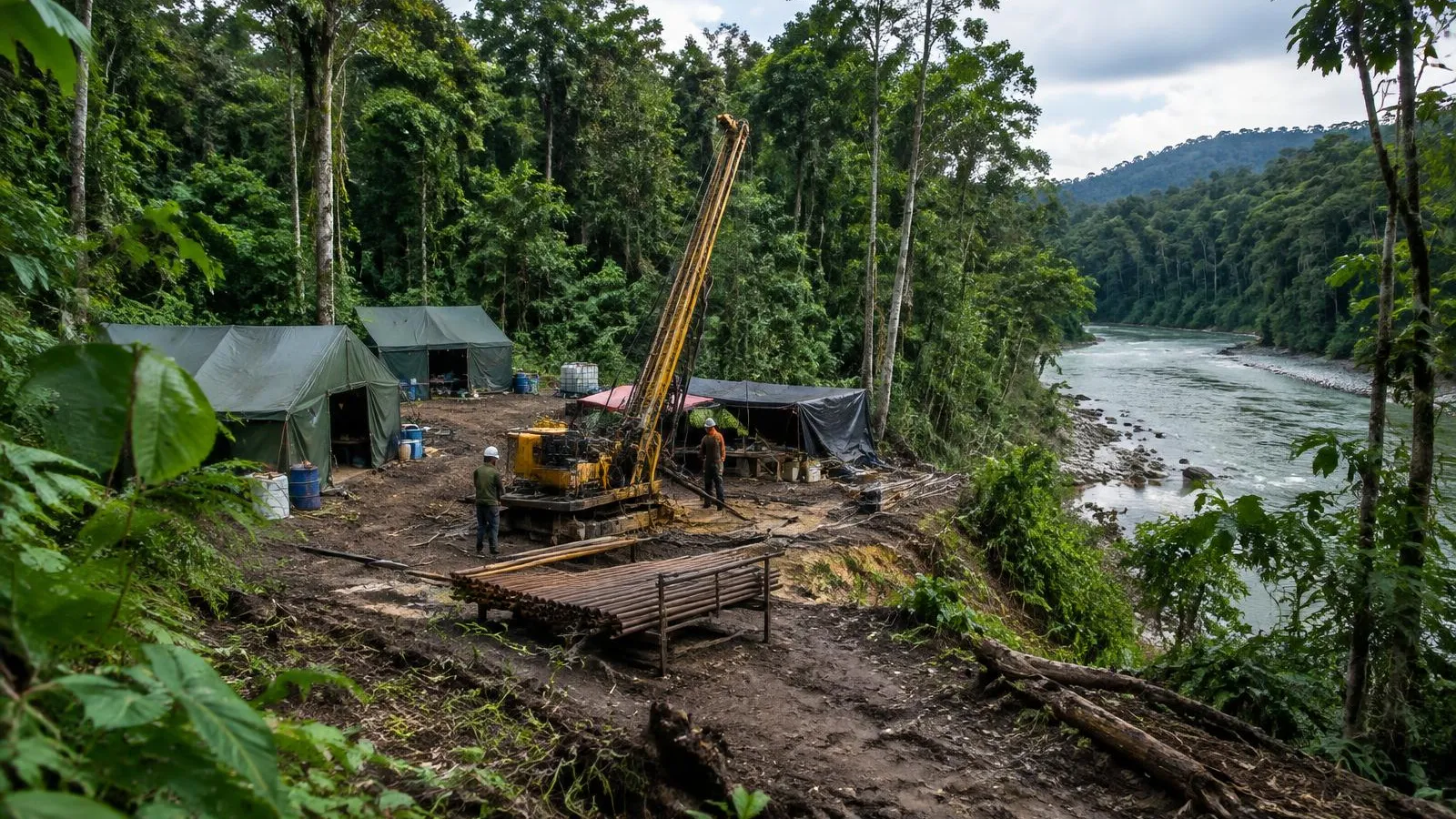
Tapajós and Alta Floresta are large Amazon gold provinces with decades of garimpo production, growing industrial exploration and serious environmental and social risks. They offer geological potential that few regions match, and they demand the most careful due diligence in Brazil.
Why investors look here
- Large areas with known gold and historic production
- Industrial projects advancing, such as Tocantinzinho in the Tapajós region of Pará
- Many mining titles held by Brazilian companies and individuals open to partners
- Exploration upside beyond garimpo-worked surface deposits
What investors must manage
- Illegal mining near or inside titled areas, including on indigenous lands
- Mercury use in informal mining and the reputational risk it carries
- Remote logistics, power and security
- Scrutiny from European and North American buyers of gold origin
Alta Floresta, in northern Mato Grosso, is part of the wider Juruena–Teles Pires province, with towns such as Peixoto de Azevedo built on gold. Many assets marketed abroad as “operating gold mines in the Alta Floresta gold belt” are small-scale permits, garimpos or early projects. Some are good; many are not industrial mines. Our article on PLG versus mining concession explains the distinction that matters most here.
The Tapajós region also illustrates why proximity matters. Illegal mining on indigenous territories in the region, including Munduruku lands, has been widely reported and has drawn federal enforcement operations. A legitimate concession nearby is not responsible for that activity, but it shares the roads, rivers and reputation of the region. Buyers and their financiers will want to see that the asset's gold can be traced from pit to invoice and that its boundaries are well clear of protected areas.
§ 05 · The north
What about Carajás, Amapá and the Gurupi belt?
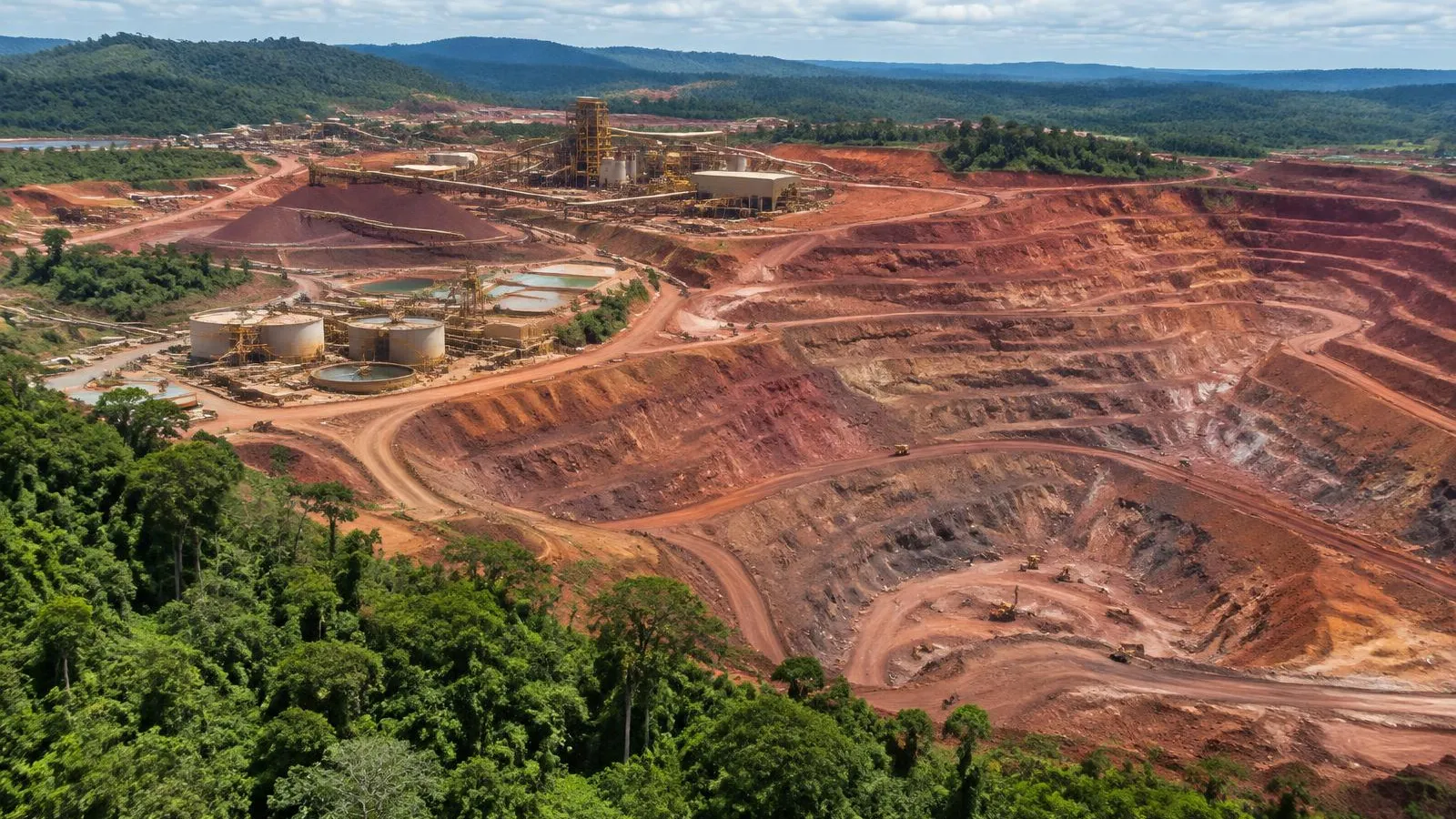
Carajás, Amapá and the Gurupi belt are northern gold regions where gold often comes from large company-run operations rather than garimpos. Carajás in Pará is better known for iron ore, but its copper-gold deposits make Salobo one of Brazil's largest gold producers, as a by-product of copper. Amapá hosts the Tucano mine in a greenstone belt, and the Gurupi belt along the Maranhão–Pará border hosts Aurizona.
For investors, these regions show that northern Brazil can support industrial gold mining with modern standards. They also show how important scale and infrastructure are: the operations that succeed here tend to be large enough to justify their own power, roads and camps.
History is also a reminder of how gold attracts people. In the early 1980s the Serra Pelada rush in the Carajás region drew tens of thousands of garimpeiros to a single open pit, an image that still shapes how the world sees Brazilian gold. Today's industrial operations in the region look nothing like it, but the legacy of informal mining remains part of the landscape investors must understand.
Copper-gold investors should also read our guide to investing in Brazilian copper, which covers Carajás and the permitting and surface-access issues that apply to large base-metal projects.
§ 06 · Due diligence
How does the gold belt change your due diligence checklist?
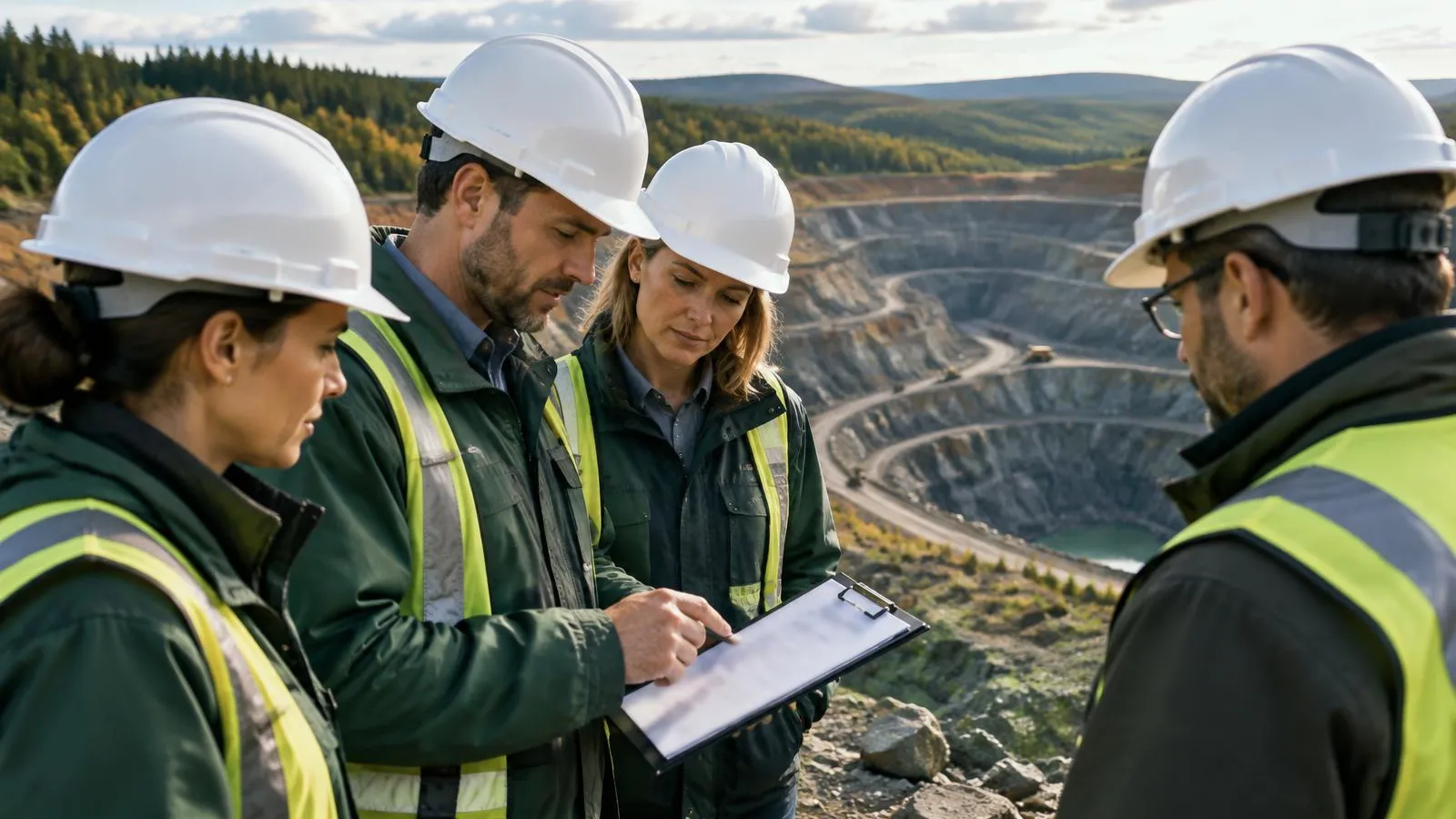
The basic checks are the same everywhere in Brazil: title, licence, land, production and the seller. What changes by belt is where the hidden risk usually sits. Use the region to decide where to dig deepest.
| Region | Focus first on | Typical surprise |
|---|---|---|
| Quadrilátero Ferrífero | Dam status, depth and ground conditions, legacy workings | Decommissioning cost of an old dam |
| Goiás, Tocantins, Bahia | Metallurgy of deeper ore, land boundaries | Recovery falling as oxide ore runs out |
| Tapajós, Alta Floresta | Title type, licence, indigenous-land and conservation proximity, mercury | A garimpo permit presented as an industrial mine |
| Carajás, Amapá, Gurupi | Infrastructure, power and scale economics | Operating costs driven by remoteness |
Region-independent essentials
- ANM process number, holder, phase and polygon
- Operating licence from the competent environmental agency
- Dam record in the ANM's public SIGBM registry, where a dam exists
- Landowner agreement and map of indigenous lands, conservation units and border strip
- Production evidence: electronic gold invoices and CFEM receipts
- Technical report under NI 43-101 or JORC where available, read as a reporting standard
Our guide on verifying a gold mining concession shows the title checks step by step, and NI 43-101 and historical estimates explains how to read the technical reports that often come with older Brazilian projects.
§ 07 · Strategy
Which of Brazil's gold belts suits which kind of investor?
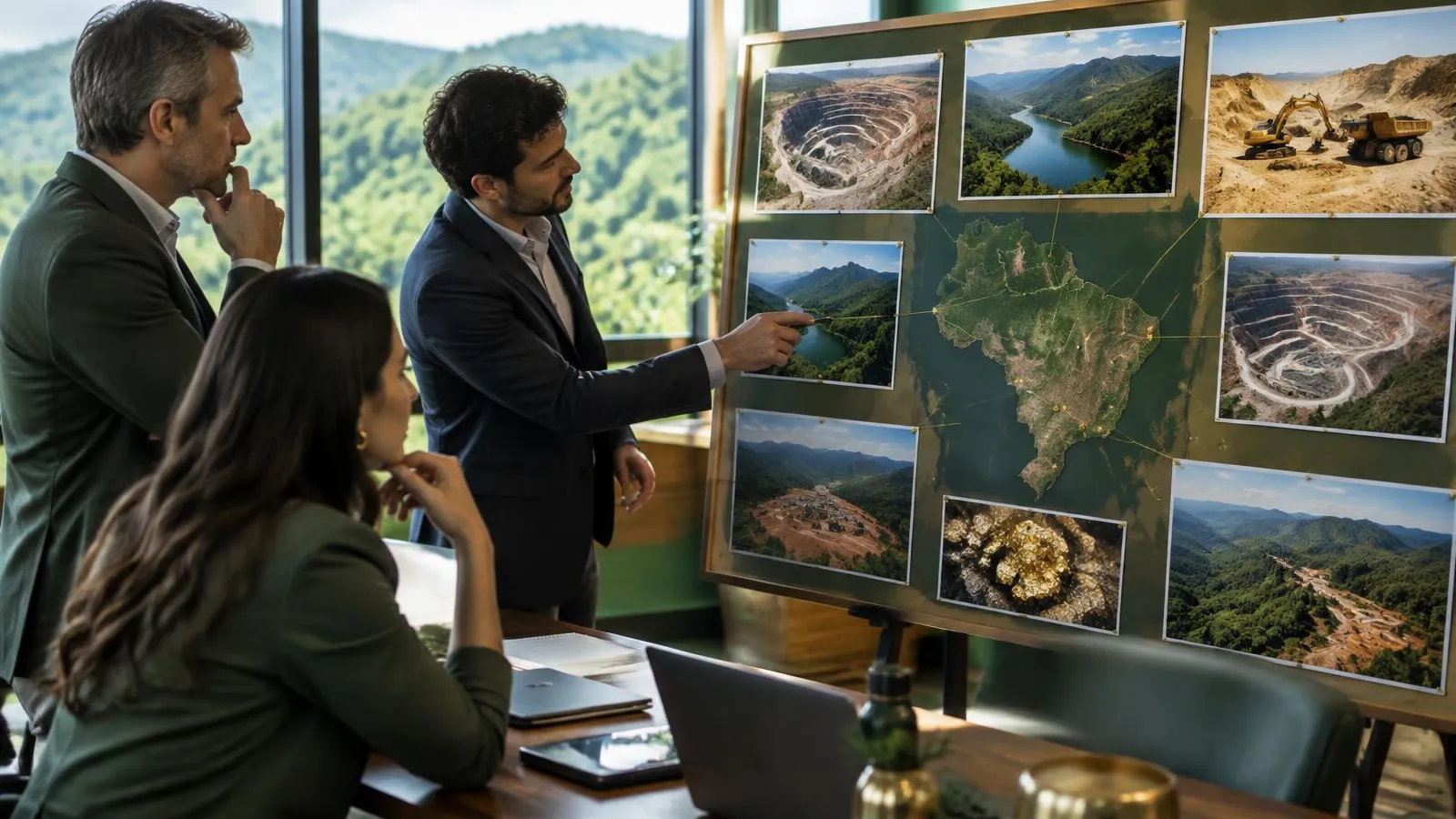
Brazil's gold belts suit different investors. A producer wanting steady cash flow with lower operational risk will look at established districts with infrastructure. An explorer looking for discovery will look at under-explored parts of the Amazon or the greenstone belts. A financial investor will look for documented assets with clear titles wherever they are.
- 01
Producers and strategics
Minas Gerais, Goiás and Bahia offer infrastructure, skilled labour and operating track records.
- 02
Explorers and juniors
Tapajós, Alta Floresta and parts of Tocantins offer geological upside and titles open to partnership, with higher risk.
- 03
Restart specialists
Idle mines with plants exist in several belts. Our guide to plants and tailings covers how to assess them.
- 04
Financial and family-office investors
Focus on documentation more than geography: clean title, licence, production evidence and a credible operator.
Gulf, Egyptian and other international investors often start with the region a broker mentions. It is better to start with the strategy, then look for belts that fit it. Some investors build a portfolio across belts: a producing asset in an established district for cash flow, and exploration interests in the Amazon or Tocantins for upside, each verified on its own terms. See also Gulf capital in Brazilian mining and our comparison of Brazil and Egypt for mining investment.
§ 08 · Our method
How BRAZIL MINE works across Brazil's gold belts
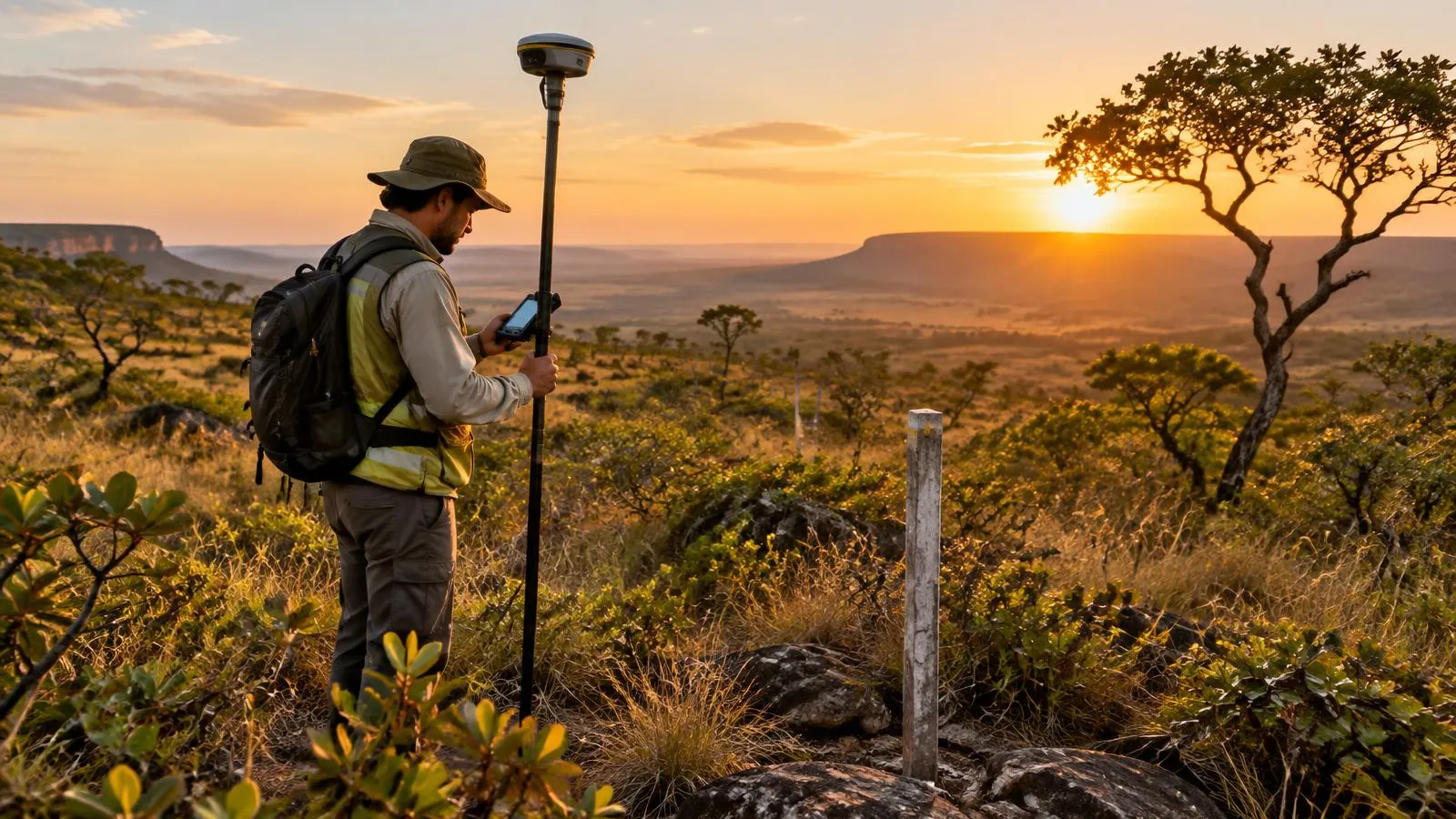
We work across Brazil's gold regions, and we verify before we offer. Our base is in Tocantins, in the centre of the country, and our founder is a mathematician and land surveyor who has spent years checking property boundaries and land records in Tocantins, Goiás, Mato Grosso, Pará, Bahia and neighbouring states. That ground-level knowledge is what we bring to title and boundary verification.
- KYC and NDA before confidential information is shared.
- ANM title, polygon and land checks done in-house.
- Licence, dam and production evidence reviewed before presentation.
- Independent experts chosen by the buyer for technical, legal and tax work.
- No advance fees at any stage.
Looking for gold in a specific Brazilian belt?
Tell us which region, size and stage interest you, or send us the ANM process number of an asset you have been offered.
Request a confidential reviewSee current opportunities on our gold mines for sale in Brazil page.
§ FAQ
Frequently asked questions
Where is most gold mined in Brazil?
Large company production is concentrated in Minas Gerais, Pará, Bahia, Goiás and Maranhão. Paracatu in Minas Gerais is the largest mine. Pará and Mato Grosso also have extensive garimpo production in the Amazon provinces.
What is the largest gold mine in Brazil?
Paracatu, operated by Kinross Gold in Minas Gerais, with about 588,000 ounces in 2023 according to GlobalData.
What is the Quadrilátero Ferrífero?
A historic mining district around Belo Horizonte in Minas Gerais, known for iron ore and for gold mined since colonial times, often from deep underground mines.
Is it safe to invest in Amazon gold provinces such as Tapajós?
It can be done responsibly, but it needs the most careful due diligence in Brazil: title type, licence, proximity to indigenous lands and conservation units, mercury and illegal mining nearby, and buyer scrutiny of gold origin.
What is the Alta Floresta gold belt?
Part of a large gold province in northern Mato Grosso, often called Juruena–Teles Pires, with extensive garimpo history and junior exploration. Many assets marketed there are small-scale permits rather than industrial mines.
Does Tocantins have gold mines?
Yes. Aura Minerals operates the Almas mine, and Hochschild bought the Monte do Carmo project in 2024 for US$60 million. The state also has a long history of small-scale gold mining.
Which gold belt is best for a first investment in Brazil?
It depends on strategy. Producers often prefer Minas Gerais, Goiás or Bahia for infrastructure and track record. Explorers may prefer the Amazon provinces for upside. Documentation matters more than geography.
How do I know which belt an asset is really in?
Ask for the ANM process number and plot its polygon on the ANM's public SIGMINE map. Regional names in teasers are often used loosely.
Can I buy an old or idle gold mine in one of these belts?
Yes, idle mines and old concessions exist in several belts, especially in Minas Gerais, Goiás and Bahia. Check that the title is still in force, why the mine stopped and the status of its dam and licence before pricing a restart.

Mathematician, Land Surveyor and Licensed Real Estate Broker · CRECI-TO 4631
BRAZIL MINE — Mining & Minerals
Keep reading