Critical minerals · United States · Europe · Asia · Gulf · Australia · investors, offtakers and juniors
Brazil's rare earth districts: Minaçu, Poços de Caldas and beyond
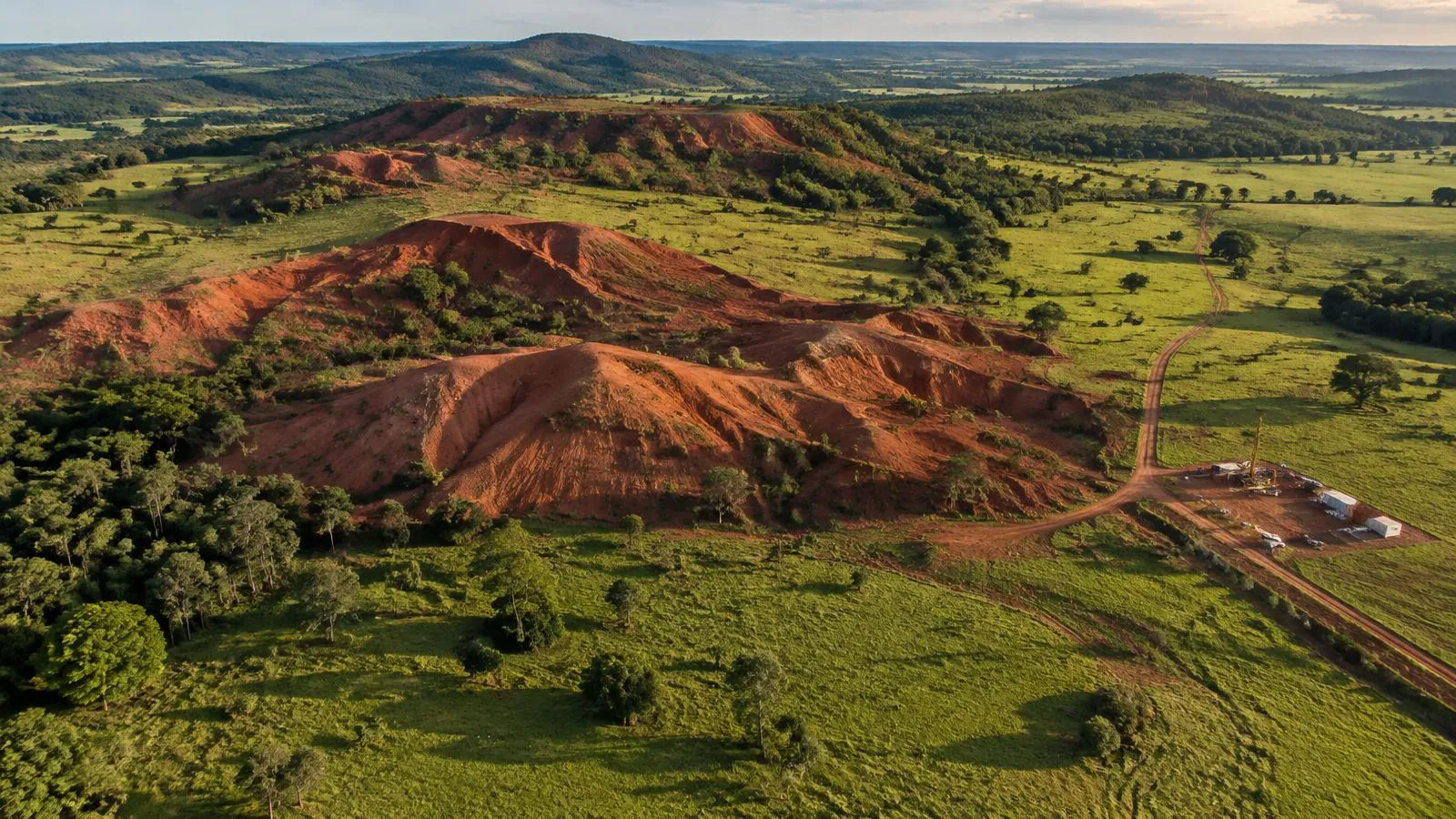
Brazil's rare earth districts are concentrated in three areas: northern and central Goiás, home to the producing Serra Verde mine at Minaçu and Aclara's Carina project; the Poços de Caldas alkaline complex in Minas Gerais, where Meteoric and Viridis are advancing large ionic clay projects; and Bahia, where hard-rock prospects are emerging. Carbonatite complexes such as Araxá and Catalão add another source. Each district has its own geology, stage of development and set of questions for a buyer.
Key takeaways
- Goiás leads on production: Serra Verde's Pela Ema ionic clay mine at Minaçu is producing a mixed rare earth concentrate and targets about 6,400 to 6,500 tonnes of rare earth oxides a year by the end of 2027.
- Aclara's Carina feasibility study in Goiás (April 2026) outlines about 4,378 tonnes a year of rare earth oxides, including dysprosium and terbium, with first production planned for the second half of 2028.
- Poços de Caldas in Minas Gerais hosts two of the largest reported ionic clay resources: Meteoric's Caldeira and Viridis' Colossus.
- Carbonatites such as Araxá and Catalão contain rare earths alongside niobium and phosphate, and Bahia has early-stage hard-rock projects.
- Every district shares the same base checks: ANM title, land, data, metallurgy and, since September 2026, the critical minerals law.
In this article
Brazil's rare earth story is often told as a national one: large reserves, recent reports placing the country second only to China, a new critical minerals law. On the ground it is regional. A handful of districts hold almost all the advanced projects, and each looks different: a producing mine in the north of Goiás, giant clay resources in a volcanic crater in southern Minas Gerais, carbonatites under niobium and phosphate mines, and new hard-rock discoveries in Bahia.
For a buyer, knowing the district is the fastest way to understand an offer. It tells you what kind of deposit to expect, which companies are nearby, what the infrastructure is like and which questions matter most. This guide maps the districts with the projects that have published data.
The districts also differ in who is active. Goiás combines a producing mine owned by an international group with Canadian-listed and private developers. Poços de Caldas is dominated by Australian-listed companies. Carbonatites belong to large Brazilian niobium and fertiliser producers. Bahia has newer ASX-listed explorers. Knowing who your neighbours are tells you who might be a buyer, a partner or a competitor for land and licences.
§ 01 · Overview
Where are Brazil's rare earth districts?
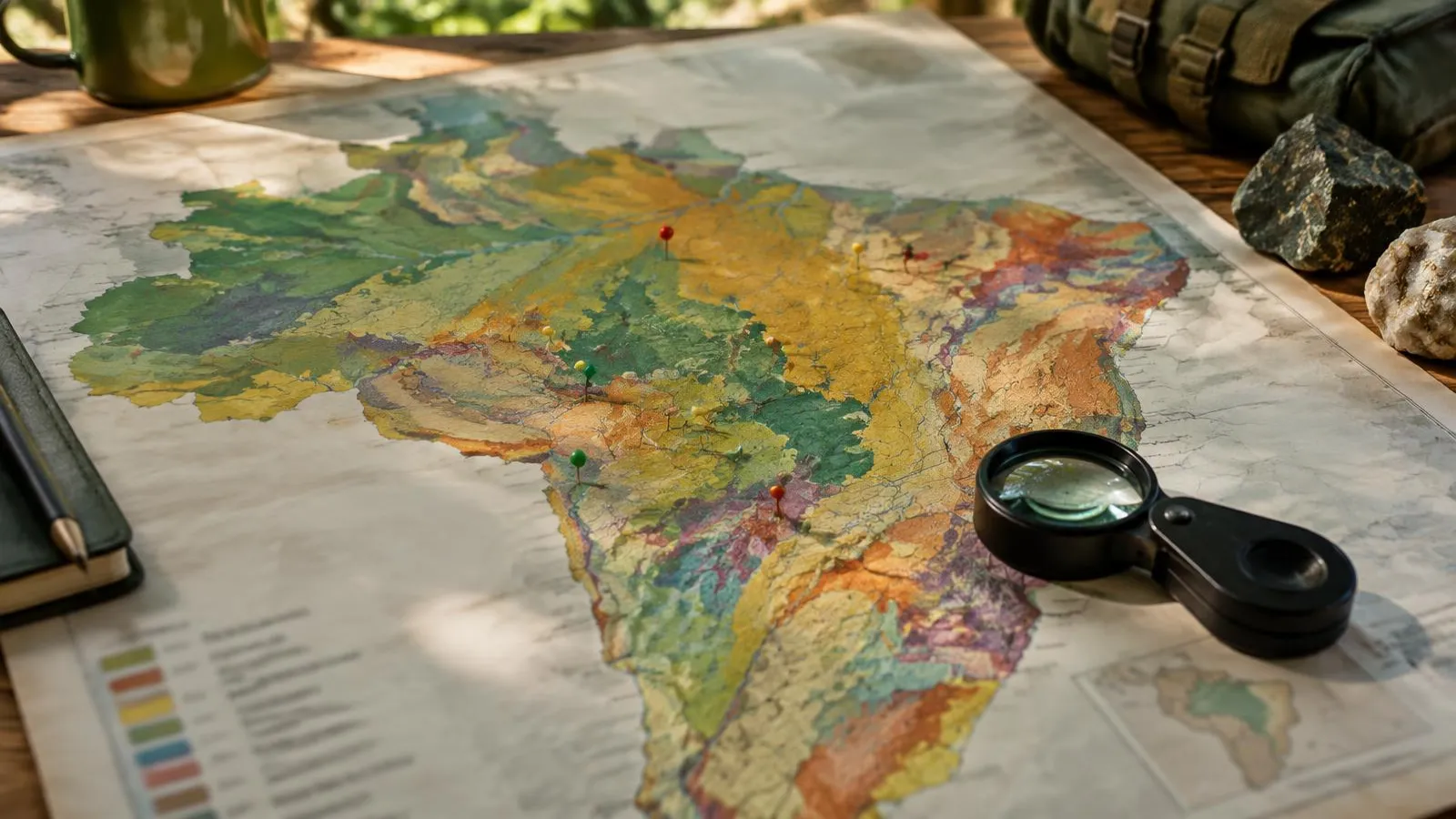
Brazil's rare earth districts are in the centre and southeast of the country, with emerging prospects in the northeast. The table below lists the main ones with representative projects that have published information. It is a map for orientation, not a complete inventory; the ANM had about 2,700 rare earth projects under consideration according to Folha de S.Paulo, as reported in 2026.
| District | State | Deposit type | Representative projects | Stage (2026) |
|---|---|---|---|---|
| Minaçu | Goiás (north) | Ionic clay | Serra Verde, Pela Ema mine | Producing; expansion financed |
| Central and northeastern Goiás | Goiás | Ionic clay | Aclara, Carina project | Feasibility study April 2026 |
| Poços de Caldas alkaline complex | Minas Gerais (south) | Ionic clay | Meteoric, Caldeira; Viridis, Colossus | Advanced studies and licensing |
| Araxá and the Alto Paranaíba | Minas Gerais | Carbonatite and by-products | Niobium and phosphate operations; rare earth by-product studies | By-product potential |
| Catalão | Goiás (south) | Carbonatite | Niobium and phosphate operations | By-product potential |
| Bahia | Bahia | Hard rock | Brazilian Rare Earths, Rocha da Rocha | Scoping study August 2026 |
Production and heavies
The only producing clay mine, plus a feasibility-stage project rich in dysprosium and terbium.
Scale
Very large clay resources close to the industrial southeast, with licensing and community questions to manage.
By-products
Rare earths alongside niobium and phosphate, accessible mainly through partnerships with existing operators.
Grade
Early hard-rock projects with high reported grades and the processing and radiological questions that come with them.
§ 02 · Goiás
What makes Minaçu and northern Goiás Brazil's leading rare earth district?
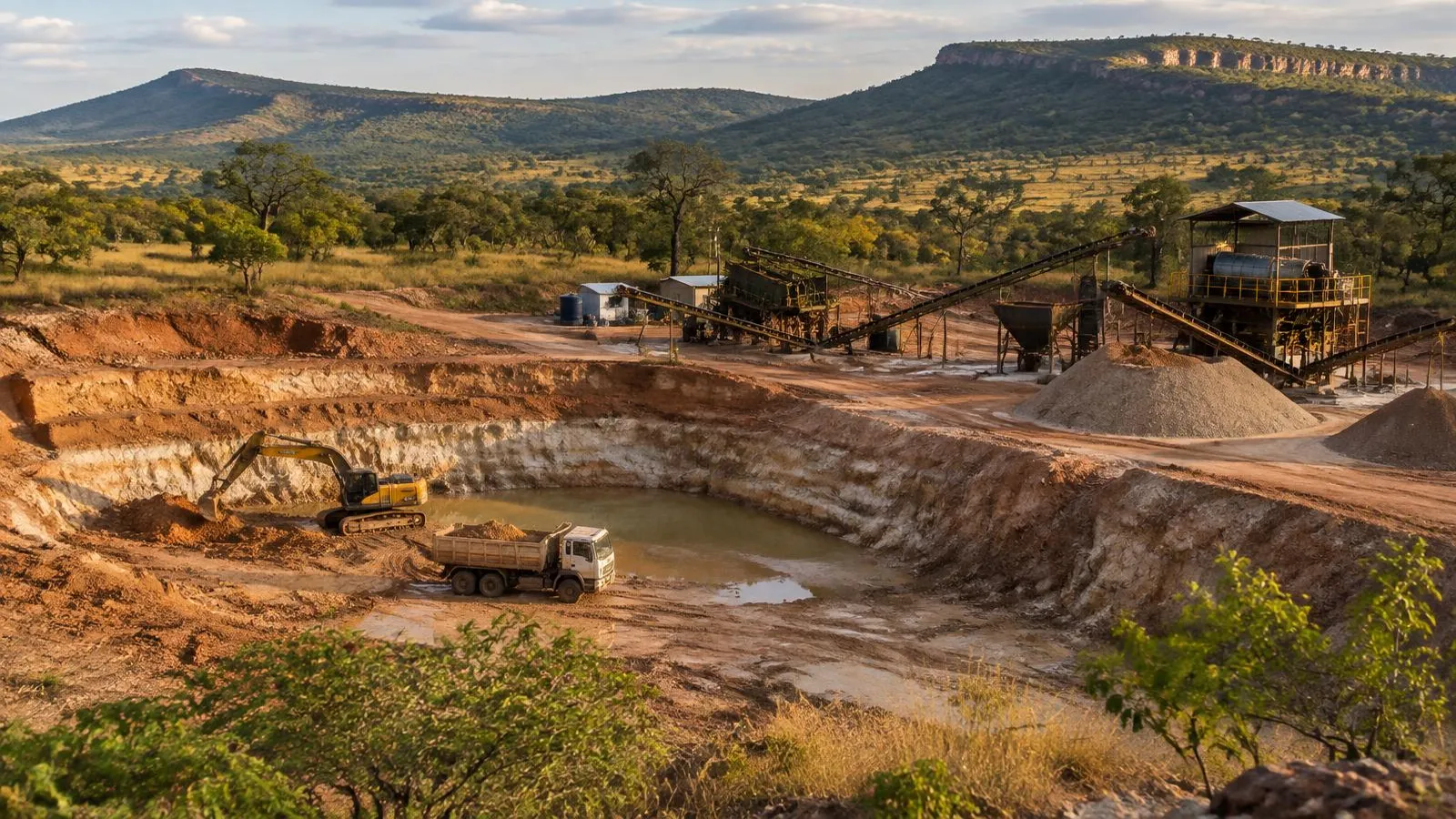
Minaçu leads because it has the only Brazilian ionic clay mine in commercial production. Serra Verde's Pela Ema mine produces a mixed rare earth concentrate containing neodymium, praseodymium, dysprosium, terbium and yttrium. In February 2026 the US International Development Finance Corporation provided a US$565 million package to refinance debt and fund optimisation and expansion, with a target of about 6,500 tonnes of rare earth oxides by the end of 2027.
Minaçu is a mining town with a long history. It grew around a chrysotile asbestos mine and sits near the Serra da Mesa reservoir and hydroelectric plant, which matters for power. It lies in the north of Goiás, close to the border with Tocantins and within reach of the BR-153 corridor. Infrastructure, a mining workforce and grid power are part of why a clay mine could be built here. The same advantages make the surrounding area attractive for further projects, and competition for well-located permits and land has grown since the mine began production.
For buyers, Serra Verde has two effects on the district. It proves that Brazilian ionic clays can be mined and processed commercially, and it raises expectations for nearby permits. A permit next to a producing mine is not a mine. Geology changes over short distances in weathered profiles, and every area needs its own drilling and metallurgy. The Serra Verde transaction and its financing are discussed in detail in our guide to rare earth offtake and financing in Brazil.
- 01
Locate the permit
Plot the ANM polygon and measure its real distance from the producing mine and from other active claims.
- 02
Read the geology
Ask whether the permit sits on the same weathered rock types as the producing deposit, supported by a geological map.
- 03
Test the clay
Insist on auger or drill samples with laboratory certificates, and on desorption tests showing recoverable rare earths.
- 04
Check the land
Identify the landowners across the permit area and whether access and compensation can be agreed.
- 05
Price the stage
Value the permit as exploration until a resource and metallurgy exist, and use options or staged payments.
§ 03 · Goiás
What does Aclara's Carina project show about Goiás rare earths?
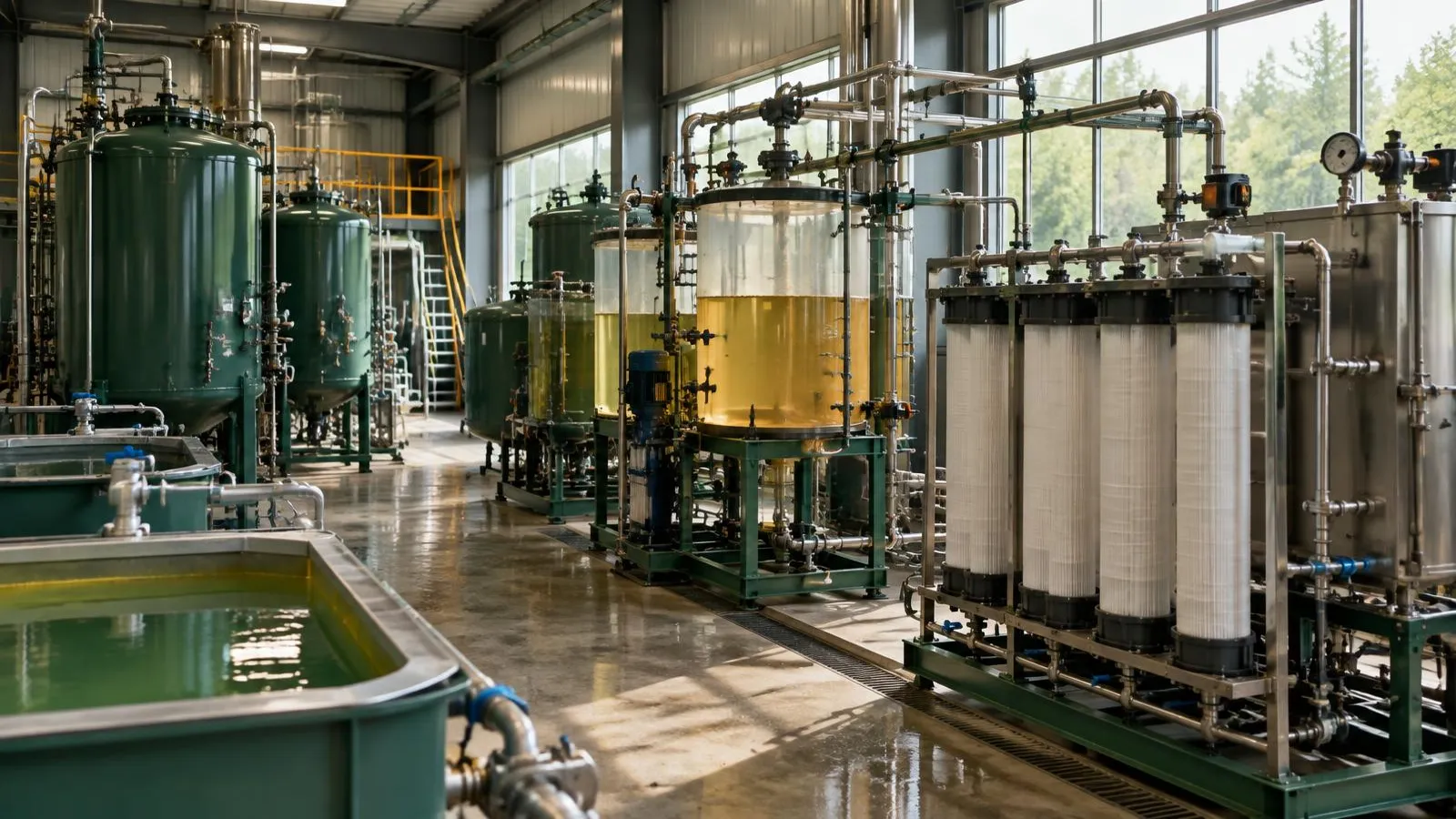
Aclara's Carina project shows that Goiás clays can support a heavy-rare-earth project with published feasibility economics. Its feasibility study, announced in April 2026, outlines average production of about 4,378 tonnes a year of rare earth oxides in a mixed concentrate, including about 156 tonnes of dysprosium and 27 tonnes of terbium, and about 1,191 tonnes of NdPr.
| Item | Figure |
|---|---|
| Average REO production | About 4,378 t/year in a mixed concentrate |
| Dysprosium / terbium | About 156 t/year Dy and 27 t/year Tb |
| Total capital | About US$781 m including contingency |
| After-tax NPV (8%) / IRR | About US$1.66 bn / 26.9% |
| Mine life | 18 years |
| Process | Open pit without drilling or blasting; ammonium sulfate washing; about 93% water recirculation; no tailings dam |
| Timeline | Construction planned for 2027; first production planned for the second half of 2028 |
Aclara runs a pilot plant in Goiânia and signed a memorandum of understanding with the State of Goiás and the municipality of Nova Roma to support permitting and regional development. Those details matter beyond Aclara: they show the state government's interest in rare earths and the kind of local partnership projects use.
§ 04 · Minas Gerais
Why is Poços de Caldas one of the world's most watched rare earth districts?
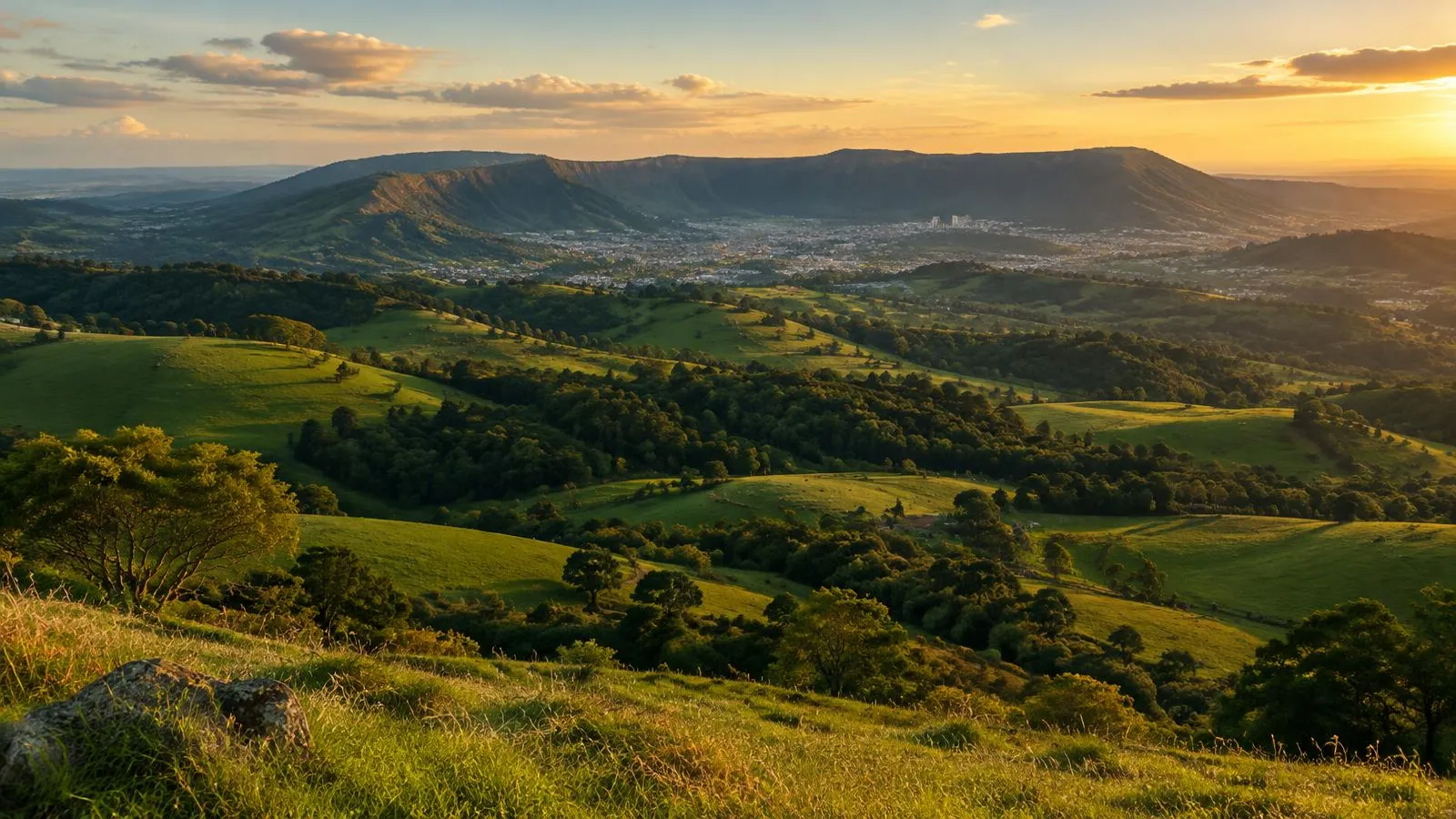
Poços de Caldas is watched because two of the largest reported ionic clay resources outside Asia sit inside it. The district is an ancient alkaline volcanic complex in southern Minas Gerais, roughly circular and tens of kilometres across, whose weathered rocks formed thick clay profiles enriched in rare earths. The area also has a long mining history, including Brazil's first uranium mine.
Meteoric Resources — Caldeira
- Total resource of about 1.6 billion tonnes at 2,317 ppm TREO (Skillings, July 2026)
- Measured resource of 128 Mt at 2,815 ppm TREO
- Magnet rare earths around 22% of TREO
- Definitive feasibility study and environmental approvals targeted for the second half of 2026
Viridis — Colossus
- Total resource of about 473 Mt at 2,505 ppm TREO; Measured and Indicated 305 Mt at 2,723 ppm
- Magnet rare earths about 24% of TREO
- Installation licence application filed May 2026; radiological exemption reported
- Final investment decision expected in the second half of 2026; first production targeted for 2028
Poços de Caldas has advantages beyond geology: it is close to the industrial southeast, with roads, power and skilled labour, and within reach of the ports of Santos and Rio de Janeiro. It also has constraints. It is a tourist city with hot springs, agriculture and water resources that the community values. Large clay mines need careful land, water and rehabilitation planning, and local acceptance is part of licensing.
History adds to that sensitivity. The Caldas uranium operation, Brazil's first, left a legacy that has been under remediation for years, and residents and regulators are attentive to radioactive and water issues in the region. Projects that can show low radioactivity, closed water circuits and credible rehabilitation plans have an advantage in licensing. Viridis' reported radiological exemption and the water-recirculation designs common in clay projects respond directly to those concerns.
Smaller permits around the complex are often marketed on the back of these two projects. The same caution applies as in Minaçu: proximity is not grade, and grade is not recovery.
§ 05 · Carbonatites
What role do Araxá, Catalão and other carbonatites play?
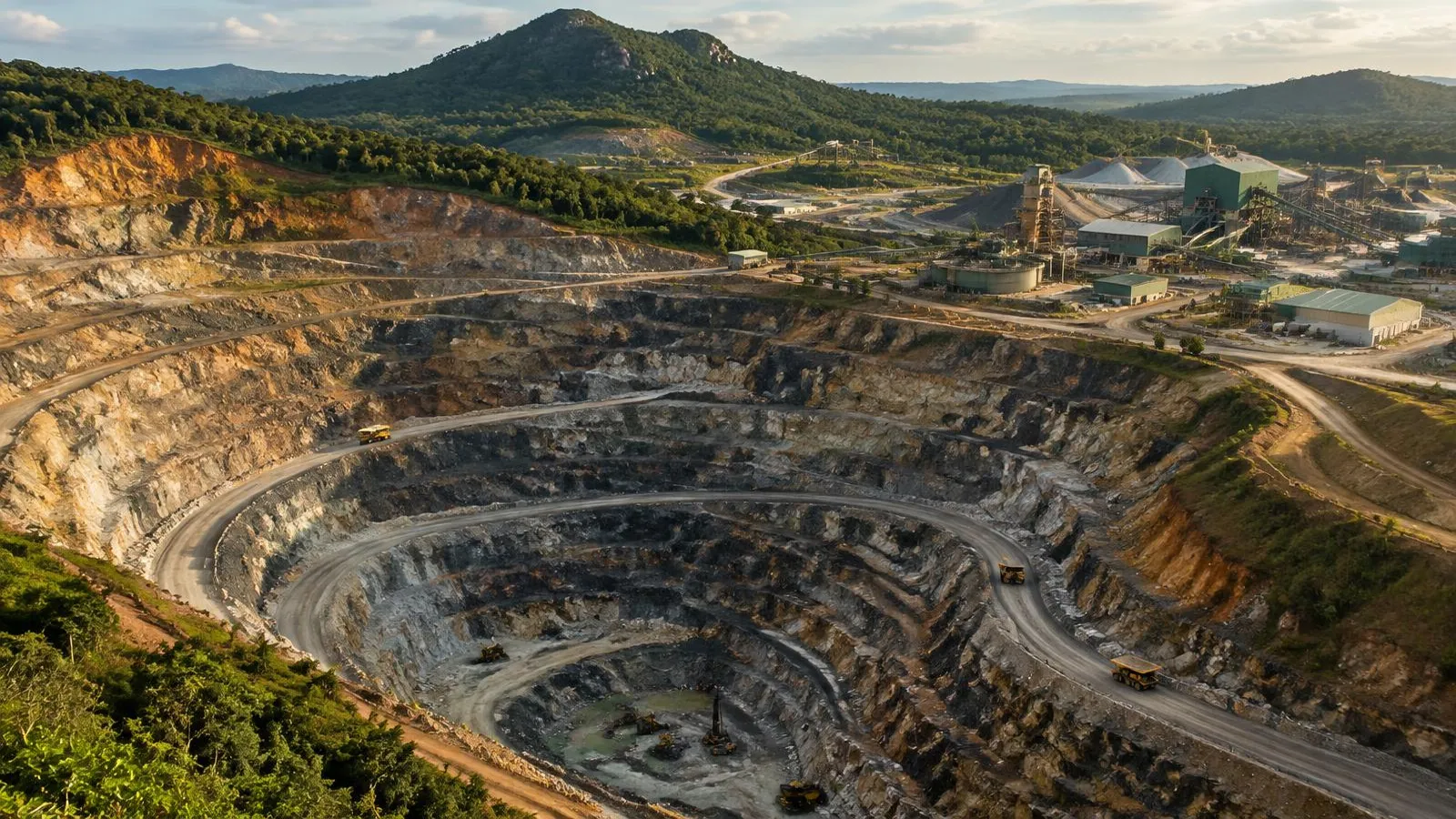
Brazil's carbonatite complexes, such as Araxá in Minas Gerais and Catalão in Goiás, are known for niobium and phosphate mines, and they also contain rare earths. Their role is mainly as potential by-product sources: rare earths could be recovered from ore, tailings or phosphate processing streams if prices and processing routes justify it.
- Araxá. Home of a major niobium operation; rare earths in the ore and tailings have been studied, but the operator has said that commercial investment depended on prices.
- Catalão. Hosts niobium and phosphate mining in southern Goiás, within a carbonatite complex that also contains rare earths.
- Phosphogypsum. Projects near Uberaba have studied recovering rare earths from phosphogypsum stacks, a by-product of fertiliser production.
- Amazon tin. The Pitinga tin mine in Amazonas has long been studied for rare earth and other by-products.
By-product projects can be attractive because the material is already mined, but they depend on the main operation's owner, its willingness to partner and its processing plans. For an outside investor, they are usually partnership or technology opportunities rather than assets to buy.
Carbonatites also illustrate a broader point about Brazil's rare earth potential. Much of it sits inside existing mining systems that were built for other minerals. Unlocking it may depend less on new mines than on new processing technology, partnerships and the price incentives that the critical minerals law is designed to create. Investors with processing know-how may find their best opportunities here rather than in greenfield exploration.
§ 06 · Bahia
What is happening with rare earths in Bahia?
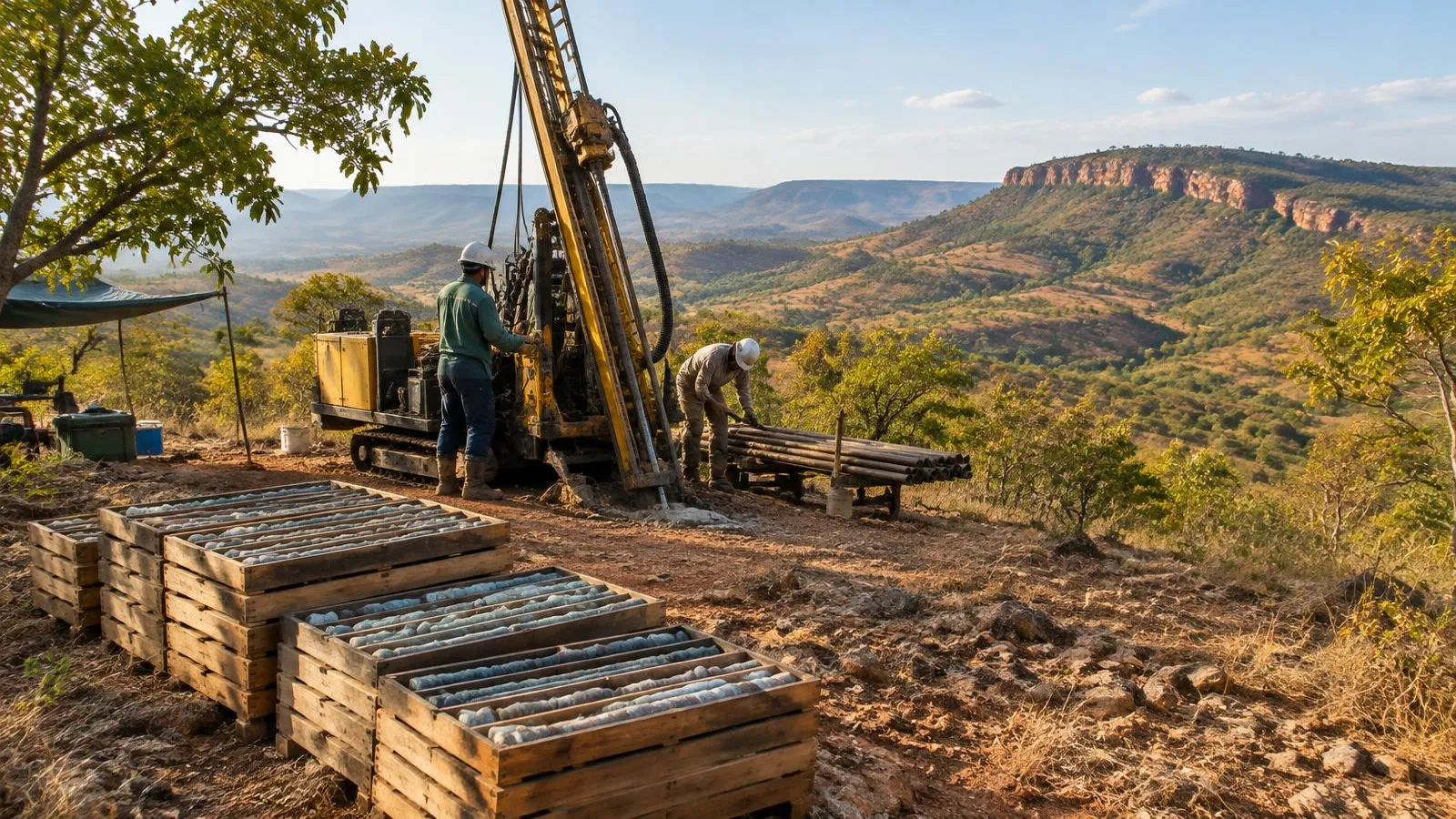
Bahia is emerging as a hard-rock rare earth district. Brazilian Rare Earths, an ASX-listed company, published a scoping study in August 2026 for its Rocha da Rocha project, which includes the Monte Alto district and plans an integrated refinery hub at Camaçari. The company described Monte Alto as ultra-high-grade, and the study reported very strong headline economics, with first sales targeted for 2030–2031 subject to funding and permitting.
Scoping studies are early and low-confidence by design. They are useful for showing potential, not for pricing an acquisition. Bahia also has a history of monazite-bearing coastal sands, which supplied rare earths decades ago, and an industrial base at Camaçari that could host processing. A buyer looking at Bahia should expect higher grades than in the clays, along with the processing and radiological questions that hard-rock deposits bring.
Camaçari matters because separation and refining, not mining alone, decide who captures value in rare earths. Brazil's critical minerals law offers incentives for local processing and transformation, and an industrial hub with chemical plants, ports and a skilled workforce is a natural location. Investors who can contribute processing technology or downstream offtake may find Bahia projects more open to partnership than to outright sale.
§ 07 · Due diligence
How should due diligence change from one rare earth district to another?
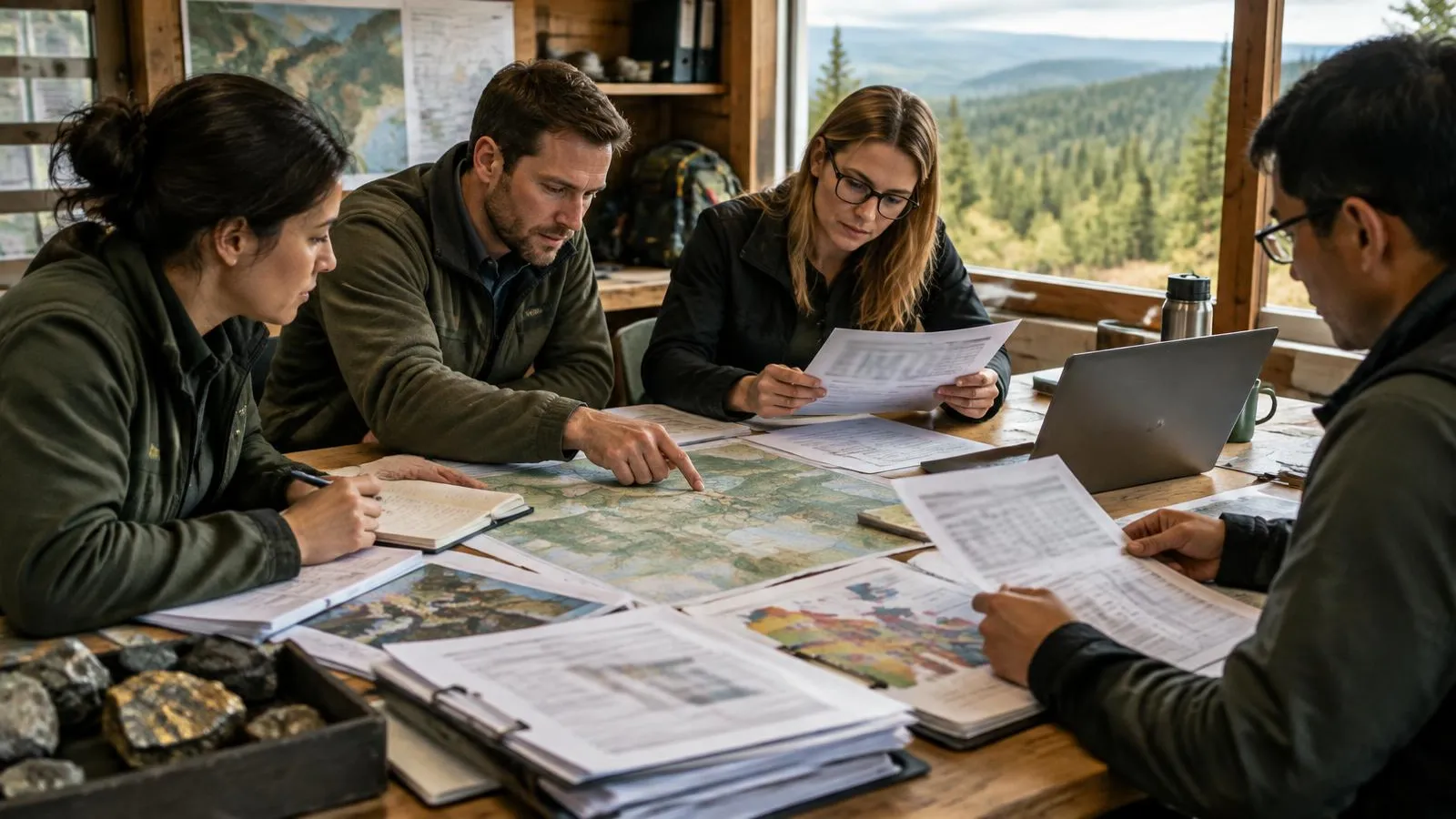
The core checks are the same everywhere: ANM title, land, data, metallurgy and the new critical minerals law. What changes by district is where the main risk tends to sit.
| District | Focus first on | Typical surprise |
|---|---|---|
| Minaçu and Goiás clays | Recoverable heavy rare earths, land agreements over a broad footprint | Clay that assays well but desorbs poorly |
| Poços de Caldas | Licensing, water and community acceptance, overlap with existing claims | Permit areas boxed in by larger projects |
| Carbonatites | Relationship with the main mine operator, processing route | No access to the by-product stream |
| Bahia hard rock | Study stage, radioactive content, processing plan | A scoping study treated as a feasibility study |
District-independent essentials
- ANM process number, holder, phase and polygon, checked on SIGMINE
- Surface ownership and access agreements
- Laboratory certificates and QA/QC for all assays
- Metallurgical test work by element, especially NdPr, Dy and Tb
- Radioactive content and any CNEN position
- Position under Law 15,506 and the timing of any homologation
For the legal side, see our guide to Brazil's new critical minerals law and our general guide to whether foreigners can buy a mine in Brazil.
§ 08 · Our method
How BRAZIL MINE works across Brazil's rare earth districts
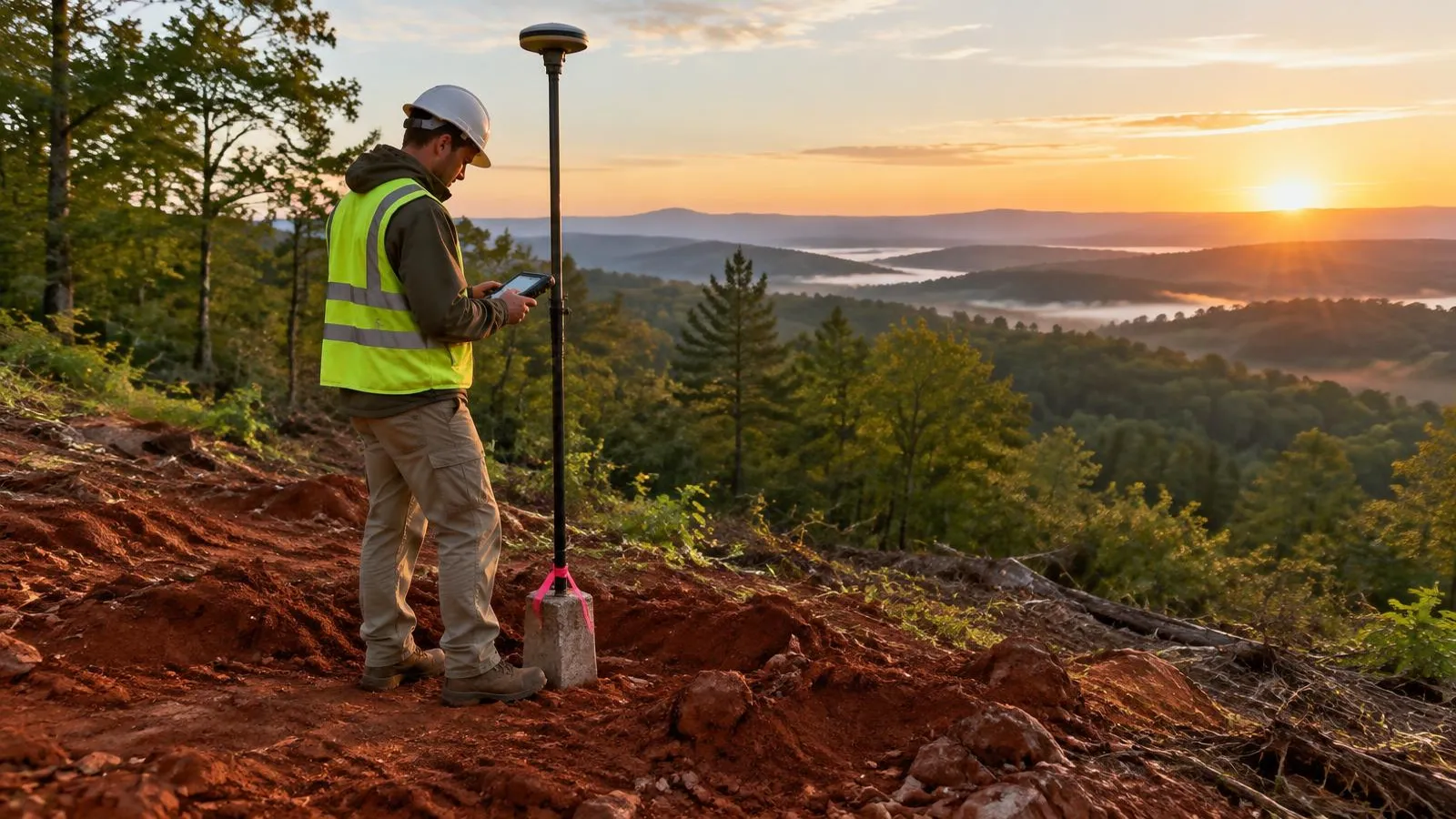
We are based in the centre of Brazil, close to the Goiás clays, and our founder is a mathematician and land surveyor who has spent years checking land records and boundaries in Goiás, Tocantins, Minas Gerais and Bahia. In rare earth projects, where clay deposits spread across many properties, that boundary work is often where a deal is won or lost.
We also help buyers read a district before they read an asset: who holds the surrounding permits, which projects have published data, where the infrastructure is and which agencies will be involved. That context makes it much easier to judge whether a permit offered at a high price is a genuine opportunity or simply sits on the right map.
- KYC and NDA before confidential information is shared.
- ANM title, polygon and land checks in-house.
- Data and metallurgy review before presentation: certificates and desorption tests, not only headline grades.
- Independent experts chosen by the buyer.
- No advance fees at any stage.
Interested in a specific rare earth district?
Tell us which district, stage and elements interest you, or send us the ANM process number of a permit you have been offered.
Request a confidential reviewFor context on foreign investment in Brazilian critical minerals, read Brazil's critical minerals and foreign capital, and for Gulf investors, Gulf capital in Brazilian mining.
§ FAQ
Frequently asked questions
Where are rare earths found in Brazil?
Mainly in Goiás, including Minaçu and the area of Aclara's Carina project, in the Poços de Caldas alkaline complex in Minas Gerais, in carbonatites such as Araxá and Catalão, and in hard-rock prospects in Bahia.
What is the Serra Verde mine?
Serra Verde's Pela Ema mine at Minaçu, Goiás, is an ionic clay rare earth mine in commercial production. It produces a mixed rare earth concentrate and received US$565 million in DFC financing in 2026.
Why is Poços de Caldas important for rare earths?
It is an ancient alkaline volcanic complex whose weathered clays host very large ionic clay resources, including Meteoric's Caldeira and Viridis' Colossus projects.
Is there rare earth production in Minas Gerais?
Not at commercial scale from clays as of 2026. Projects in Poços de Caldas were advancing through feasibility and licensing, with first production targeted from around 2028.
What about rare earths in Bahia?
Bahia has emerging hard-rock projects, including Brazilian Rare Earths' Rocha da Rocha, which published a scoping study in August 2026. Scoping studies are early-stage and low-confidence.
Can I buy a permit near Serra Verde or Poços de Caldas?
Permits near major projects do change hands, but proximity does not prove grade or recovery. Each permit needs its own data and metallurgy, and transactions may need homologation under Law 15,506.
Do Brazilian rare earth districts have infrastructure?
Goiás and Minas Gerais districts generally have roads, grid power and mining workforces. Infrastructure varies by site and should be checked for each project.
Which regulator is involved for radioactive rare earth deposits?
Brazil's nuclear regulator, CNEN, alongside the ANM and the state environmental agency, where thorium or uranium content requires it.
Which Brazilian rare earth district has the most heavy rare earths?
Goiás ionic clays, including Serra Verde and Aclara's Carina, are notable for dysprosium and terbium. Carina's feasibility study outlines about 156 tonnes of dysprosium and 27 tonnes of terbium a year.
Mathematician, Land Surveyor and Licensed Real Estate Broker · CRECI-TO 4631
BRAZIL MINE — Mining & Minerals
Keep reading