Legal & structure · Egypt · North Africa · Gulf · investors active in Egyptian mining
Brazil vs. Egypt mining investment: licensing, royalties and ownership compared
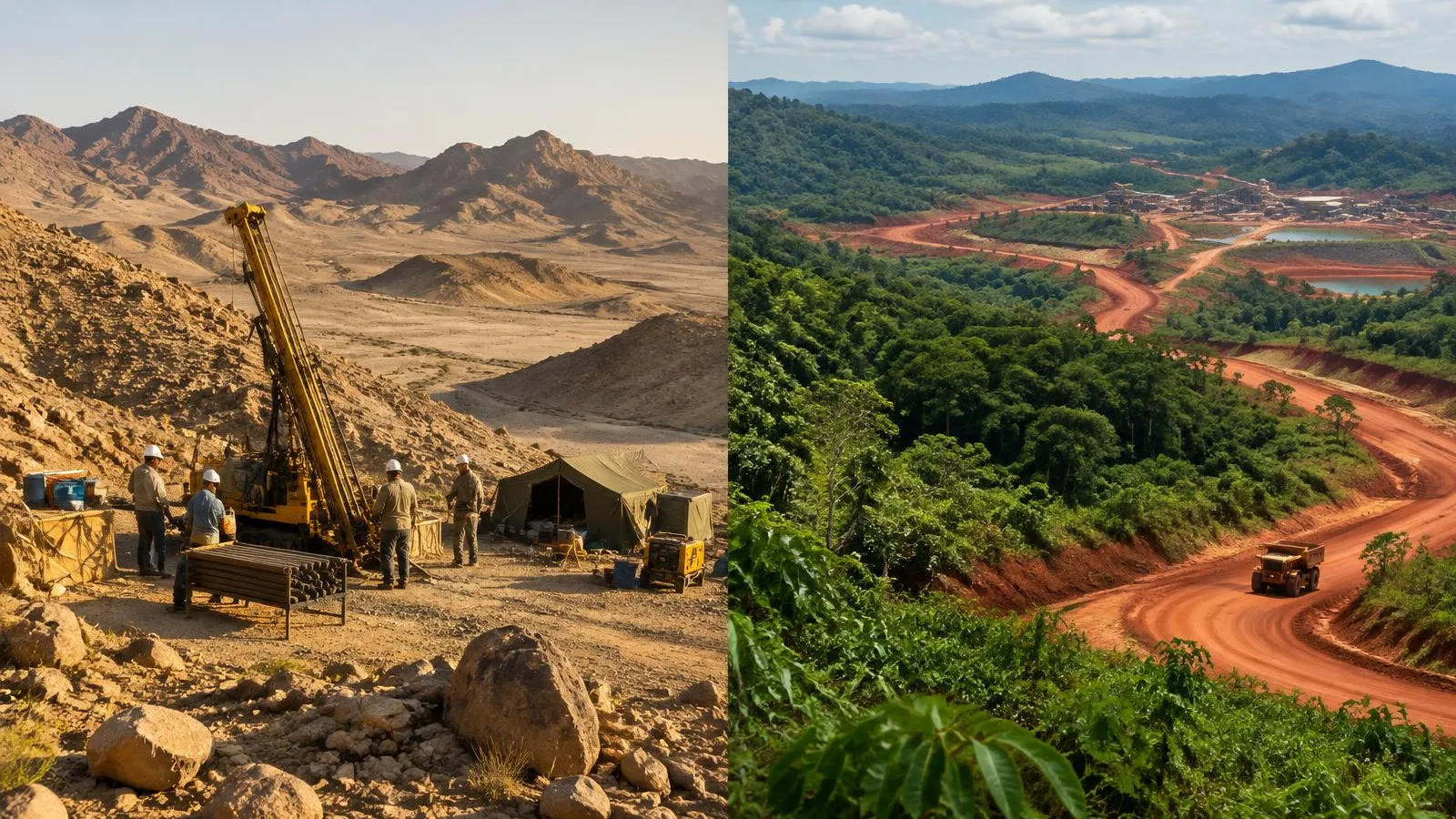
Brazil vs. Egypt mining investment comes down to this: Egypt offers a reformed, still young gold sector with a royalty-and-tax regime introduced in 2019 and licences granted by a state authority, while Brazil offers a large, mature mining industry with titles granted by the federal regulator, a 1.5% royalty on gold and a deep market of existing mines to buy. Neither is simply better. They suit different investors and different strategies, and an Egyptian or Gulf investor who already knows one can use that knowledge to read the other faster.
Key takeaways
- Egypt replaced its production-sharing system with royalties and income tax through Law 145/2019, amending Law 198/2014. A 2020 government source put the gold royalty at 5% and income tax at 22.5%.
- Brazil charges a CFEM royalty of 1.5% on gold under Law 13,540/2017 and a standard combined corporate tax of 34%, before regional incentives.
- In Egypt, licences come from the mining authority, often through bid rounds. In Brazil, titles come from the ANM through a first-come application system, and existing titles can be bought.
- Egypt's gold output is dominated by one large mine, Sukari. Brazil has many producing gold mines of different sizes, from Paracatu to small private concessions.
- Both countries require local companies, licences and community and security planning. Neither rewards investors who skip verification.
In this article
Egyptian investors have watched their own country's gold sector change quickly. After decades of a production-sharing model that discouraged private investment, Egypt rewrote its mining law in 2019 and began offering exploration areas in bid rounds. Sukari, the country's flagship mine, passed to AngloGold Ashanti when it bought Centamin in 2024. New explorers have arrived, and the government has set a target of about 800,000 ounces a year by 2030, according to a Reuters report in September 2026.
Brazil sits at the other end of the spectrum. Its mining code dates from 1967, its regulator is a dedicated federal agency, and it already produces gold from dozens of mines across several states. For an investor in Cairo, Alexandria or the Gulf who knows the Egyptian system, Brazil is not a step into the unknown. Many of the questions are the same; the answers are different.
There is a practical reason the comparison matters now. Brazilian gold and gemstone offers increasingly reach investors through intermediaries based in Egypt and the Gulf. Some of those offers are real; many are not. An investor who understands how a Brazilian title differs from an Egyptian licence can sort them quickly, ask the right questions and avoid paying for something that does not exist.
§ 01 · Ownership
Who owns the minerals in Brazil and in Egypt?

In both countries the state owns the minerals, and investors acquire a right to explore or mine rather than the deposit itself. The difference is in how that right is granted and how freely it can change hands.
Brazil
- Article 176 of the Constitution assigns mineral deposits to the Federal Union, separate from the land surface.
- The National Mining Agency (ANM) grants exploration and mining titles.
- Titles go to Brazilians or companies incorporated in Brazil; foreign shareholders are allowed.
- Existing titles can be assigned with the ANM's prior consent, so there is an active secondary market.
Egypt
- Mineral resources belong to the state under the mining law (Law 198/2014, amended by Law 145/2019).
- The Mineral Resources and Mining Industries Authority (MRMIA), successor to EMRA, administers the sector.
- Exploration areas are often offered through bid rounds, and large projects can require parliamentary approval.
- Assignments require the authority's approval, under timelines the reform aimed to clarify.
The secondary market is the practical difference that matters most to a buyer. In Brazil, an investor can acquire a company that already holds a producing concession, or an advanced project, from a private owner. In Egypt, most new entrants have come in through exploration licences awarded in bid rounds, with fewer producing assets available to buy.
Our guide on whether foreigners can buy a mine in Brazil explains the Brazilian corporate structure in more detail.
§ 02 · Licensing
How are exploration and mining licences granted in each country?
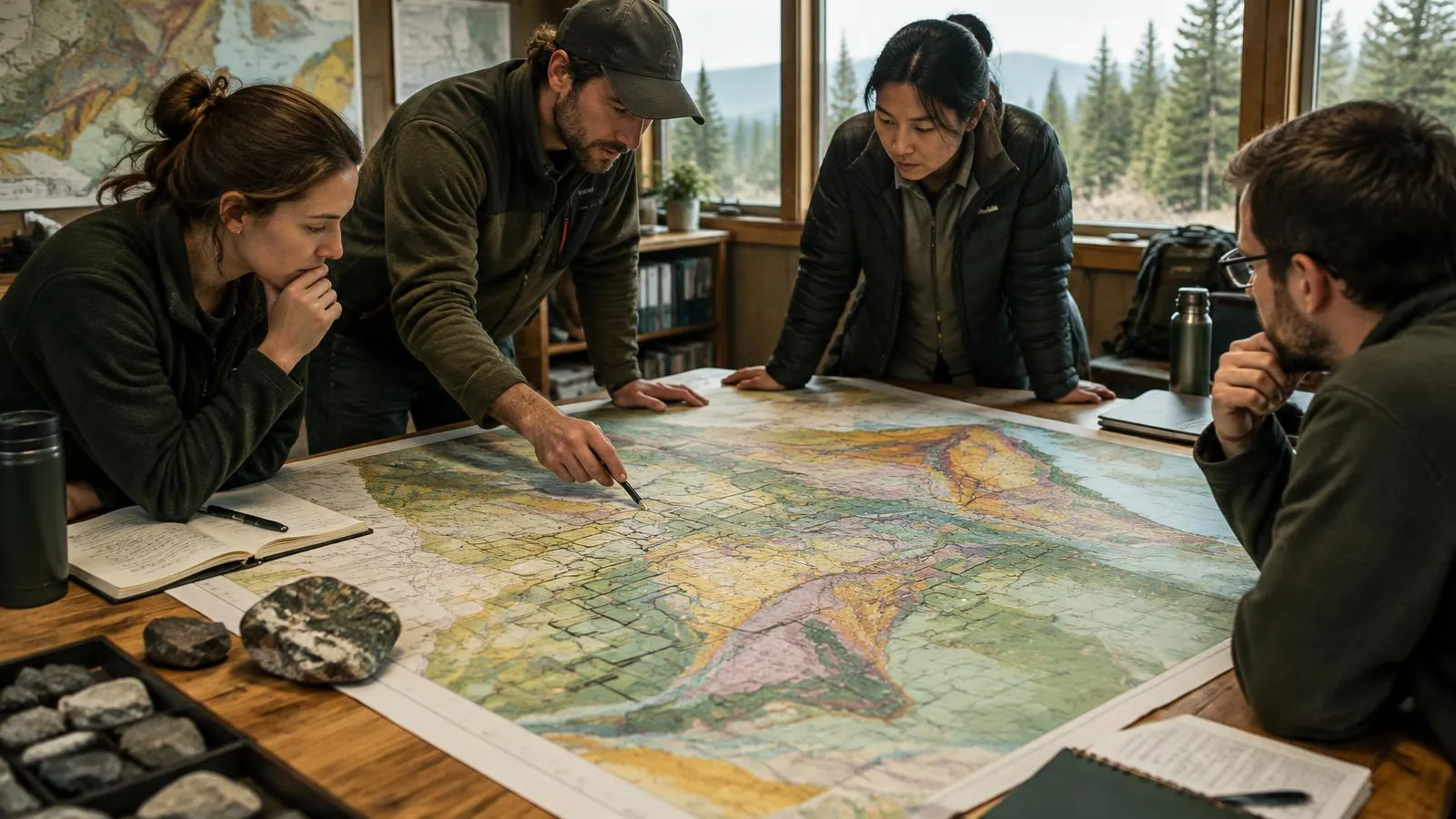
In Brazil, most areas are granted on a first-come basis: whoever files a valid application first for a free area gets priority, and the ANM also auctions areas that have become available. In Egypt, the authority offers blocks in bid rounds and evaluates work programmes and financial capacity. Each system has its own logic and its own risks.
| Brazil | Egypt | |
|---|---|---|
| Granting body | ANM (federal agency) | MRMIA (formerly EMRA) |
| Main route to new areas | Application for free areas; ANM auctions of available areas | Bid rounds for exploration blocks |
| Exploration title | Exploration authorisation with a fixed term, ending in a final research report | Exploration licence of two years, renewable if the work programme is met |
| Mining title | Mining concession, with no fixed expiry while the mine operates within the rules | Exploitation licence of up to fifteen years, renewable |
| Small-scale route | PLG garimpo permits for Brazilian individuals and cooperatives | Separate regime; artisanal and illegal mining are a challenge |
| Buying existing titles | Common, with ANM consent for assignments | Possible with authority approval; fewer producing assets on offer |
Brazil's concession without a fixed expiry is a notable feature for long-life gold mines: the right continues while the mine operates and the holder meets its obligations. Egypt's exploitation licence has a defined term and must be renewed. Investors should model renewal risk accordingly.
Brazil's small-scale regime, the PLG, deserves a warning for investors used to Egypt. A PLG is a legal permit, but it belongs to Brazilian individuals or cooperatives and cannot be held by an ordinary company. Many Brazilian gold offers are PLGs presented as industrial mines. Our article on PLG versus mining concession explains how to tell them apart.
§ 03 · Fiscal terms
How do gold royalties and taxes compare between Brazil and Egypt?

On gold, Brazil's royalty is lower and its headline corporate tax higher. Brazil charges the CFEM royalty at 1.5% of gross gold sales revenue net of sales taxes and taxes corporate profits at a standard combined 34%. Egypt, after its reform, set the gold royalty at 5% according to a 2020 government source, within a legal range of 5% to 20% by mineral, with corporate income tax at 22.5%.
Headline rates do not tell the whole story. In Brazil, the landowner is entitled by law to a share of the mine's results, and projects in the SUDAM (Amazon) and SUDENE (Northeast) regions may qualify for a reduction of income tax on operating profit, subject to approval. In Egypt, investors also pay surface rent and signature bonuses, and the reformed regime includes incentives for local processing and refining. The only meaningful comparison is a full model of the same project under both regimes.
A simple illustration shows why. On a mine selling US$100 million of gold a year, a 1.5% royalty costs about US$1.5 million and a 5% royalty about US$5 million, before tax. Royalties are paid on revenue whether or not the mine makes a profit, so a lower royalty helps most in lean years. Income tax, by contrast, is paid only on profit. A mine with thin margins may therefore prefer Brazil's lower royalty even with a higher tax rate, while a very profitable mine may come out ahead under Egypt's lower tax rate. These are hypothetical numbers for illustration, not a forecast for any project.
For how these inputs feed into a Brazilian valuation, see how to value an operating gold mine in Brazil.
§ 04 · Market
How do the gold sectors of Brazil and Egypt compare in size and depth?
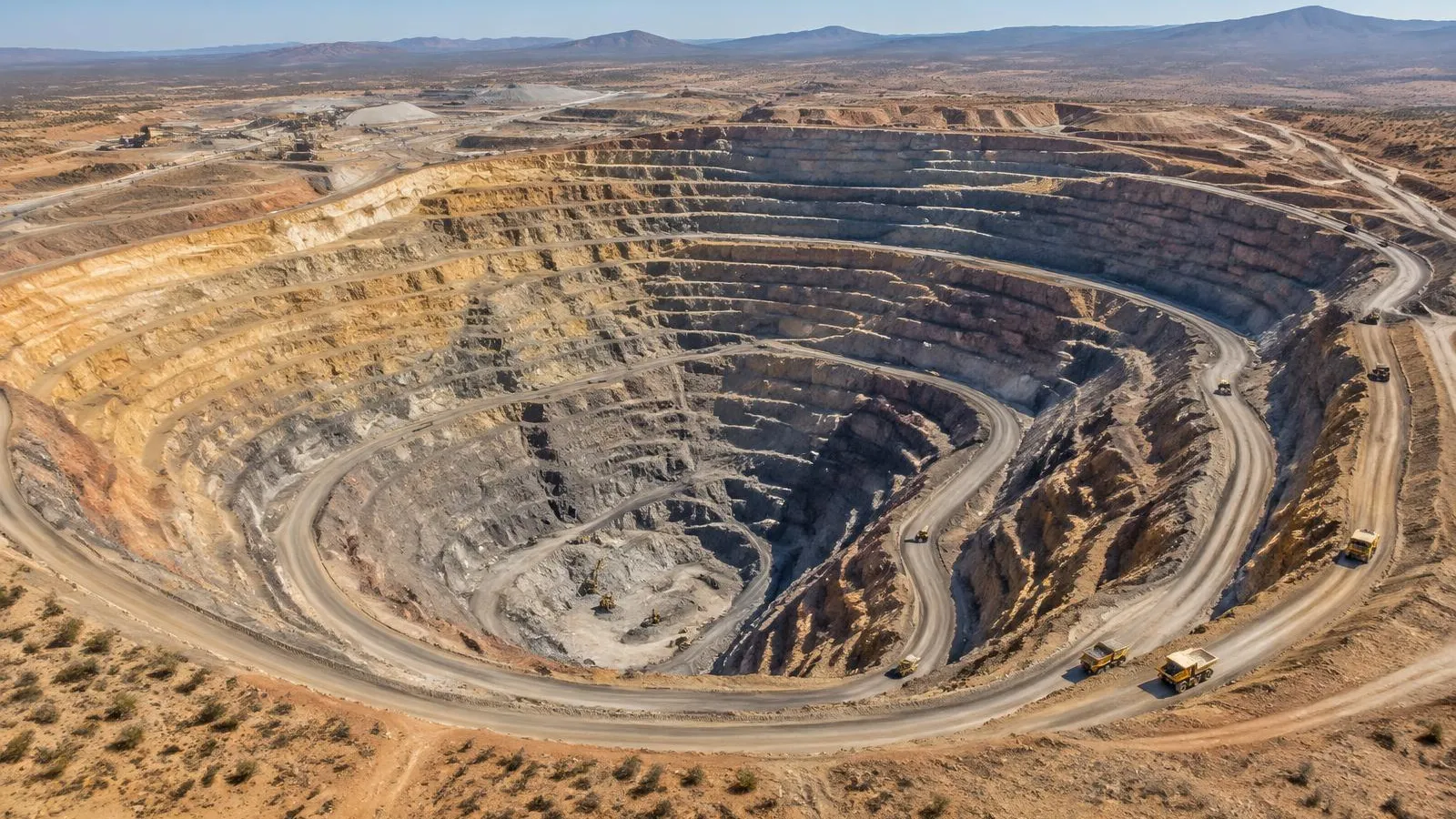
Brazil's gold sector is broad and diversified; Egypt's is concentrated and still emerging. That difference shapes what an investor can buy, and how quickly.
| Brazil | Egypt | |
|---|---|---|
| Largest mine | Paracatu (Kinross), Minas Gerais, about 588,000 oz in 2023 (GlobalData) | Sukari (AngloGold Ashanti), about 500,000 oz a year (Reuters, 2026) |
| Other producers | Salobo (Vale), Jacobina (Pan American Silver), Cuiabá (AngloGold Ashanti), Aurizona and others | Smaller producers and projects, including Abu Marawat with Aton Resources |
| Recent large deals | CMOC agreed in December 2025 to buy Equinox Gold's Brazilian mines for up to US$1.015 bn | AngloGold Ashanti acquired Centamin, owner of Sukari, in 2024 |
| Private mid-size market | Many private concessions and projects held by Brazilian companies and families | Limited; most new entrants hold exploration licences |
For an Egyptian investor who wants production now, Brazil offers more choice. For one who wants to build from exploration in a district that is still opening up, Egypt's Eastern Desert has real appeal. Many investors will want both: a producing or near-producing asset in Brazil for cash flow, and exploration exposure at home.
Brazil's breadth goes beyond gold. The same corporate and legal structure that holds a gold concession can hold copper, nickel, lithium, graphite, rare earths or gemstone titles. For an Egyptian group that wants to diversify across minerals, one Brazilian subsidiary can become a platform for several assets over time, each verified and acquired on its own merits.
Our guide to producing gold mines for sale in Brazil sets out the evidence a Brazilian mine must show before it can be priced as a producing asset.
§ 05 · Risks
What operating risks do investors face in Brazil and in Egypt?
Both countries share some operating risks and differ on others. The main shared risks are illegal mining, bureaucracy and remoteness. The main differences are environmental licensing, tailings regulation and land.
Illegal mining
Egypt's explorers report illegal miners blocking access to concessions. In parts of the Brazilian Amazon, illegal gold mining operates near or inside titled areas.
Bureaucracy
Investors in both countries cite delays in approvals. Build regulatory time into the plan.
Environmental licensing
State environmental agencies issue preliminary, installation and operating licences, often after an impact study. Licensing is detailed and can be slow.
Tailings dams
After the Mariana and Brumadinho disasters, dam rules tightened. Law 14,066/2020 reinforced the ban on upstream-raised dams.
Land and communities
Mining rights are separate from land. Agreements with landowners, and attention to indigenous lands and conservation units, are essential.
Remote desert logistics
Water, power and access in the Eastern Desert require significant infrastructure and security planning.
Currency risk applies in both: gold revenue is effectively in dollars while many costs are local. Brazil's real and Egypt's pound have both moved sharply in recent years. Repatriation of profits is easier when foreign capital is registered from the start, which in Brazil means registration with the Central Bank.
Community relations look different too. In Egypt's Eastern Desert, mines are often far from settlements, and the main local relationships are with the state and security services. In Brazil, many deposits sit on or near farmland, small towns and, in the north, forest and traditional communities. Local employment, road use, water and noise all become part of the licence conditions and of daily operations. An investor who budgets for them early avoids conflict later.
§ 06 · Pitfalls
What do investors used to Egypt most often get wrong in Brazil?
Investors used to Egypt most often assume that a Brazilian mining offer comes, as an Egyptian licence does, from an official process. In Brazil, many offers come from private sellers and chains of brokers, and the official process happens later, when the ANM is asked to approve an assignment. That makes early verification the buyer's job.
- Assuming a permit is a mine. A PLG or an exploration permit can be presented as an industrial operation. Check the title type first.
- Trusting brokers' paperwork. Teasers often circulate through several intermediaries, including some in Egypt and the Gulf, without a mandate from the owner.
- Reading reports as certificates. NI 43-101 and JORC are reporting standards. A mine is not “certified” under either.
- Valuing gold in the ground at spot. Real buyers of producing Brazilian mines paid a fraction of that per ounce.
- Ignoring land. In Brazil, the land and the mineral right are separate, and a missing landowner agreement can stop a mine.
Our guide on verifying a gold mining concession walks through the title check step by step. It takes hours and ends most bad deals immediately.
Ask every Brazilian seller for these before you travel
- The ANM process number and the holder's company tax number (CNPJ)
- The title document: exploration authorisation, PLG or mining concession
- The environmental licence, its conditions and its expiry date
- The landowner's identity and the access agreement
- For a producing mine: electronic gold invoices and CFEM receipts for the last twelve months
- A mandate signed by the title holder for every intermediary in the chain
§ 07 · Decision
Brazil vs. Egypt mining investment: which fits your strategy?

Brazil makes more sense when you want production or advanced projects now, a wide choice of assets and a mature legal market. Egypt makes more sense when you want early exploration exposure in a district that is opening up, close to home, with government support for new entrants. The table below summarises the trade-offs.
| Your goal | Brazil | Egypt |
|---|---|---|
| Buy a producing gold mine | Strong fit: many private producing assets | Limited supply of producing assets |
| Explore a new district from scratch | Possible, with first-come applications | Strong fit: bid rounds for new blocks |
| Diversify beyond gold | Copper, nickel, lithium, rare earths, gemstones | Phosphate, other industrial minerals and gold |
| Low royalty on gold | 1.5% CFEM | 5% royalty per 2020 terms |
| Lower headline income tax | 34% standard, with regional incentives | 22.5% |
| Proximity and language | Distant; Portuguese | Home market for Egyptian investors; Arabic |
- 01
Define the goal
Cash flow now, or exploration upside later? The answer often decides the country.
- 02
Model both regimes
Run the same project through Brazilian and Egyptian fiscal terms with local tax advice.
- 03
Check the asset, not the country
A clean Brazilian concession beats a doubtful Egyptian licence, and the reverse is also true.
- 04
Plan the team
Local counsel, technical advisers and translators in each country are not optional.
§ 08 · Our method
How BRAZIL MINE works with Egyptian and North African investors

We verify Brazilian mining assets before we present them, and we work directly with title holders or their mandated representatives. For investors in Egypt and North Africa, that means fewer intermediaries, documents in English, and a clear picture of what an asset is before anyone books a flight to Brazil.
- KYC and NDA on both sides before confidential information is shared.
- Title and boundary verification in-house: our founder is a mathematician and land surveyor.
- Organised data room in English with Portuguese originals.
- Independent advisers chosen by the investor for legal, technical and tax work.
- No advance fees at any stage.
Comparing Brazil with Egypt for your next mining investment?
Tell us what you are looking for in Brazil, or send us an asset you have been offered. We will tell you what the Brazilian documents show.
Request a confidential reviewSee our current gold mines for sale in Brazil, and for the Gulf perspective, our guide to Gulf capital in Brazilian mining.
§ FAQ
Frequently asked questions
Is it easier to invest in mining in Brazil or Egypt?
It depends on the strategy. Brazil has a larger market of existing mines and projects that can be bought privately. Egypt offers new exploration areas through bid rounds. Both require local companies, licences and careful verification.
What is the gold royalty in Brazil compared with Egypt?
Brazil's CFEM royalty on gold is 1.5% of gross sales revenue net of sales taxes. A 2020 Egyptian government source put Egypt's gold royalty at 5%, within a legal range of 5% to 20% by mineral. Confirm current terms with local advisers.
What corporate tax applies to mining in each country?
Brazil's standard combined rate of IRPJ and CSLL is 34%, with possible regional incentives. Egypt's reformed regime applies income tax at 22.5%.
Can an Egyptian company own a mine in Brazil?
Yes, through a Brazilian company. Mining titles must be held by a company incorporated in Brazil, whose shareholders can be Egyptian or of any nationality. Title assignments need the ANM's prior consent.
Who regulates mining in Egypt now?
The Mineral Resources and Mining Industries Authority (MRMIA), which succeeded the Egyptian Mineral Resources Authority (EMRA) and took over its rights and obligations.
How long do mining titles last in each country?
In Brazil, a mining concession has no fixed expiry while the mine operates within the rules. In Egypt, exploitation licences run for up to fifteen years and are renewable, and exploration licences run for two years, renewable.
What is Egypt's largest gold mine?
Sukari, operated by AngloGold Ashanti since it acquired Centamin in 2024, producing about 500,000 ounces a year according to Reuters.
Does BRAZIL MINE work with investors from Egypt?
Yes. We work with investors from Egypt, North Africa, the Gulf and elsewhere, verifying Brazilian assets before presenting them and charging no advance fees.

Mathematician, Land Surveyor and Licensed Real Estate Broker · CRECI-TO 4631
BRAZIL MINE — Mining & Minerals
Keep reading