Critical minerals · United States · Europe · Asia · Gulf · Australia · investors, analysts, offtakers and lenders
How to value a rare earth project in Brazil: basket price, NdPr and offtake
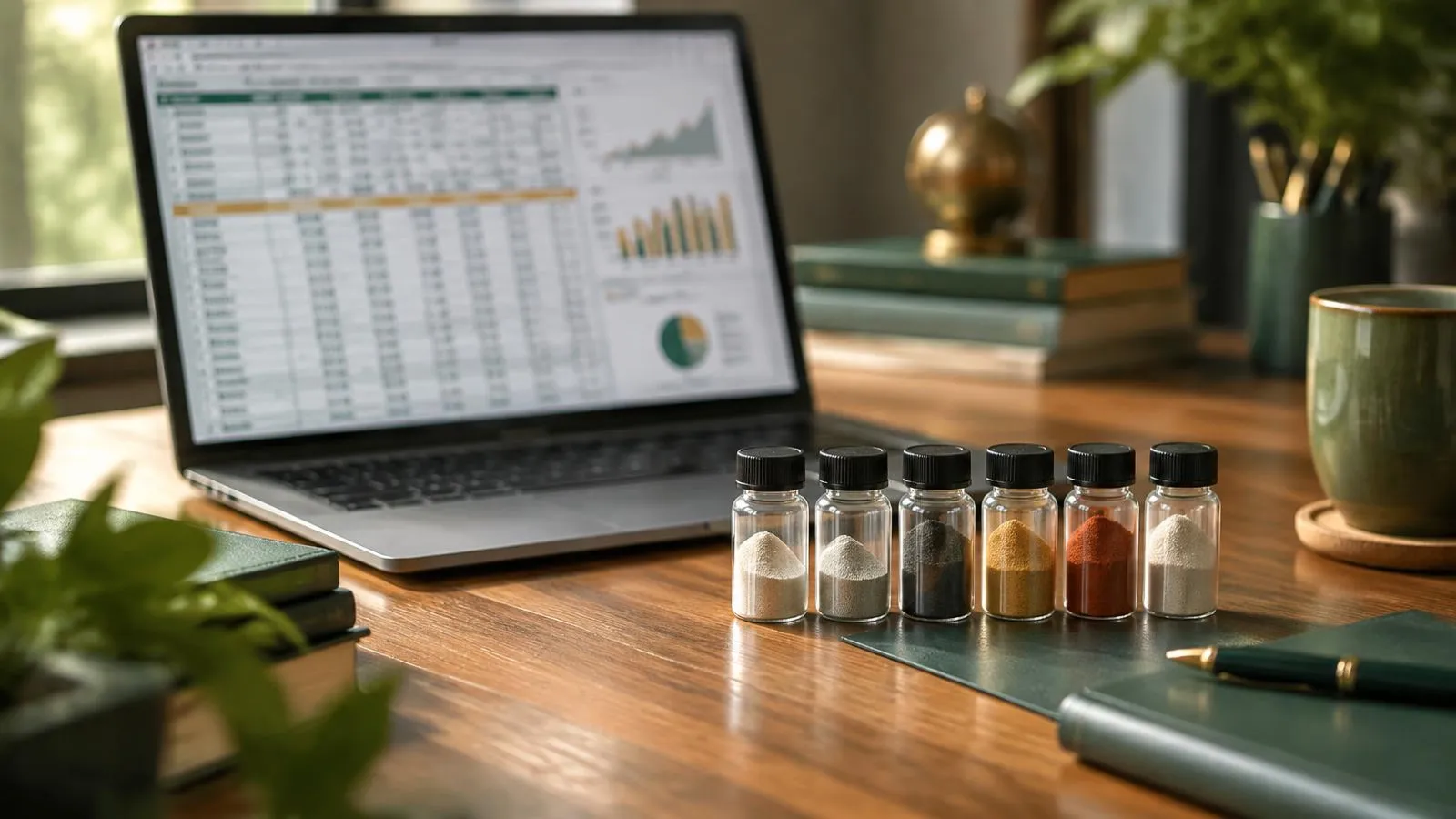
To value a rare earth project in Brazil, you start from the basket price of its recoverable rare earths, which is dominated by NdPr, dysprosium and terbium, then apply recoveries, the discount a buyer pays for a mixed concentrate, the project's costs, Brazilian royalties, taxes and the new critical-minerals contributions, and the confidence level of its study. Total tonnes of rare earth oxide in the ground multiplied by a headline price is not a valuation. This guide shows how the pieces fit, with Brazilian examples.
Key takeaways
- Value lives in the magnet rare earths: NdPr, and especially dysprosium and terbium. Lanthanum and cerium add little.
- The basket price is the weighted value of a kilogram of a deposit's rare earth mix. Aclara's Carina feasibility study assumed a basket of about US$209 per kilogram of oxide, using Argus forecasts for markets outside China.
- A mixed concentrate is sold at a discount to the value of its contained oxides. Payability and separation costs belong in every model.
- Study stage matters: a scoping study is low-confidence; a feasibility study supports investment decisions. Do not compare their headline NPVs as equals.
- Brazil adds the CFEM royalty, income taxes, Law 15,506 contributions, land, water and, for some deposits, radiological costs.
In this article
Rare earths attract big numbers. A teaser might describe millions of tonnes of “rare earth oxides in the ground” and multiply them by a price taken from a news headline. The result can run into tens of billions of dollars for a project that has never drilled a hole. Real buyers, offtakers, lenders and their technical advisers do not work that way, and a seller who prices a project like that loses credibility at the first meeting.
Professional valuation of a rare earth project follows the same logic as any mine: the present value of future cash flows, tested against what comparable projects have fetched. What makes rare earths different is the product. A deposit produces a mix of up to seventeen elements, each with its own price, sold as a mixed concentrate to a small number of separators. Getting that mix and its price right is most of the work. The rest is recovery, cost and confidence, and each of those can be checked against documents rather than accepted on trust.
§ 01 · Basket
What is the basket price, and why does it decide how you value a rare earth project?
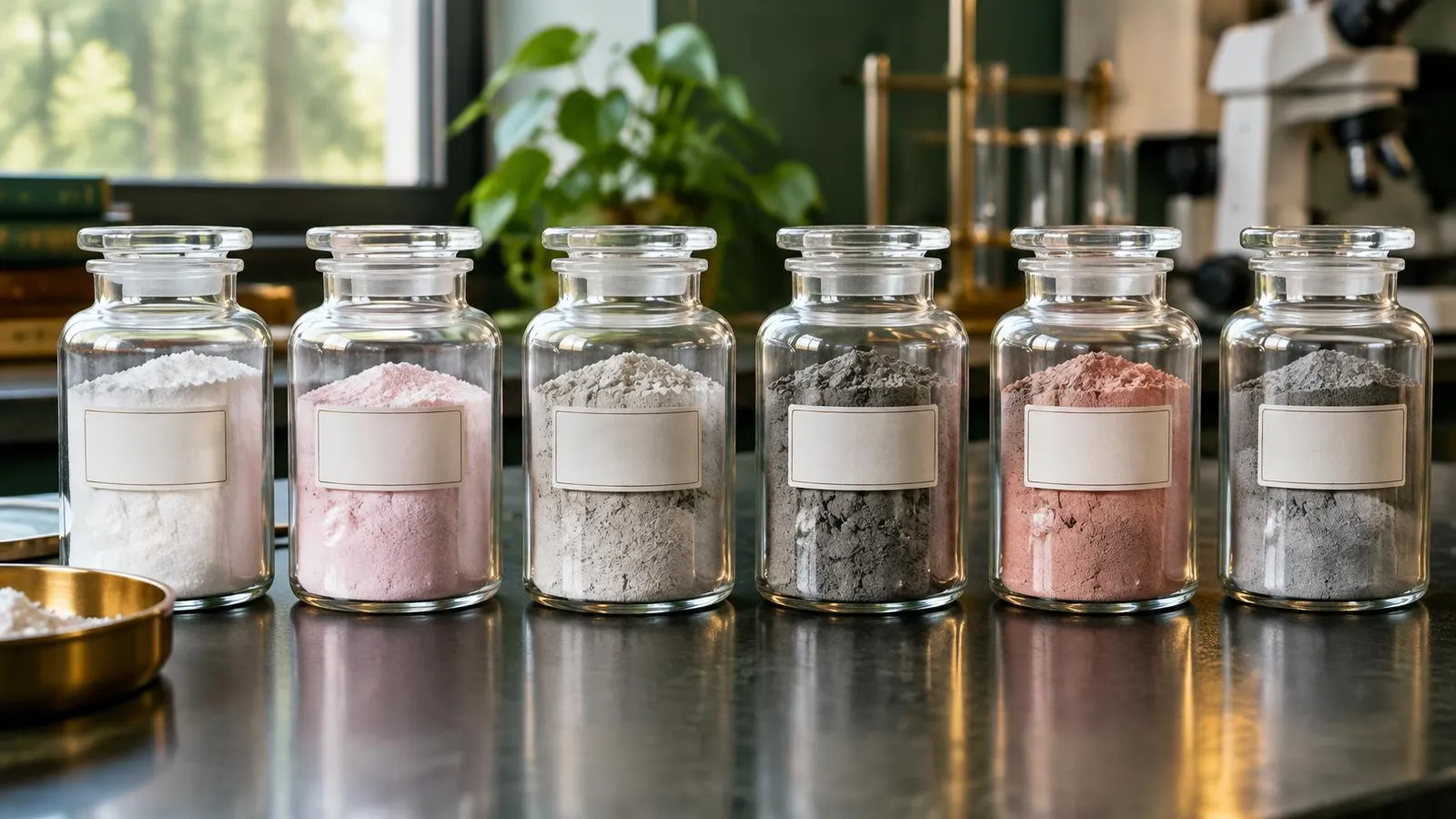
The basket price is the value of one kilogram of a deposit's rare earth oxides, calculated by weighting each element's price by its share in the mix. Two deposits with the same grade can have very different baskets, because one may be rich in cheap lanthanum and cerium while the other carries valuable neodymium, praseodymium, dysprosium and terbium.
| Product | Assumed price (US$/kg oxide) |
|---|---|
| NdPr oxide | About 157 |
| Dysprosium oxide | About 1,640 |
| Terbium oxide | About 3,609 |
| Carina basket (all REO) | About 209 |
The table shows why heavy rare earths matter so much. A kilogram of terbium oxide was assumed to be worth more than twenty kilograms of NdPr. Small amounts of dysprosium and terbium can therefore carry a large share of a project's revenue. When you read a Brazilian project's assays, look first at the share of magnet rare earths, often reported as MREO, and at the dysprosium and terbium figures, not just total rare earth oxides (TREO).
A worked illustration helps, using round hypothetical numbers. Suppose a clay deposit's recovered mix is 25% NdPr, 1% dysprosium and 0.2% terbium, with the rest made up of lower-value elements. At the Carina study prices, the NdPr alone contributes about US$39 per kilogram of mixed oxide, dysprosium about US$16 and terbium about US$7, before anything else. Change the dysprosium and terbium shares a little and the basket moves noticeably. That is why buyers ask for element-by-element assays from every part of the deposit, not one average.
§ 02 · From rock to revenue
How do grade, recovery and payability turn into revenue?
Revenue comes from a chain of factors, each of which can cut the headline number: how much ore is mined, its grade, the share of each element that the process recovers, the specification of the product, and the share of contained value the buyer pays for.
- 01
Tonnes and grade
Ore mined each year and its grade in ppm TREO, from the mine plan and the resource or reserve.
- 02
Element mix
The share of each rare earth in the TREO, especially NdPr, Dy and Tb.
- 03
Recovery
The share of each element the process recovers. In ionic clays this depends on how much desorbs; in hard rock, on concentration and cracking.
- 04
Product
Usually a mixed rare earth carbonate or concentrate, sometimes separated oxides if the project includes separation.
- 05
Payability
Buyers of mixed products pay a percentage of contained value, reflecting their separation costs and margin. Terms are negotiated case by case.
- 06
Net revenue
Contained oxides times basket price times payability, minus transport and any penalties for impurities.
Payability is where many models are too generous. A mixed concentrate is not a separated oxide. The buyer still has to separate it, which is costly and technically demanding, and capacity outside China is limited. A project that plans its own separation captures more value but needs more capital, more technology and longer to build.
Impurities matter too. Separators specify limits for elements such as thorium, uranium, aluminium and other contaminants in the concentrate they buy. A product outside specification may be penalised or refused. Metallurgical test work should therefore report not only recoveries but also the composition of the final product, and the model should reflect any penalties.
§ 03 · Costs
What costs drive a Brazilian rare earth project's value?
The main costs are mining and moving material, processing reagents and energy, water and tailings management, land and rehabilitation, and the capital to build the plant. Their balance depends on the deposit type.
Ionic clay cost drivers
- Large volumes of low-grade clay to mine, move and rehabilitate
- Reagents such as ammonium sulfate, and their recovery and recycling
- Water management and recirculation
- Land access and compensation over a broad footprint
- Generally lower capital: no crushing, grinding or tailings dam in some designs
Hard-rock cost drivers
- Drilling, blasting and conventional mining
- Crushing, grinding and concentration
- Acid or alkaline cracking with high energy and reagent use
- Handling of thorium and uranium residues
- Higher capital and longer construction
Aclara's Carina feasibility study gives a Brazilian clay benchmark: construction capital of about US$678 million plus about US$103 million contingency, roughly US$781 million in total, for an 18-year operation producing about 4,378 tonnes of rare earth oxides a year. The study reported an after-tax NPV of about US$1.66 billion at an 8% discount rate and an IRR of 26.9%. Those figures are specific to that project and its assumptions, but they set an order of magnitude for comparison.
Operating costs deserve as much attention as capital. In clay projects, the cost of reagents, their recovery and the volume of clay handled per kilogram of product drive the margin. In hard-rock projects, energy and acid consumption dominate. Ask for the cost per kilogram of rare earth oxide produced, by component, and compare it with the basket price. A project whose operating cost absorbs most of the basket has little room for lower prices.
§ 04 · Confidence
How does study stage change what a rare earth project is worth?

Study stage changes value because it changes confidence. A scoping study shows what a project might look like using early data, often including inferred resources. A pre-feasibility study narrows the options. A feasibility study is designed to support an investment decision. Headline NPVs from studies at different stages are not comparable.
| Stage | Typical confidence | How buyers use it |
|---|---|---|
| Scoping study | Low; may rely on inferred resources and preliminary test work | Shows potential; not a basis for paying full value |
| Pre-feasibility study | Moderate; supports a preferred option and reserves under some codes | Basis for negotiation with discounts for remaining risk |
| Feasibility study | High; detailed engineering, costs and metallurgy | Basis for investment decisions and project finance |
| Operating history | Highest; actual costs, recoveries and sales | Valued on cash flow, like any producing mine |
Brazil offers a clear illustration. In August 2026 Brazilian Rare Earths published a scoping study for its Rocha da Rocha project in Bahia with a post-tax NPV of about US$7.9 billion at 8%. In April 2026 Aclara published a feasibility study for Carina with an after-tax NPV of about US$1.66 billion. The larger number comes from a far earlier and less certain study, on a different deposit type. Treating the two as equivalent would be a serious error, in either direction.
Technical reports under NI 43-101 or JORC are the usual vehicles for these studies. Read them as reporting standards, with their cautionary statements, not as certificates. Our articles on NI 43-101 and historical estimates and on JORC versus Brazilian ANM reports explain what each type of report can support.
§ 05 · Market approach
What do comparable transactions say about Brazilian rare earth values?

Comparable transactions anchor a valuation in what buyers have actually paid. Brazil now has one large reference point: USA Rare Earth's announced acquisition of Serra Verde in April 2026, at an implied value of about US$2.8 billion, mostly in shares and about US$300 million in cash, according to reports.
Serra Verde is a producing mine with US$565 million of DFC financing, a 15-year offtake for its Phase 1 output with price floors, and a target of about 6,400 to 6,500 tonnes of rare earth oxides a year by the end of 2027. Reports cited projected EBITDA of US$550 to 650 million at the end of 2027. A simple division of the implied value by that projected EBITDA gives roughly 4 to 5 times, as an illustration of the method, not a valuation.
For earlier-stage projects, analysts often compare enterprise value per tonne of contained TREO or MREO in resources, adjusted for grade, element mix and confidence. These metrics are crude but useful for a quick check: if a permit with no resource is priced above an advanced project with a feasibility study, something is wrong.
Remember that most rare earth value in Brazil today sits in listed companies whose share prices move with sentiment. Market capitalisations of juniors can be useful context, but they mix technical value with expectations about prices, policy and financing. A private permit holder who quotes a listed neighbour's market value as the price of an unexplored permit is borrowing someone else's story.
§ 06 · Brazil
Which Brazil-specific factors change a rare earth project's value?

Brazil adds royalties, taxes, the new critical-minerals contributions, licensing and land to the model, and in some deposits radiological requirements. Each one reduces cash flow or adds time.
- CFEM royalty. Charged on gross sales revenue net of sales taxes; under Law 13,540/2017 diamonds and other substances not named elsewhere pay 2%, the rate expected for rare earths. Confirm the applicable rate with counsel.
- Landowner share. By law, the surface owner is entitled to a share of the results, in addition to compensation for occupation.
- Income taxes. The standard combined rate of IRPJ and CSLL is 34%, before any incentives.
- Law 15,506 contributions. At least 0.3% of net gross operating revenue to R&D and 0.2% to the FGAM guarantee fund in the initial six-year period, if the mineral is covered.
- Incentives. Processing in Brazil may qualify for a CSLL tax credit of up to 20% of processing investment, REIDI and BNDES financing, which can offset some costs.
- Licensing and land. Clay projects cover large areas; licences, water use and land agreements take time and money.
- Radiological requirements. Where thorium or uranium is present, CNEN requirements add cost and time; some clay projects have obtained exemptions.
Transaction risk is also a value input. Under the new law, changes of control and significant foreign stakes in covered minerals need homologation by the CIMCE council. Until procedures are clear, buyers will price that uncertainty through conditions, staged payments or a lower price. Our guide to Brazil's new critical minerals law explains the mechanics.
§ 07 · Red flags
What red flags show that a rare earth valuation is inflated?
Inflated rare earth valuations share a few recognisable patterns. Each one can be tested with a simple question.
In-situ value
Tonnes of TREO in the ground times a price. Ask: what is the recoverable magnet-metal content and the cost to produce it?
Every element at full price
Lanthanum and cerium counted like NdPr. Ask for the element-by-element basket.
Peak prices
Prices from a historical spike used for the whole mine life. Ask which price deck and which market.
Separated-oxide prices for a concentrate
A mixed product valued as if already separated. Ask for payability or offtake terms.
Scoping treated as feasibility
An early study's NPV presented as a firm value. Ask for the study stage and its cautionary statements.
Neighbour's value borrowed
A permit priced off a nearby producing mine. Ask for this permit's own data and metallurgy.
Data a buyer needs before pricing a rare earth project
- ANM title and polygon, and the project's position under Law 15,506
- Assays by element with laboratory certificates and QA/QC
- Resource estimate under NI 43-101 or JORC, with its category split
- Metallurgical recoveries by element and product specification
- Study report with price deck, payability, capex, opex and sensitivities
- Any offtake, royalty or financing terms
- Licensing status, land agreements and radiological classification
§ 08 · Our method
How BRAZIL MINE supports rare earth valuations

We do not sell valuations, and we encourage buyers to appoint independent valuers, geologists and metallurgists. What we do is make sure the inputs are real before anyone spends money modelling them: the title, the land, the data behind the grades, and the stage the project has actually reached. Our founder is a mathematician and land surveyor, so we read both the numbers and the boundaries.
- KYC and NDA before confidential information is shared.
- Title and boundary verification in-house.
- Data-room review focused on certificates, element-by-element assays and metallurgy.
- Honest staging: we present exploration as exploration and studies at their real confidence level.
- No advance fees at any stage.
Valuing a rare earth project in Brazil?
Send us the teaser, the study or the ANM process number. We will tell you which inputs are documented and which are assumptions.
Request a confidential reviewSee also our guides to Brazil's rare earth districts and to rare earth offtake and financing, with lessons from Serra Verde.
§ FAQ
Frequently asked questions
How do you value a rare earth project?
With a discounted cash flow model built on recoverable rare earths, an element-by-element basket price, payability for the product, costs, royalties and taxes, cross-checked against comparable transactions and adjusted for study stage.
What is a rare earth basket price?
The value of one kilogram of a deposit's rare earth oxide mix, weighting each element's price by its share. Projects rich in NdPr, dysprosium and terbium have higher baskets.
Why are dysprosium and terbium so important?
They are scarce heavy rare earths used to make magnets work at high temperatures, and they are priced far above NdPr. Aclara's Carina study assumed about US$1,640/kg for dysprosium oxide and US$3,609/kg for terbium oxide.
What is payability in rare earths?
The share of contained value a buyer pays for a mixed concentrate or carbonate, reflecting the cost and margin of separating it. It is negotiated in offtake agreements.
Can I compare NPVs from different rare earth studies?
Only with care. Scoping, pre-feasibility and feasibility studies have very different confidence levels and assumptions. A scoping NPV is not comparable to a feasibility NPV.
What royalty applies to rare earths in Brazil?
The CFEM royalty, charged on gross sales revenue net of sales taxes. Substances not named elsewhere in Law 13,540/2017 pay 2%, the rate expected for rare earths; confirm with counsel.
How does Law 15,506 affect valuation?
It adds revenue-based contributions of at least 0.3% for R&D and 0.2% for a guarantee fund in the initial period, offers processing incentives, and introduces homologation risk for changes of control and foreign stakes.
Is a permit next to Serra Verde worth a lot?
Not by itself. Value depends on the permit's own resource, element mix and metallurgy. Serra Verde's value reflects production, financing and long-term offtake that a nearby permit does not have.
Should a Brazilian rare earth project build its own separation plant?
It captures more value and may qualify for processing incentives under Law 15,506, but it needs much more capital, technology and time. Many projects start by selling a mixed concentrate under offtake and consider separation later.

Mathematician, Land Surveyor and Licensed Real Estate Broker · CRECI-TO 4631
BRAZIL MINE — Mining & Minerals