Gemstones · Gulf · India · Belgium · Israel · United States · diamond traders, cutters and mining investors
Diamond mines for sale in Brazil: Kimberley Process, alluvial vs. kimberlite
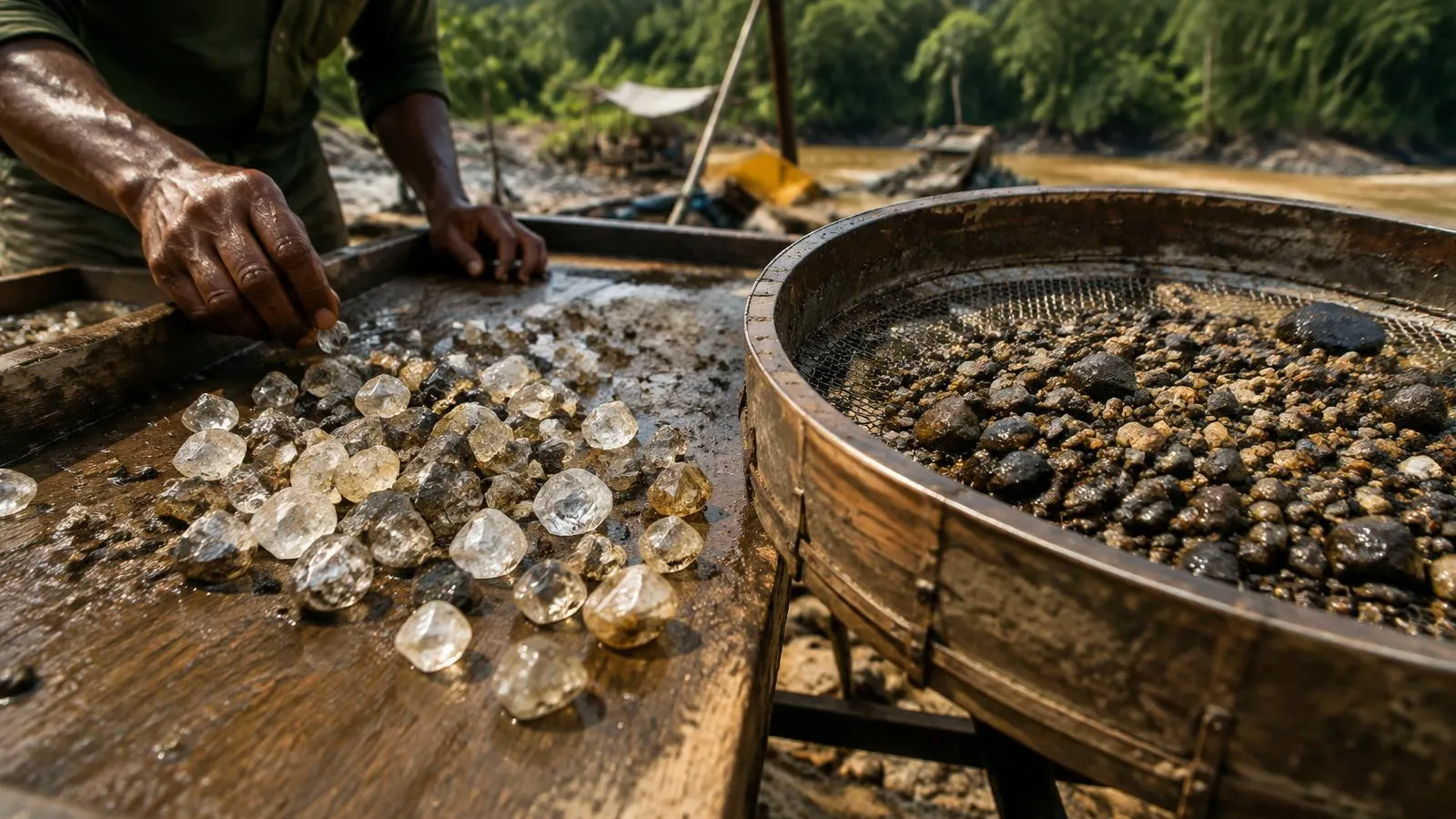
Diamond mines for sale in Brazil fall into two very different groups: alluvial deposits, where diamonds are recovered from river gravels and old terraces, often under small-scale permits, and kimberlite deposits, the primary rock source, which need industrial mining and large capital. Every rough diamond exported from Brazil needs a Kimberley Process certificate issued by the National Mining Agency (ANM). This guide explains the geology, the rules and the checks that separate a real diamond asset from a story.
Key takeaways
- Brazil was the world's leading diamond source in the 18th century, from Minas Gerais and later Bahia, before South Africa's discoveries.
- Most Brazilian production has come from alluvial deposits worked by garimpeiros. Kimberlite mining is newer: the Braúna mine in Bahia was described as South America's first kimberlite diamond operation.
- Under Law 10,743/2003, rough diamonds can only be exported or imported with a Kimberley Process certificate issued by the ANM.
- The CFEM royalty on diamonds is 2% of gross sales revenue net of sales taxes, under Law 13,540/2017.
- A diamond deposit's value depends on grade and on the price per carat of its diamonds, which can only be established from a large, properly sampled parcel.
In this article
Before Kimberley, there was Diamantina. In the early 1700s diamonds were found in the rivers of Minas Gerais, and for more than a century Brazil supplied most of the world's diamonds. The colonial town of Diamantina, now a World Heritage Site, was built on that trade. Later finds in the Chapada Diamantina in Bahia, and in Mato Grosso, Goiás and other states, kept Brazil on the diamond map.
Today Brazil is a small producer by global standards, but it still has known diamond districts, kimberlite fields and a long garimpo tradition. For buyers in the Gulf, India, Belgium and Israel, and for mining investors elsewhere, that makes Brazilian diamond assets interesting and difficult at the same time: geology with potential, paperwork that is often informal, and a certification system that must be respected for every stone that leaves the country.
§ 01 · Geology
What is the difference between alluvial and kimberlite diamond mines in Brazil?
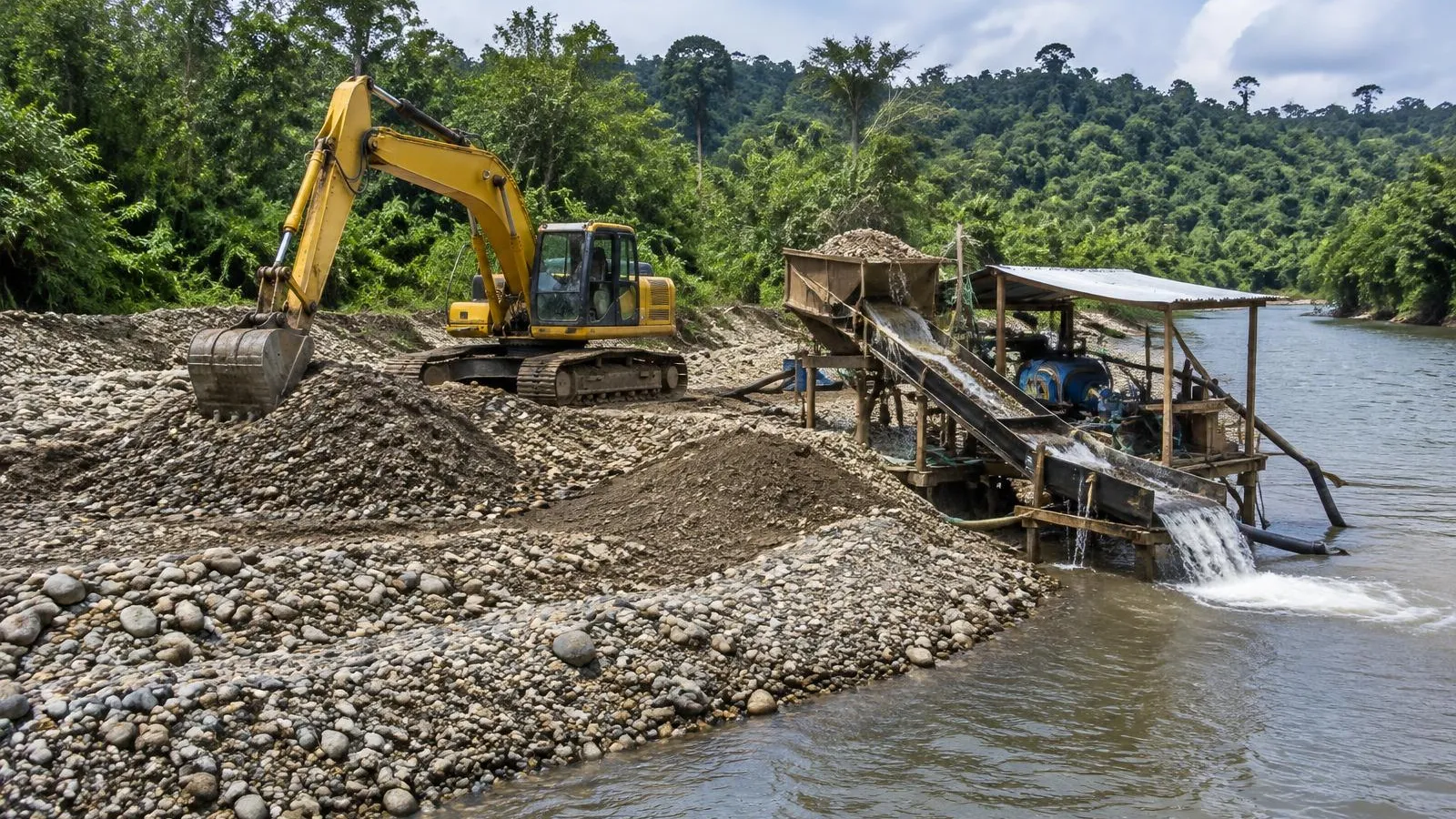
Kimberlite is the primary source: a volcanic rock that carried diamonds from deep in the mantle to the surface in pipes and dykes. Alluvial deposits are secondary: over millions of years, erosion freed diamonds from kimberlites and rivers concentrated them in gravels. The two produce very different mines.
Alluvial (secondary) deposits
- Diamonds in river beds, terraces and old gravels
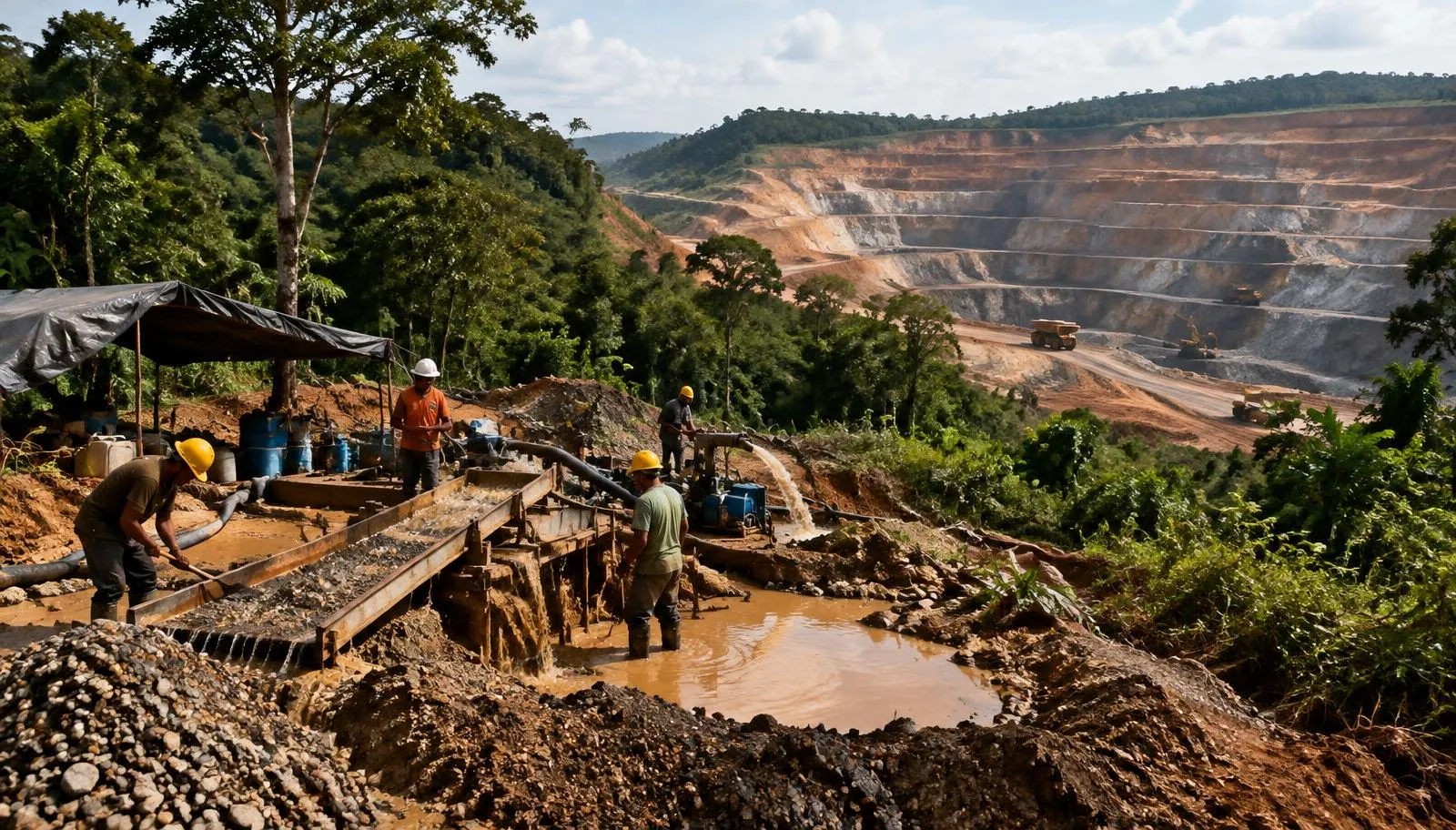
- Often worked by garimpeiros under PLG permits, with pumps, jigs and screens
- Lower capital, shallow workings, faster start
- Grades and stone sizes highly variable; good-quality stones are common because weak stones broke during transport
- Hard to estimate a resource; production history is the main evidence
Kimberlite (primary) deposits
- Diamonds in the host rock of a pipe or dyke
- Industrial open-pit or underground mining with dense media separation and X-ray sorting
- High capital and long development
- Most kimberlites carry no diamonds or too few to mine
- Resource estimated from drilling and large bulk samples, in carats per hundred tonnes
Brazil has many kimberlites, especially in Minas Gerais, Mato Grosso and Bahia, but few have proved economic. The Braúna mine near Nordestina in Bahia, owned by the Brazilian company Lipari Mineração, was described by Mining Weekly in 2017 as South America's first kimberlite diamond operation, with production projected at up to 400,000 carats a year. De Beers had held the deposit earlier but never developed it.
For a buyer, the type decides almost everything else: the title you need, the capital you will spend, the evidence you can expect and the way the asset should be valued.
Processing differs too. Alluvial operations typically wash gravel through screens and jigs, or simple rotary pans, and pick diamonds from the concentrate by hand. Kimberlite plants crush the rock, separate heavy minerals in dense media cyclones and recover diamonds with X-ray sorters, with secure, controlled final recovery. A buyer looking at an alluvial operation that wants to scale up will often need to invest in better recovery and security before production can grow.
§ 02 · Regions
Where are Brazil's main diamond regions?

Brazil's main diamond regions are in Minas Gerais, Bahia, Mato Grosso and neighbouring states, each with its own history and type of deposit.
| Region | State | What it is known for |
|---|---|---|
| Diamantina and the Espinhaço range | Minas Gerais | Historic alluvial production since the 1700s |
| Coromandel and the Alto Paranaíba | Minas Gerais | Alluvial diamonds known for large stones, and kimberlite fields |
| Chapada Diamantina | Bahia | Historic 19th-century diamond rush, alluvial and conglomerate deposits |
| Nordestina (Braúna) | Bahia | Kimberlite mine operated by Lipari Mineração |
| Juína and northern Mato Grosso | Mato Grosso | Kimberlite field and alluvial production |
| Goiás and Tocantins | Goiás, Tocantins | Alluvial diamonds, sometimes with gold, in river systems |
Some regions require special care. Diamond mining on indigenous lands is illegal in Brazil, and diamonds from the Roosevelt Indigenous Territory in Rondônia, home of the Cinta Larga people, have been at the centre of illegal mining and smuggling cases. Any offer that cannot show where its diamonds were mined, under which title, should be treated with suspicion.
§ 03 · Kimberley Process
How does the Kimberley Process work for diamond mines in Brazil?
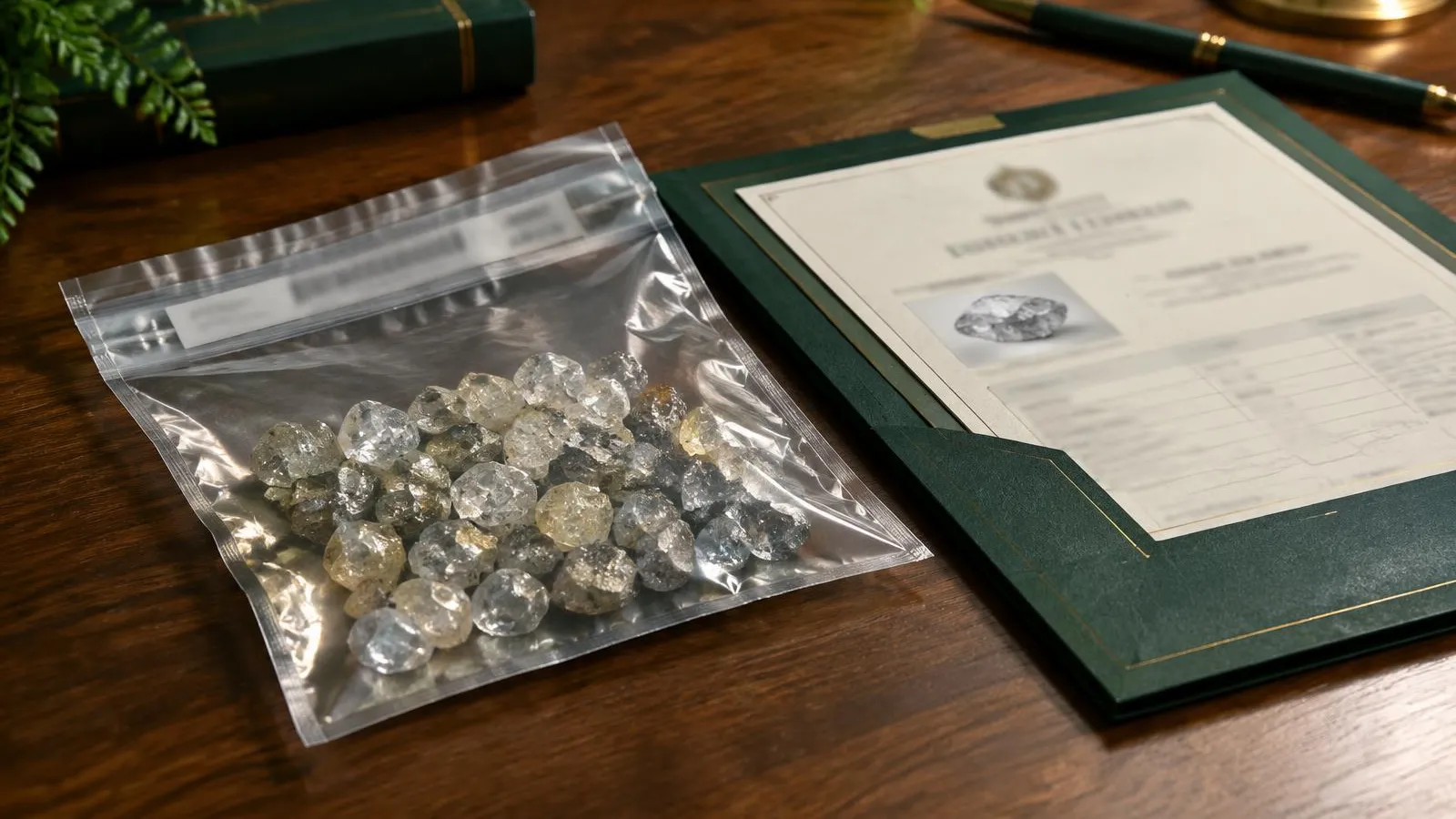
In Brazil, the Kimberley Process Certification Scheme is implemented by Law 10,743/2003. Rough diamonds can be exported or imported only with a Kimberley Process certificate, issued by the ANM, which replaced the former DNPM. Traders in rough diamonds register with the agency, and production and sales must be documented so that the certificate can trace each export to a lawful source.
- 01
Lawful production
Diamonds are mined under a valid ANM title (a PLG for garimpo or a mining concession) with an environmental licence.
- 02
Documented sale
Each sale of rough is invoiced and recorded, and the CFEM royalty is paid at 2% on gross revenue net of sales taxes.
- 03
Registered trader
The buyer of rough diamonds in Brazil is registered with the ANM for diamond trading.
- 04
Certificate for export
The exporter requests the Kimberley Process certificate from the ANM, which checks the origin documentation before issuing it.
- 05
Import abroad
The importing country's Kimberley authority accepts the parcel only with a valid certificate.
For a mine buyer, this matters in two ways. First, a mine that has sold diamonds legally will have a paper trail: invoices, royalty payments and, if it exported, Kimberley certificates. That trail is the best evidence of production. Second, a mine that cannot produce the trail may still have good geology, but its diamonds cannot be sold internationally until the paperwork is right.
International buyers rely on this system. The main rough diamond trading centres, including Antwerp, Dubai, Mumbai and Ramat Gan, accept imports only with a valid Kimberley certificate, and many also apply their own responsible-sourcing rules. A Brazilian mine whose diamonds arrive with clean certificates and invoices can sell into these markets; one whose diamonds cannot is limited to the informal market, at a discount and with risk.
§ 04 · Titles
What mining title does a Brazilian diamond mine need?

A Brazilian diamond mine needs either a garimpo permit (PLG) for small-scale alluvial work or a mining concession for industrial mining. Diamonds are listed among the garimpo minerals under Law 7,805/1989, which is why so much alluvial production happens under PLGs. Kimberlite mining requires a concession, with an approved research report, an economic plan and an environmental licence.
The same rules on ownership apply as for any mineral. Titles are held by Brazilians or by companies incorporated in Brazil, whose shareholders can be foreign. A PLG belongs to a Brazilian individual or cooperative and cannot be held by an ordinary company, so foreign investors in alluvial diamonds usually partner with the permit holder. See can foreigners buy a mine in Brazil and PLG versus mining concession for the details.
Check the substance on the title. A title for gold does not automatically cover diamonds, and the reverse is also true. Adding a substance requires an amendment approved by the ANM. Combined gold and diamond offers often hide this gap.
Land deserves the same attention as the title. Alluvial diamonds lie along rivers, which often form property boundaries, run through several farms and sit inside permanent preservation areas protected by environmental law. A mine that works a river must have the landowners' agreement and a licence that allows work in or near the watercourse, with a plan for restoring the banks. Our founder's background as a land surveyor is especially useful here: river boundaries are among the most disputed in rural Brazil.
§ 05 · Value
How is a diamond deposit valued?

A diamond deposit is valued on two numbers multiplied together: how many carats it contains per tonne of rock or gravel, and how much those carats are worth on average. Both are hard to measure, and the second is often where sellers overstate most.
| Input | What it means | How it is established |
|---|---|---|
| Grade | Carats per hundred tonnes (cpht) of rock or gravel | Drilling and bulk sampling, processed through a proper plant |
| Tonnage | How much diamond-bearing material exists | Geological model from drilling, trenching and pitting |
| Average price per carat | Average value of the diamonds, in US$ per carat | Valuation of a large, representative parcel by independent diamond valuers |
| Size distribution | Share of large stones, which drive value | Requires a large parcel; small samples miss large stones |
| Costs and recovery | Mining, processing and the share of diamonds actually recovered | Plant design and trial mining |
The parcel size problem is central. Large stones are rare but carry a disproportionate share of value. A small sample may contain none, or one, and either result misleads. That is why diamond projects use bulk samples of thousands of tonnes and independent valuations of the resulting parcels. Valuations based on a handful of impressive stones are not valuations.
Market conditions matter as well. Prices for many categories of natural rough diamonds weakened in recent years, and the industry has cited competition from laboratory-grown diamonds among the reasons. Large, high-quality natural stones have held their appeal better than small, lower-quality goods. A valuation should therefore use a current price assessment for the deposit's actual size and quality mix, not an average from a stronger market.
Technical reports under NI 43-101 or JORC exist for some diamond projects and are valuable when they do. Read them as reporting standards, not certificates. Our guides on NI 43-101 and historical estimates and on JORC versus Brazilian ANM reports apply to diamonds too.
§ 06 · Due diligence
What should you check in diamond mines for sale in Brazil?
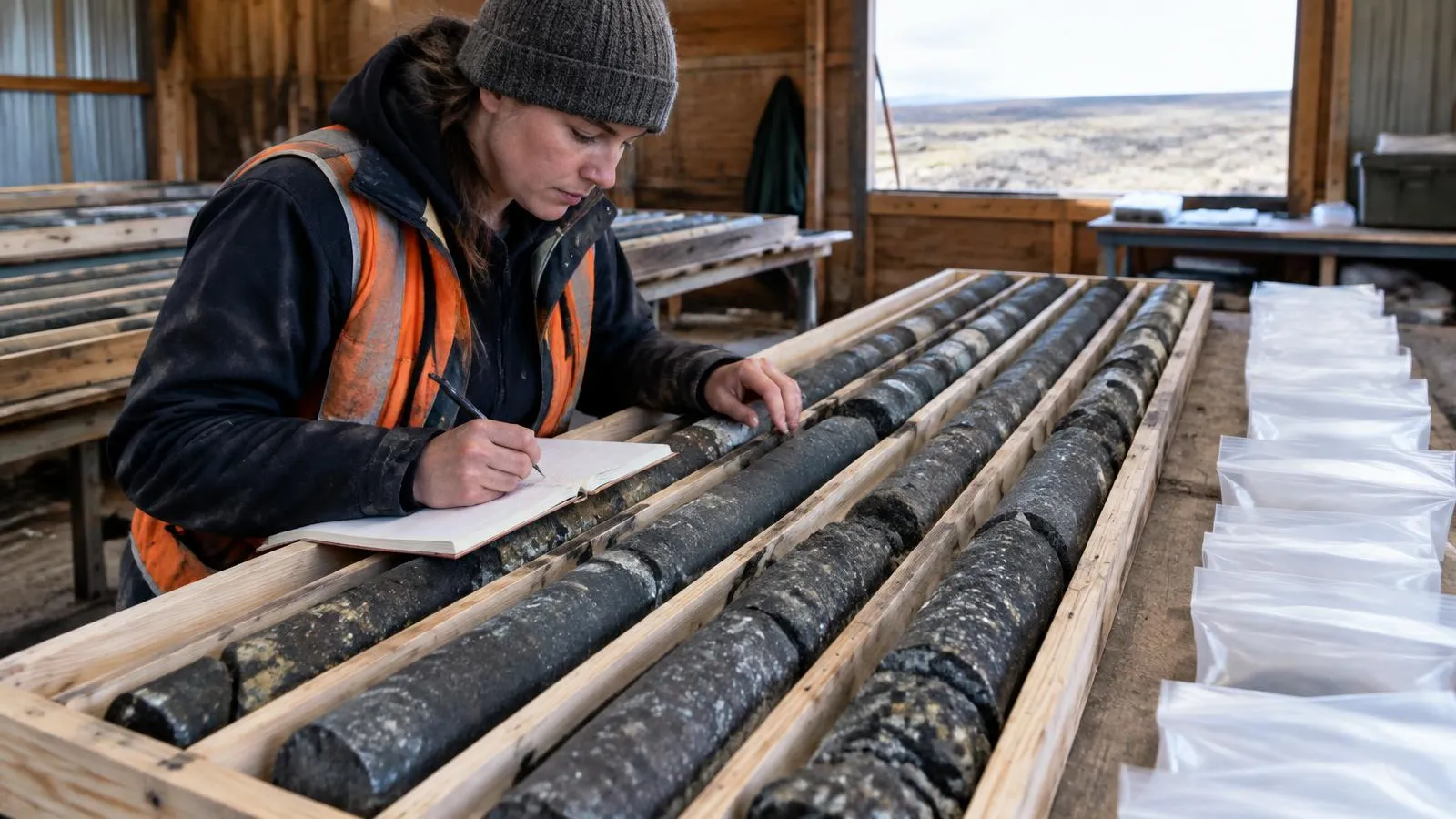
Check the title, the licence, the land, the production paper trail and the diamonds themselves, in that order. The early checks are cheap and often decisive.
Plan for a staged deal. Because diamond grades and values are so uncertain until a large parcel has been recovered and valued, most sensible transactions start with an option or exclusivity period, followed by a funded bulk-sampling or trial-mining phase with the buyer's representatives present. The final price, or part of it, then depends on what the sampling shows. Sellers confident in their deposit usually accept this; sellers who refuse any testing are telling you something about their own expectations.
Diamond mine due diligence
- ANM process number, holder, title type and the substances covered (diamond, and gold if relevant)
- Environmental licence, its conditions and expiry
- Landowner agreement and map against indigenous lands, conservation units and the border strip
- Production records, sales invoices and CFEM receipts for several seasons
- Kimberley Process certificates for any exports, matched to production
- Independent valuation of a representative parcel of the mine's diamonds
- For kimberlites: drilling, bulk sampling results and a technical report
- Plant description: screens, jigs, dense media separation, X-ray sorting, and security of the recovery area
Security deserves particular attention in diamond operations. Diamonds are small and valuable, and theft at the recovery stage is a known risk worldwide. A well-run mine controls access to the recovery area, uses secure sorting, records every stone and reconciles recoveries with plant throughput. Weak controls are both a theft risk and a reason to doubt the production records.
For combined assets, run the gold checks in parallel. Our guide to verifying a gold mining concession covers them.
§ 07 · Red flags
What are the red flags in Brazilian diamond mine offers?

Brazilian diamond offers carry the red flags common to all mining deals, plus some specific to diamonds. The common thread is value claimed without evidence that a buyer can check.
One famous stone
A mine marketed with photos of a single large diamond. One stone says little about grade or average value.
Value in the ground
A price built from assumed carats times retail prices. Diamond deposits are valued on sampled grade and independently valued parcels.
No Kimberley trail
Claims of past exports without matching certificates, or rough offered for export without one.
Wrong substance on the title
A gold title presented as a diamond mine, or the reverse, without an ANM amendment.
Unclear location
Coordinates near indigenous lands or conservation units, or no process number at all.
Fees up front
Payments requested to see the parcel, visit the mine or reserve the deal before signed agreements.
Combined gold and diamond projects deserve extra care with prices. A teaser that values both minerals generously, with no technical report and no production evidence, can reach very large numbers very quickly. Check that the price matches what the project's own documents could support.
Consider a typical case, described here as a hypothetical example. A seller offers an alluvial diamond operation with photos of several large stones and a price based on an assumed annual production. The title turns out to be a PLG held by the seller's relative, covering gold only. Sales were made informally, without invoices, and no Kimberley certificates exist. The gravels may still be worth working, but the asset on offer is a partnership with a permit holder that first needs a title amendment and proper sales records, not a diamond mine ready to buy.
§ 08 · Our method
How BRAZIL MINE works on diamond assets

We verify before we offer. For diamond assets that means checking the ANM title and the substances it covers, the licence, the land, the production and royalty records, and the Kimberley trail for any exports. Valuation of diamonds is a specialist task, and we encourage buyers to appoint independent diamond valuers and geologists.
- KYC and NDA before confidential information is shared.
- Title and boundary verification in-house: our founder is a mathematician and land surveyor.
- Kimberley and royalty records reviewed before presentation.
- Independent valuers and geologists chosen by the buyer.
- No advance fees at any stage.
Looking at a diamond mine or a gold-and-diamond project in Brazil?
Send us the ANM process number or the teaser you received. We will tell you what the title covers and what evidence to ask for.
Request a confidential reviewSee our diamond projects for sale in Brazil page, and for coloured gemstones, our guide on how to buy a gemstone mine in Brazil.
§ FAQ
Frequently asked questions
Are there diamond mines for sale in Brazil?
Yes. Alluvial operations, kimberlite projects and combined gold and diamond assets change hands, mostly privately. Each needs verification of title, licence, production records and the diamonds themselves.
Does Brazil participate in the Kimberley Process?
Yes. Law 10,743/2003 implements the Kimberley Process Certification Scheme in Brazil. Rough diamonds can be exported or imported only with a certificate issued by the ANM.
What is the royalty on diamonds in Brazil?
The CFEM royalty on diamonds is 2% of gross sales revenue net of sales taxes, under Law 13,540/2017.
What is the difference between alluvial and kimberlite diamonds?
Kimberlite is the primary rock that brought diamonds to the surface. Alluvial deposits are river gravels where erosion concentrated diamonds freed from kimberlites. Alluvial mining is cheaper and more variable; kimberlite mining is industrial and capital-intensive.
Is there a kimberlite diamond mine in Brazil?
Yes. The Braúna mine near Nordestina, Bahia, owned by Lipari Mineração, was described in 2017 as South America's first kimberlite diamond operation.
Where are diamonds found in Brazil?
Mainly in Minas Gerais (Diamantina, Coromandel), Bahia (Chapada Diamantina, Nordestina), Mato Grosso (Juína) and river systems in Goiás, Tocantins and other states.
Can a foreign company own a diamond mine in Brazil?
Through a Brazilian company, yes. Titles are held by companies incorporated in Brazil, whose shareholders can be foreign. Garimpo permits for alluvial work are limited to Brazilian individuals and cooperatives.
How is the value of a diamond deposit established?
From its grade, in carats per hundred tonnes, and the average price per carat of its diamonds, established by independent valuation of a large, representative parcel from bulk sampling or production.
Should I buy a diamond mine on the basis of a few large stones?
No. A few large stones show that diamonds exist, not what the deposit is worth. Value depends on grade and average price per carat across a large, representative parcel.

Mathematician, Land Surveyor and Licensed Real Estate Broker · CRECI-TO 4631
BRAZIL MINE — Mining & Minerals
Keep reading