Gemstones · United States · Gulf · Asia · gem dealers and private investors
Paraíba tourmaline mines in Brazil: an investor's guide
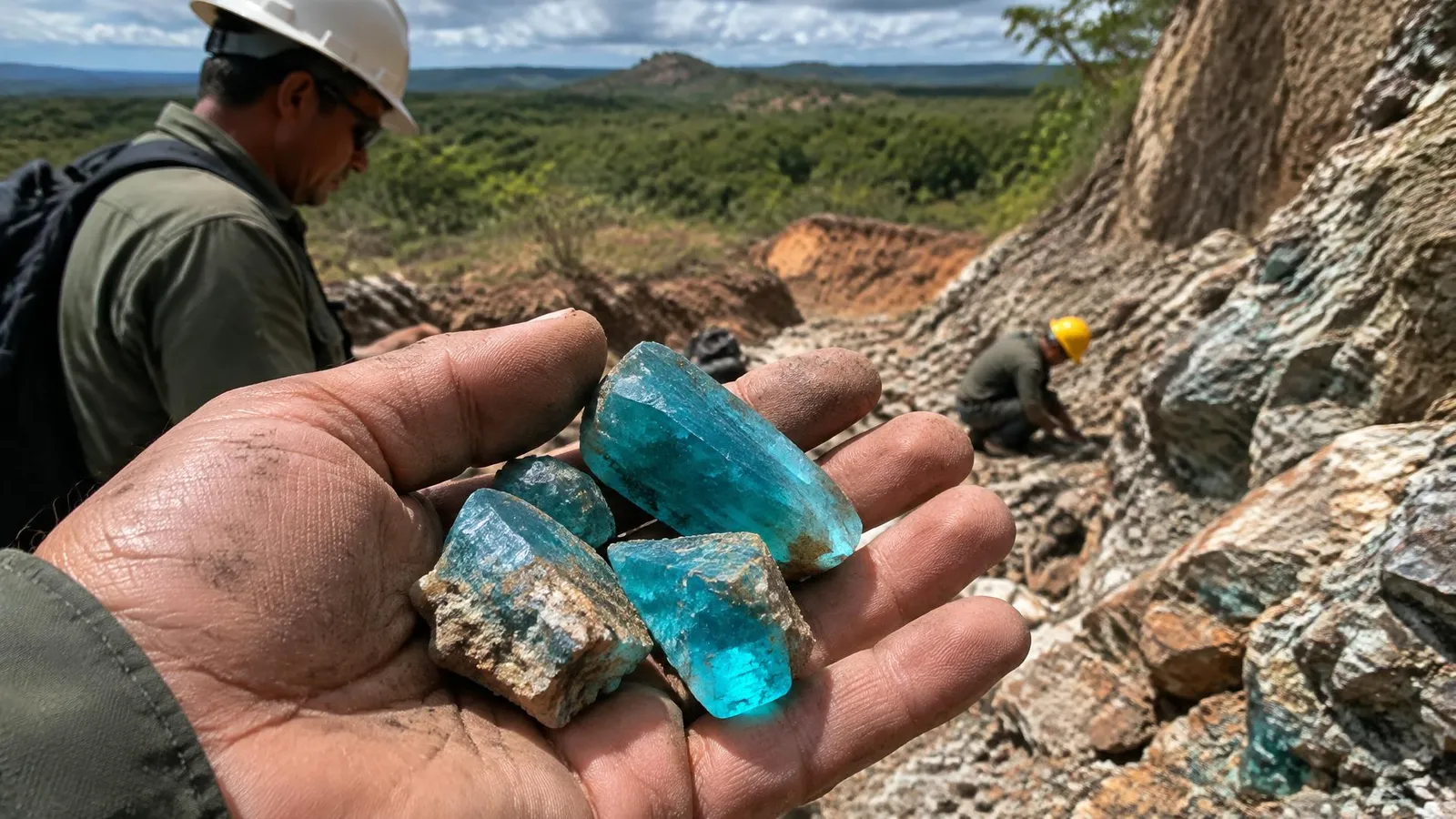
Paraíba tourmaline is a copper-bearing tourmaline first found in the late 1980s near São José da Batalha, in Paraíba State, Brazil, and Brazilian stones still command the highest prices of any source. That is the short answer. The harder question for an investor is what you are actually buying when someone offers you a “Paraíba tourmaline mine”: a title, a hill of pegmatite, a few parcels of rough, or a story. This guide shows you how to tell them apart.
Key takeaways
- Paraíba tourmaline is defined by copper and manganese, not by geography. Since 2006 the trade has used the name for stones from Brazil, Mozambique and Nigeria alike.
- Brazilian stones, from Paraíba and the neighbouring state of Rio Grande do Norte, are typically valued well above African ones. Origin is proven by laboratory analysis, not by the seller's word.
- Brazilian supply has been thin for years. The richest zones of the original Batalha mine were largely worked out by the mid-1990s.
- In Brazil, every mineral deposit belongs to the Federal Union. What you buy is a mining title registered with the ANM, or a company that holds one, never the gems in the ground.
- A serious offer survives five checks: title, environmental licence, surface rights, production evidence and laboratory reports for the stones it has produced.
In this article
Few gemstones carry a backstory like this one. A prospector named Heitor Dimas Barbosa spent years digging into the hills around São José da Batalha before the first stones with the now famous neon blue colour came out of a pegmatite in 1987. When the material reached the international gem shows around 1989 and 1990, prices climbed from a few hundred dollars per carat to thousands within days. The colour had simply never been seen in a tourmaline before.
Thirty-five years later, the Brazilian deposits are small, irregular and mostly worked by hand. Material from Mozambique and Nigeria now supplies most of the market under the same name. That combination, a famous origin with very little new production, is exactly why Paraíba tourmaline attracts both serious buyers and opportunistic sellers.
§ 01 · The stone
What is Paraíba tourmaline, and why does Brazil still matter?
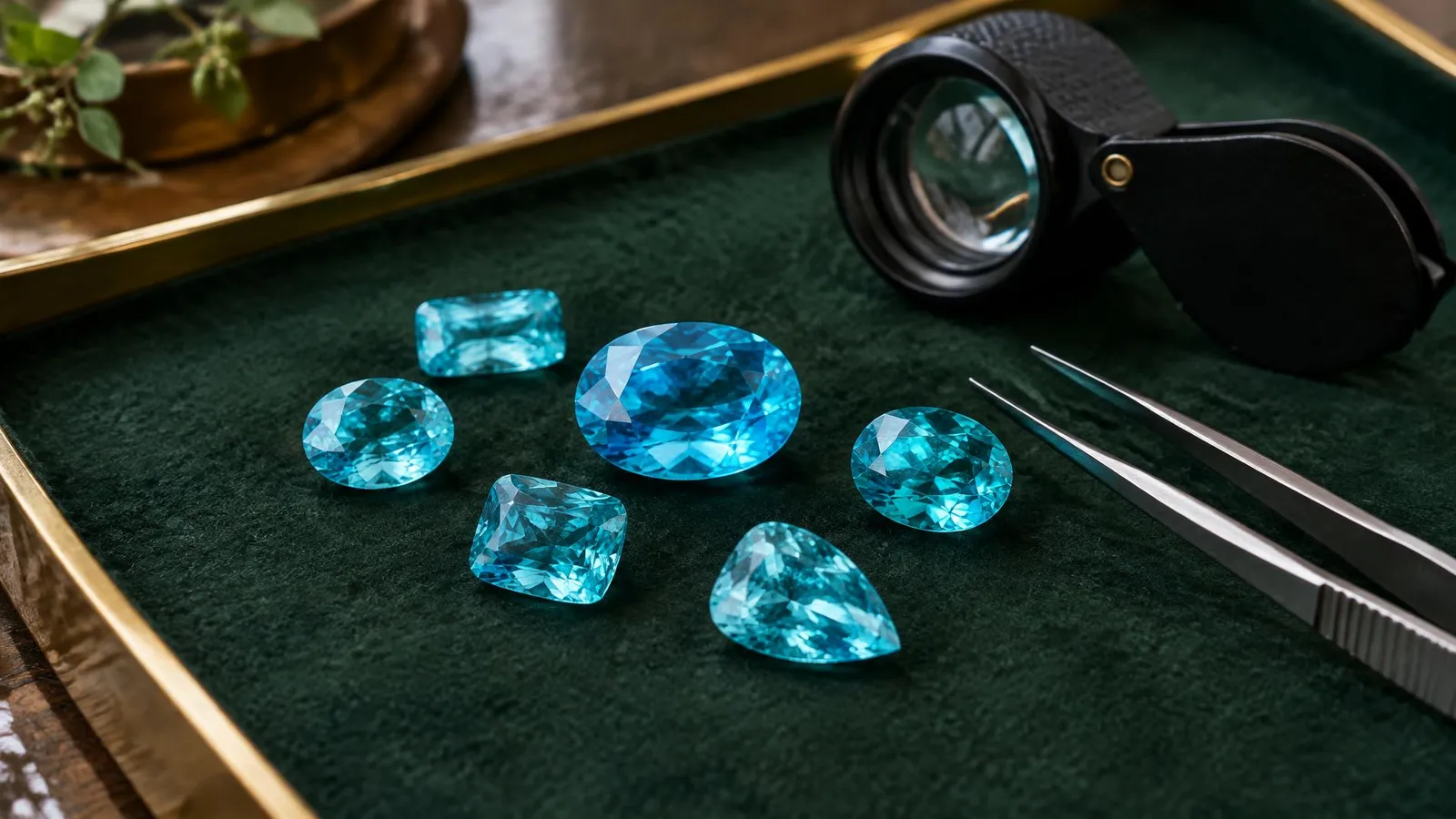
Paraíba tourmaline is a variety of elbaite tourmaline coloured mainly by copper, with manganese also present. Copper is what produces the electric blue and green that gem dealers call “neon”. Iron can make tourmaline blue too, but iron blues, sold as indicolite, never reach the same glow. Mineralogists call the material cuprian elbaite; the trade calls it Paraíba, after the state where it was first found.
The name stopped being a geographic label in 2006. That February, the international gem laboratory conference accepted “Paraíba tourmaline” as a variety name regardless of origin, and the Laboratory Manual Harmonisation Committee (LMHC), which aligns the wording of the main gem laboratories, followed in April. The CIBJO Blue Book, the jewellery industry's nomenclature reference, adopted the same position. A copper-bearing blue tourmaline from Mozambique is therefore a Paraíba tourmaline, too.
Copper and manganese
Copper creates the neon blue to green. Manganese contributes to violet and purple tones, which heat treatment can shift towards blue.
Variety, not origin
Since 2006, “Paraíba” describes the chemistry. Origin is a separate statement that only a laboratory report can support.
Three countries
Brazil (Paraíba and Rio Grande do Norte), Nigeria (found around 2000) and Mozambique (first recovered in 2001, widely sold by 2005).
Brazil on top
According to GIA, Brazilian Paraíba tourmalines are typically more highly valued than their African counterparts.
So why does Brazil still matter if most stones on the market are African? Because the market pays for it. The original Brazilian material tends to have higher copper content and stronger saturation, and collectors pay for the provenance. GIA's research on origin determination found Brazilian stones averaging about 11,400 parts per million of copper, against under 2,000 for African stones. That gap shows up in colour, and then in price.
For an investor, the consequence is direct. A Brazilian deposit that can prove its stones are Brazilian sits on the most valuable end of the market. A deposit that cannot prove it is, commercially, just another source of copper-bearing tourmaline. We cover that difference in detail in our companion piece on Brazilian versus African Paraíba tourmaline.
§ 02 · The district
Where are the Paraíba tourmaline mines in Brazil?
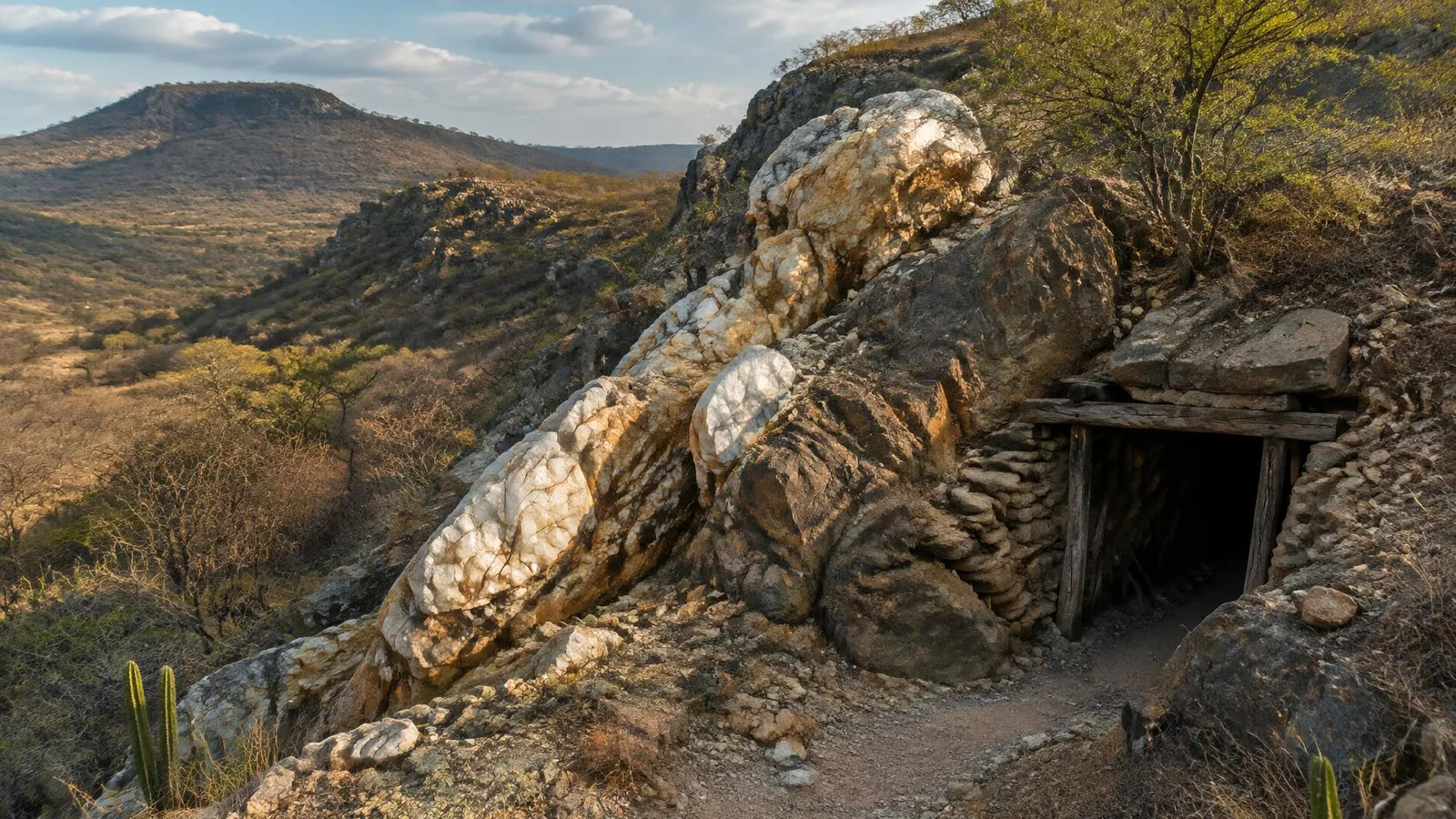
Brazilian Paraíba tourmaline comes from granitic pegmatites in a small district that straddles the border between Paraíba and Rio Grande do Norte, in the semi-arid northeast. Pegmatites are coarse-grained veins and pods that crystallised late from granitic melts. They are where many of Brazil's coloured gemstones form, and they are notoriously irregular.
| Locality | State | What is known |
|---|---|---|
| Mina da Batalha, near the village of São José da Batalha | Paraíba | The original discovery. Produced the finest and most famous material. Most of its output came in the early years, and the richest zones were largely worked out by the mid-1990s. |
| Other workings around São José da Batalha | Paraíba | Smaller mines and garimpos in the same pegmatite field, producing sporadically. |
| Mulungu and Alto dos Quintos | Rio Grande do Norte, Parelhas area | Found after Batalha. Have produced limited quantities of cuprian elbaite. GIA measured lower copper in Mulungu stones than in top Batalha material. |
The host rocks belong to the Equador Formation, a sequence of Late Proterozoic metamorphic rocks. Geologists still do not agree on where the copper came from, which matters to an investor: without a clear geological model, nobody can reliably predict where the next gem pocket sits. Exploration here is closer to careful prospecting than to the drill-and-model approach used for gold or copper.
Other Brazilian pegmatite districts, especially in Minas Gerais and Bahia, produce tourmaline in many colours, including copper-free blues. An offer of “Paraíba tourmaline” from those regions should come with laboratory evidence of copper, because without it the stones are a different, much cheaper product.
§ 03 · Supply
Why is Brazilian Paraíba tourmaline so scarce?
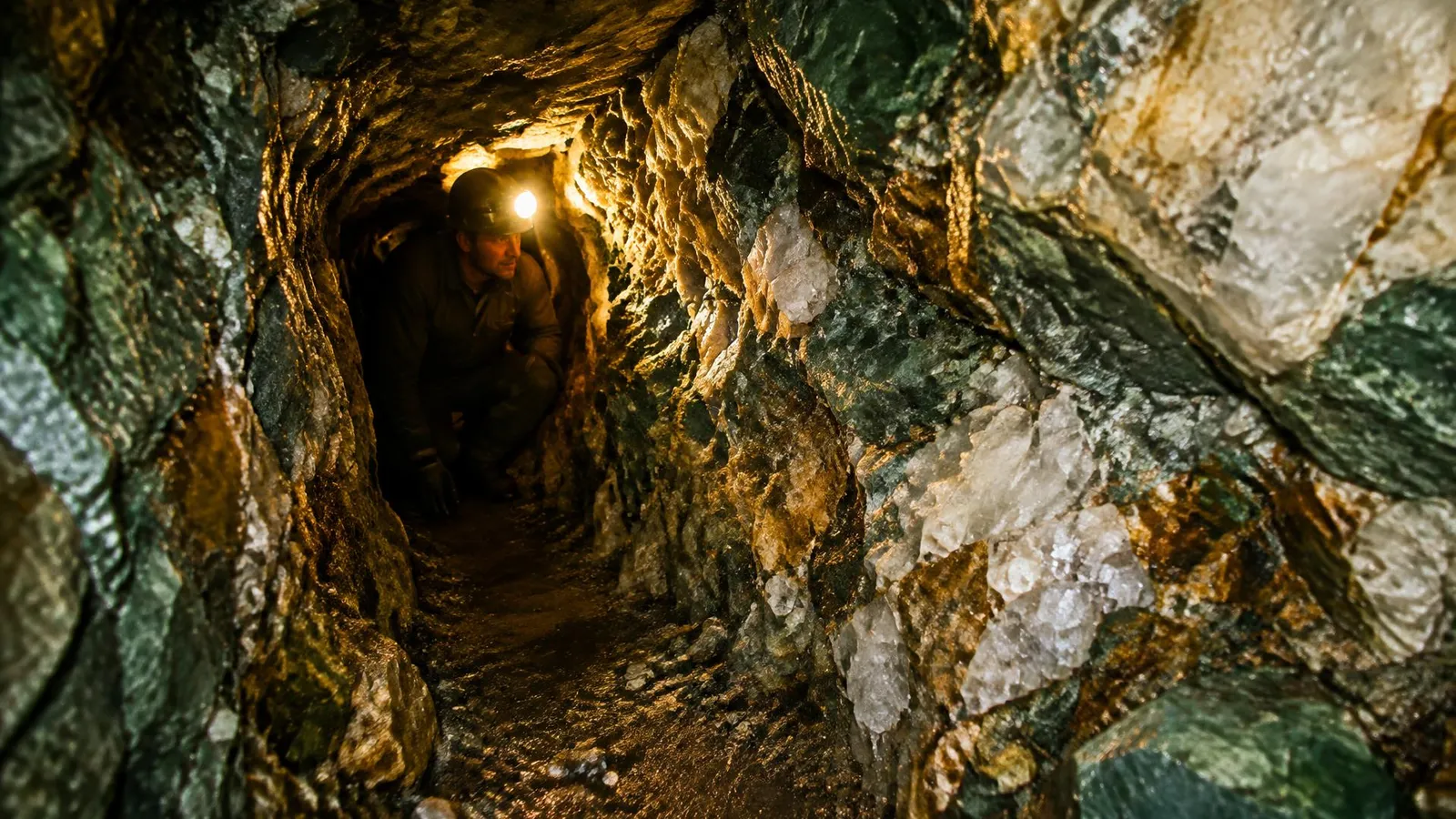
Brazilian Paraíba tourmaline is scarce because the deposits are small, the gem pockets are rare inside them, and the best zones were mined early. Dealers interviewed by Rapaport in 2018 described Brazilian supply as close to nil, with very little new material reaching the market. A Brazilian business column has described the São José da Batalha deposit as practically exhausted, with output that is now very low.
Three geological facts explain the scarcity. First, the copper-bearing zones are a small part of each pegmatite. Second, gem-quality crystals grow only in open cavities, the “pockets”, which are scattered and unpredictable. Third, most stones that come out are small; clean Brazilian stones above a few carats are genuinely rare.
Scarcity cuts both ways for an investor. It supports price, and dealers have reported asking prices above US$100,000 per carat for exceptional Brazilian stones; Rapaport cited a 4.61-carat oval offered at US$150,000 per carat. But scarcity also means that the value of a mine depends on finding the next pocket, not on a measured tonnage. A mine can produce nothing for months and then pay for years in a single week, or never again.
§ 04 · The title
What mining title does a Paraíba tourmaline mine hold?
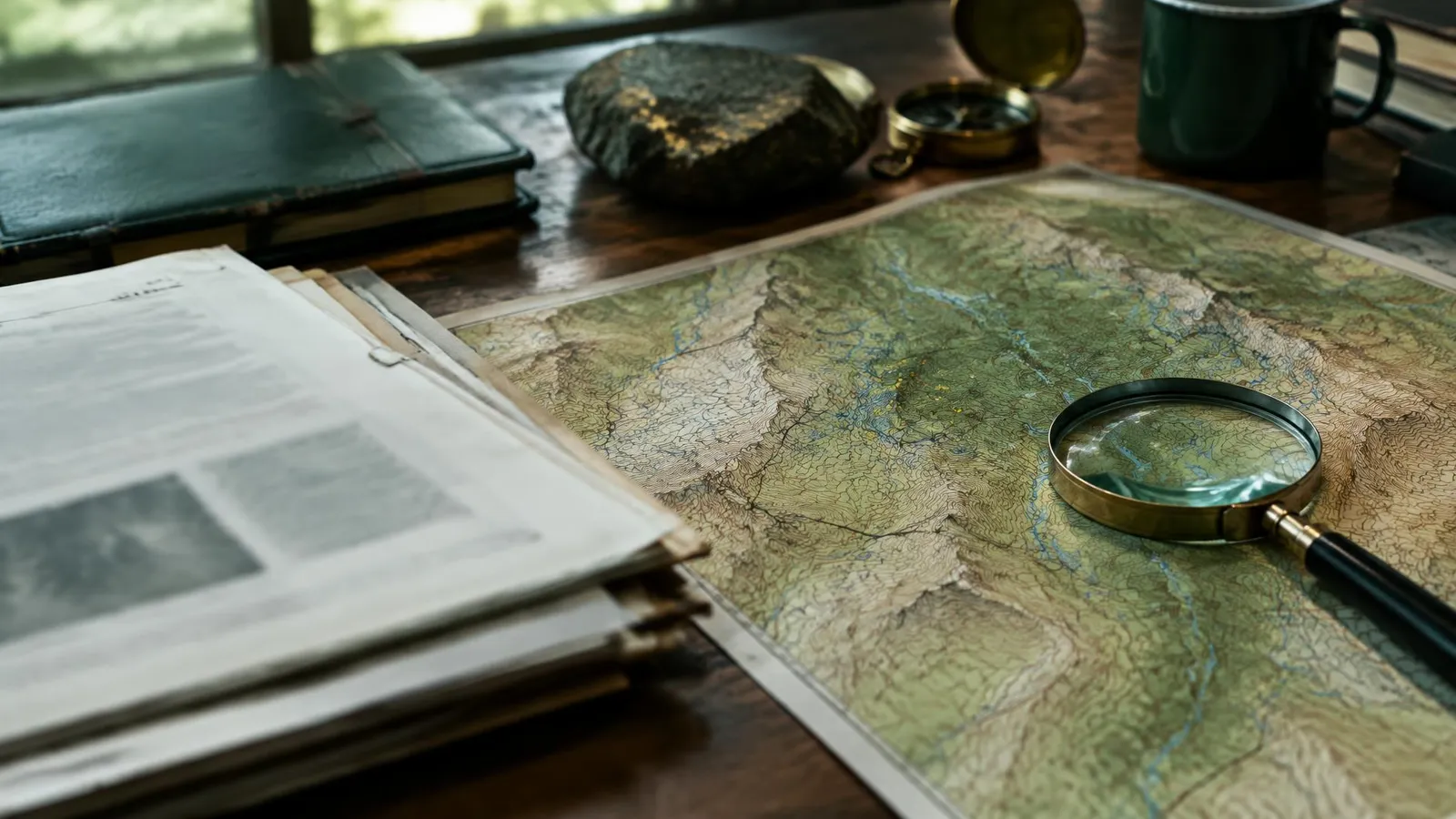
Under Article 176 of the Brazilian Constitution, mineral deposits belong to the Federal Union, separate from the land surface. Nobody owns the gems in the ground. What exists, and what you can acquire, is a right to mine, granted by the National Mining Agency (ANM) to a Brazilian individual, a cooperative or a company incorporated in Brazil. Foreign investors therefore act through a Brazilian company, as we explain in can foreigners buy a mine in Brazil.
PLG (Permissão de Lavra Garimpeira)
- Small-scale mining permit under Law 7,805/1989; gemstones are among the minerals that qualify.
- Up to 50 hectares for an individual; larger areas only for cooperatives.
- Valid for up to 5 years, renewable at the ANM's discretion.
- Held by Brazilian individuals or garimpeiro cooperatives, not by ordinary companies.
- Requires a prior environmental licence.
Concessão de lavra (mining concession)
- Industrial mining title, granted after an exploration phase with an approved final research report.
- Requires an economic development plan (PAE) and an operating licence.
- Held by a company incorporated in Brazil, which a foreign group can own.
- No fixed expiry while the mine operates within the rules.
- Transfers need the ANM's prior consent.
Most gem workings in the Paraíba district have historically operated under PLGs or as informal garimpos. That is not a problem in itself, but it shapes what a foreign buyer can do. A PLG cannot simply be bought by a foreign company. The usual routes are to partner with the PLG holder or cooperative under a supply or offtake agreement, or to apply for an exploration permit over free ground and build towards a concession. Our article on PLG versus mining concession explains the same distinction for gold; the legal logic is identical for gems.
There is also a middle step that sellers sometimes present as a full mine: the Guia de Utilização, which allows limited extraction during the exploration phase. It is a legitimate instrument, but it is temporary and capped. If the offer says “mine” and the title says exploration permit or Guia de Utilização, the price should reflect an exploration project.
§ 05 · Value
What makes a Paraíba tourmaline deposit valuable?
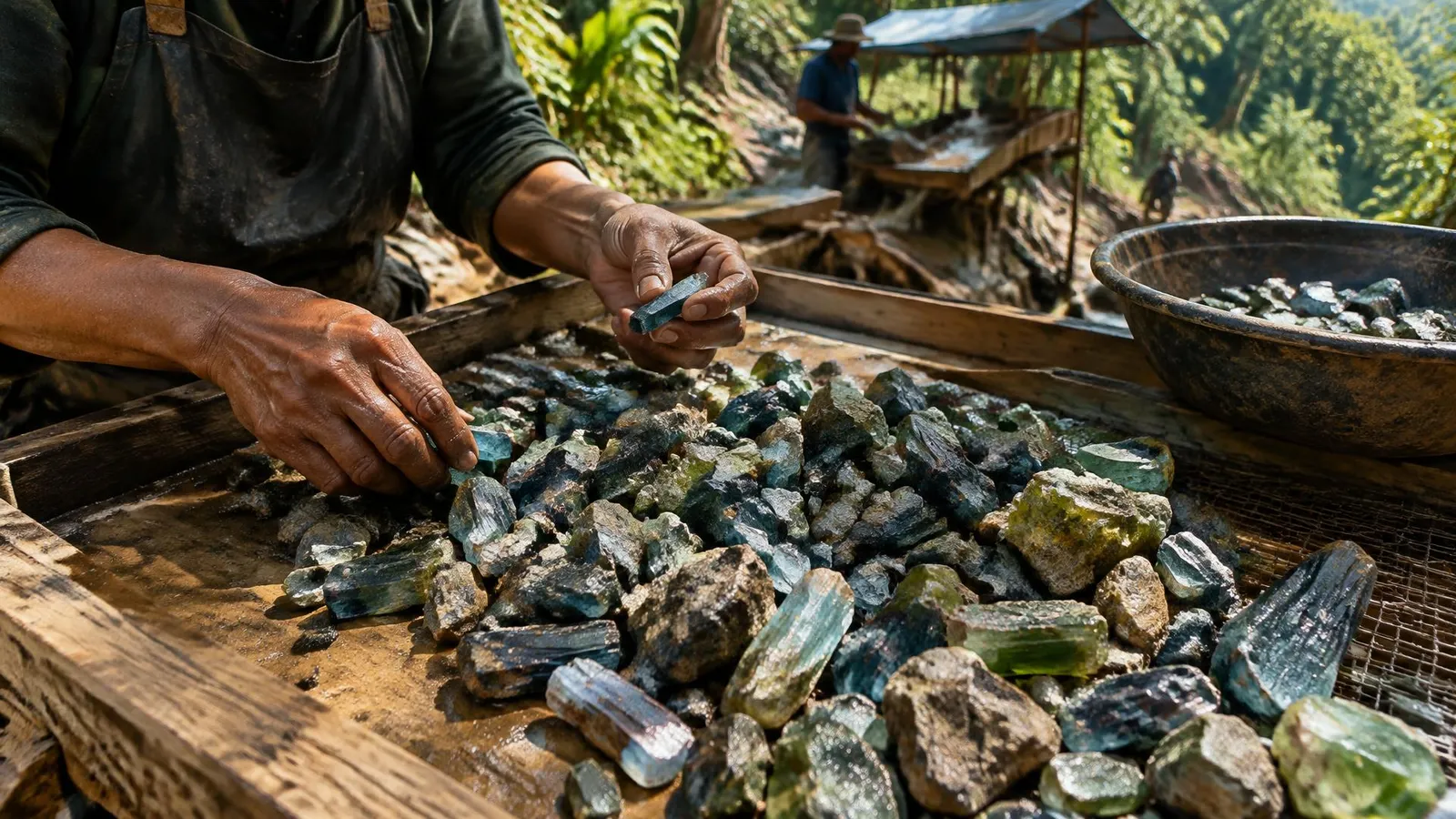
A Paraíba tourmaline deposit is valuable when it combines a clean title, provable Brazilian origin and a production history you can check. Geology matters, but in gem pegmatites it rarely produces the kind of measured resource that a gold investor expects. Most gem deposits will never carry an NI 43-101 or JORC resource estimate, because the value sits in rare pockets that drilling cannot sample well.
| Driver | Why it matters | Evidence to ask for |
|---|---|---|
| Copper-bearing material | Without copper it is not Paraíba tourmaline | Laboratory reports naming the variety on stones from this mine |
| Brazilian origin | The largest single price factor | Origin opinions from GIA, SSEF, Gübelin, AGL or a comparable laboratory |
| Colour quality | Neon blue with strong saturation carries the top prices | Photos under daylight, graded parcels, past sales by colour |
| Production history | Shows the pegmatite actually yields pockets | Production logs, sales invoices, CFEM royalty receipts |
| Unworked pegmatite | Room for future pockets | Geological map, trenches, adits, independent geologist's site report |
| Title and licence | Without them, nothing can be sold legally | ANM process, environmental licence, landowner agreement |
Royalties are part of the economics. Brazil charges the CFEM mining royalty on the gross sales revenue of the mineral, net of sales taxes. Under Law 13,540/2017, gold pays 1.5% and diamonds and other mineral substances not named elsewhere pay 2%, which is the rate generally applied to gemstones. Brazilian law also gives the landowner a share of the mine's results, so surface agreements belong in the valuation.
The other factor is how the stones reach the market. A mine that sells rough with invoices, to identified buyers, and that pays its royalty leaves a paper trail that supports both legality and origin. A mine that sells informally may produce good stones, but it cannot prove what it produced, and its value to an institutional buyer is much lower.
§ 06 · Due diligence
How do you verify a Paraíba tourmaline mine before you invest?
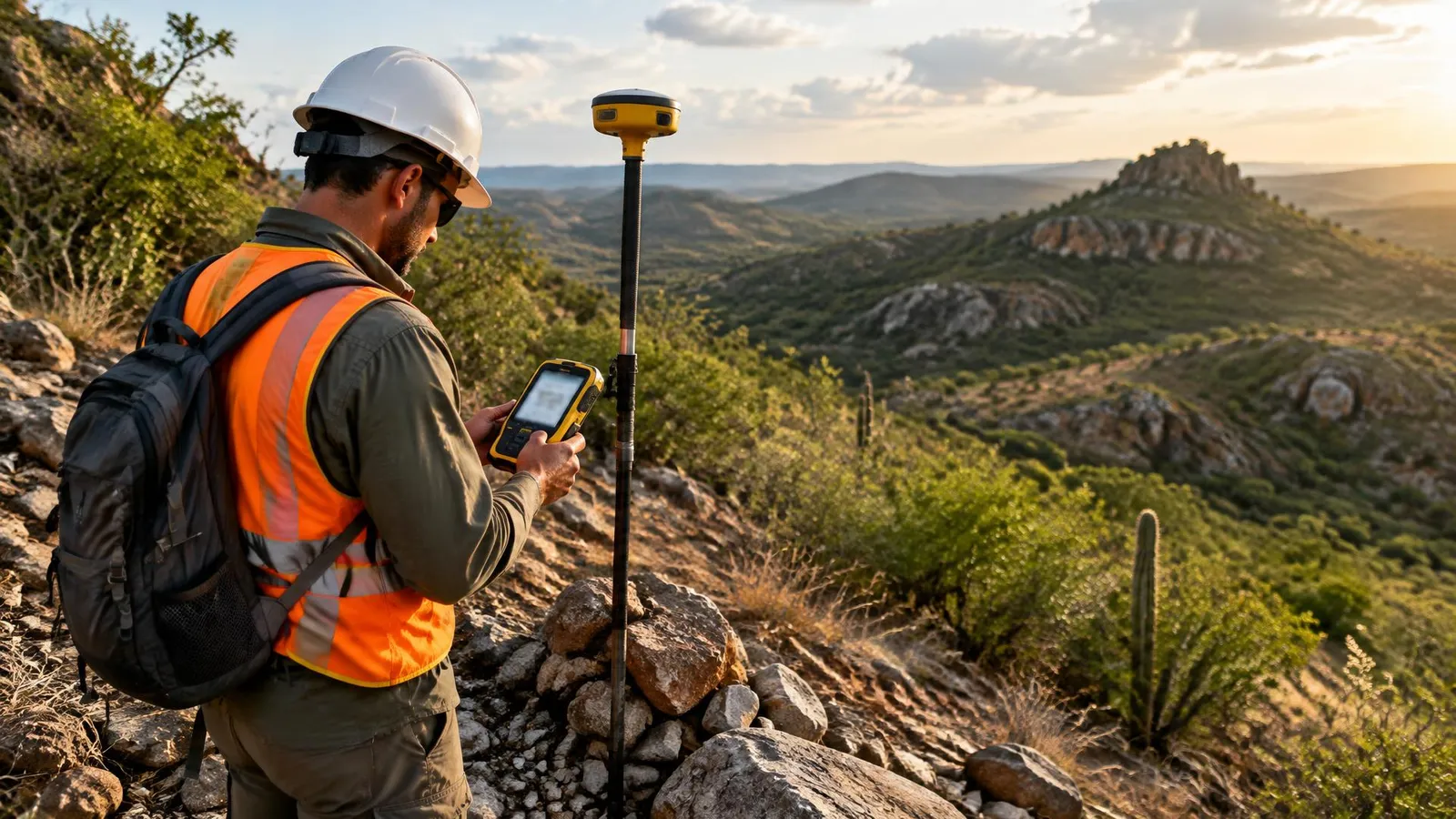
You verify a Paraíba tourmaline mine in a fixed order: title, location, environmental licence, surface rights, production evidence, and only then the stones. The order matters because each step is cheaper than the next and can end the conversation early.
- 01
Read the ANM process
Get the process number. Check on the ANM's public Cadastro Mineiro the holder, the substance (it should name tourmaline or gemstones), the phase and any pending obligations or deadlines.
- 02
Check the polygon on the ground
Plot the SIGMINE polygon against satellite imagery and visit. The workings you are shown must sit inside the titled area, not next to it.
- 03
Confirm the environmental licence
In Paraíba the state agency is SUDEMA; in Rio Grande do Norte, IDEMA. Ask for the licence, its conditions and its expiry date.
- 04
Map the surface rights
Identify the landowner, the property registration and any agreement for access and compensation. Disputes over land are a common reason gem projects stall.
- 05
Test the production story
Compare production logs, sales invoices and CFEM payments. They should tell the same story, month by month.
- 06
Send stones to a laboratory
Pick sample stones produced at the mine, in your presence if possible, and send them for variety and origin reports to a laboratory you choose and pay.
Documents to request before any offer
- ANM process number, title document and the holder's identification
- Corporate documents of the holding company and its shareholders, if a company holds the title
- Environmental licence with conditions and expiry
- Landowner identification and access agreement
- Production log, sales invoices and CFEM payment receipts for at least the last two years
- Laboratory reports on stones from this mine, with report numbers you can verify online
- A geologist's report on the pegmatite, workings and remaining potential
Laboratory reports deserve a note. Major laboratories let you verify a report number online. A report on a beautiful stone proves the stone, not the mine. What you want is a set of reports on stones you saw come out of this specific mine, or a production history that ties reports to dated invoices. Our article on JORC versus Brazilian ANM reports explains why Brazilian regulatory filings are a starting point, not a substitute for independent technical work.
§ 07 · Red flags
What are the red flags in a Paraíba tourmaline mine offer?

The red flags in a Paraíba tourmaline offer are the same ones we see across Brazilian mining, plus a few specific to gems. The famous name attracts sellers who have no title, no production and no stones of their own.
No process number
A real title has one. Anything presented only with photos, videos and coordinates is not an asset yet.
Fee to see the mine
Requests for an advance payment to open a data room, book a visit or “reserve” the deal. Serious sellers do not charge for access.
Lab report without a link
A report that cannot be verified on the laboratory's website, or a report on a stone nobody can connect to the mine.
African stones, Brazilian story
Parcels presented as Brazilian with no origin report. Mozambican material is common and legitimate, but it is not priced as Brazilian.
Valuation by headline price
A price built by multiplying a retail per-carat record by an assumed annual production. That is not how gem deposits are valued.
Chain of intermediaries
Several brokers between you and the title holder, none of whom can produce a mandate signed by the holder.
None of these flags means fraud on its own. Garimpos are often family operations with informal paperwork, and a good deposit can sit behind a messy file. But the paperwork has to be fixed before money moves, not after. A seller who resists the fix is telling you something.
§ 08 · Our method
How BRAZIL MINE works on Paraíba tourmaline assets
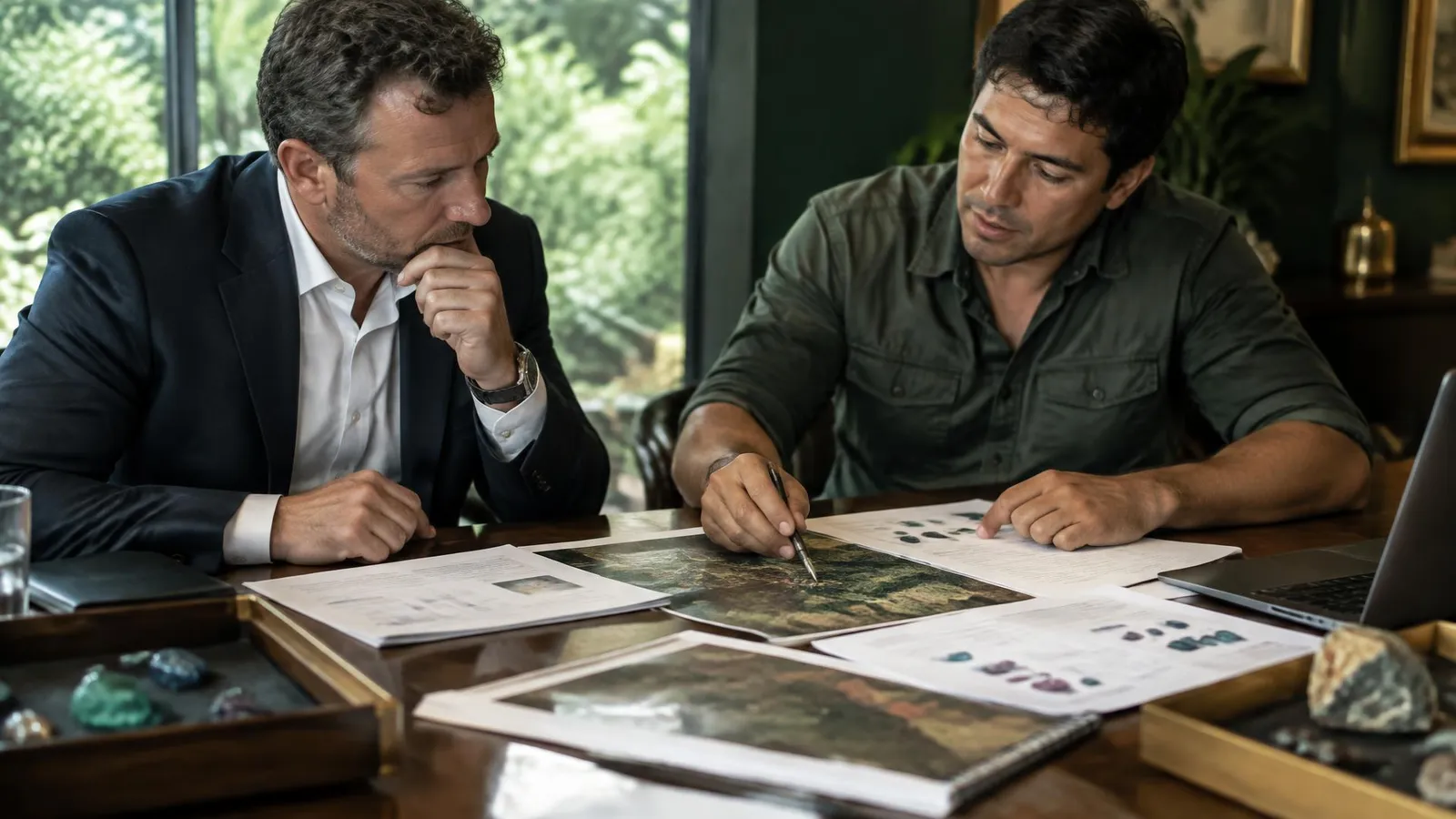
We verify before we offer. For a Paraíba tourmaline asset that means we read the ANM title and its history, check the polygon against the ground, confirm the licence and the landowner, and test the production story against invoices and royalty payments. Our founder is a mathematician and land surveyor, so the boundary and title work is done in-house rather than taken on trust.
- Identification first. Both sides complete KYC, and an NDA is signed before any confidential data changes hands.
- Data room, not WhatsApp. Title, licence, land, production and laboratory documents go into one organised file.
- Your laboratory, your geologist. We encourage buyers to commission their own reports and site visit.
- No advance fees. Nobody pays to see an asset or to open a negotiation.
- Clear roles. We intermediate and verify; legal opinions come from Brazilian counsel and technical opinions from independent professionals.
Looking at a Paraíba tourmaline mine?
Tell us what you are looking for, or send us the ANM process number of an asset you have been offered. We will tell you what the title actually says before you spend on travel or lawyers.
Request a confidential reviewIf you are new to Brazilian mining, start with our guide to Brazil's critical minerals and foreign capital for the wider picture, then come back to the gem-specific steps above.
§ FAQ
Frequently asked questions
What is Paraíba tourmaline called outside Brazil?
It is sold as Paraíba tourmaline, often written without the accent as Paraiba. Dealers also say neon tourmaline or copper-bearing tourmaline, and mineralogists use cuprian elbaite.
Is Paraíba tourmaline only from Brazil?
No. Since 2006 the name covers copper- and manganese-bearing tourmaline from any origin, including Mozambique and Nigeria. Brazilian origin must be shown by a laboratory report and usually commands a premium.
Where exactly is Paraíba tourmaline mined in Brazil?
In pegmatites around São José da Batalha in Paraíba State, home of the original Batalha mine, and around Parelhas in Rio Grande do Norte, at workings such as Mulungu and Alto dos Quintos.
Can a foreigner buy a Paraíba tourmaline mine?
Not directly as an individual title holder. Mining rights in Brazil are held by Brazilians, cooperatives or companies incorporated in Brazil. A foreign investor can own such a company, subject to the ANM's consent for title transfers and specific rules on rural land.
Is there an NI 43-101 or JORC report for Paraíba tourmaline mines?
Rarely. Gem pockets in pegmatites are too irregular to estimate as a resource in the way gold or copper deposits are. Expect geological reports, production history and laboratory evidence instead, and be cautious with any document that presents a gem “reserve” in tonnes.
How much is Brazilian Paraíba tourmaline worth per carat?
It varies enormously with colour, size and clarity. Dealers have reported asking prices above US$100,000 per carat for exceptional Brazilian stones, while small and less saturated stones sell for a fraction of that. Rough is worth much less than cut stones.
What royalty applies to gemstone mining in Brazil?
The CFEM royalty. Under Law 13,540/2017 diamonds and other mineral substances not named elsewhere pay 2% of gross sales revenue net of sales taxes, which is the rate generally applied to gemstones.
How do I know a parcel of rough came from the mine I was shown?
Only with a documented chain: stones selected at the mine, sales invoices, royalty payments and laboratory reports that match. Without that chain, a parcel proves only itself.

Mathematician, Land Surveyor and Licensed Real Estate Broker · CRECI-TO 4631
BRAZIL MINE — Mining & Minerals
Keep reading