Gemstones · Gem dealers · Gulf and Asian buyers · African and Brazilian producers
Brazilian vs. African Paraíba tourmaline: why origin changes the price
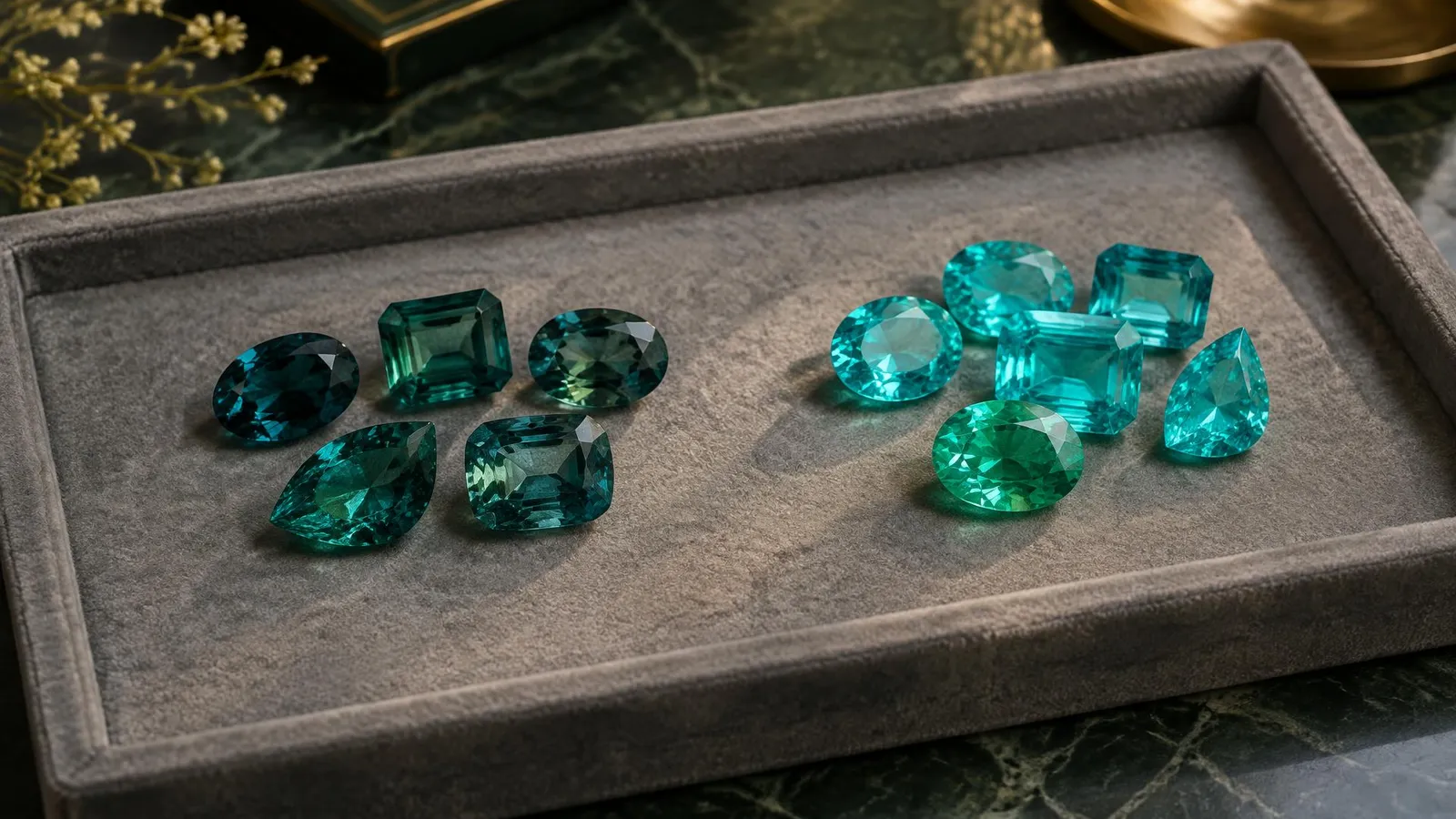
African Paraíba tourmaline is genuine Paraíba tourmaline: since 2006 the name covers copper-bearing tourmaline from Brazil, Mozambique and Nigeria. But Brazilian stones are typically valued well above African ones, and only a laboratory can say which is which. For a buyer of stones that is a pricing question. For a buyer of a mine it is the whole investment case, because a Brazilian deposit is worth its premium only if its stones can be proven Brazilian.
Key takeaways
- Mozambique and Nigeria produce copper-bearing tourmaline that the trade legally calls Paraíba tourmaline, the same as Brazil.
- Brazilian stones carry the premium. GIA states they are typically more highly valued than their African counterparts.
- Origin cannot be seen with a loupe. Laboratories determine it with trace-element chemistry (LA-ICP-MS) compared against reference collections.
- Some stones receive an “inconclusive” origin result. A seller cannot fix that with a story.
- For a mine investor, provable Brazilian origin is the asset. Chain of custody from pocket to invoice to laboratory report is what protects it.
In this article
When copper-bearing tourmaline turned up in Nigeria around 2000 and in Mozambique a few years later, the trade had a decision to make. Either “Paraíba” meant a place, and the new stones needed another name, or it meant a material, and the name followed the chemistry. In 2006 the laboratories chose chemistry. The International Gemstone Industry Laboratory Conference accepted Paraíba tourmaline as a variety name regardless of origin in February, and the LMHC followed in April.
That decision opened the market to African supply, which today provides most of the stones in jewellery. It also created a permanent question at every negotiation: is this stone Brazilian? The answer moves the price more than almost any other factor except colour.
§ 01 · The name
Is African Paraíba tourmaline real Paraíba tourmaline?
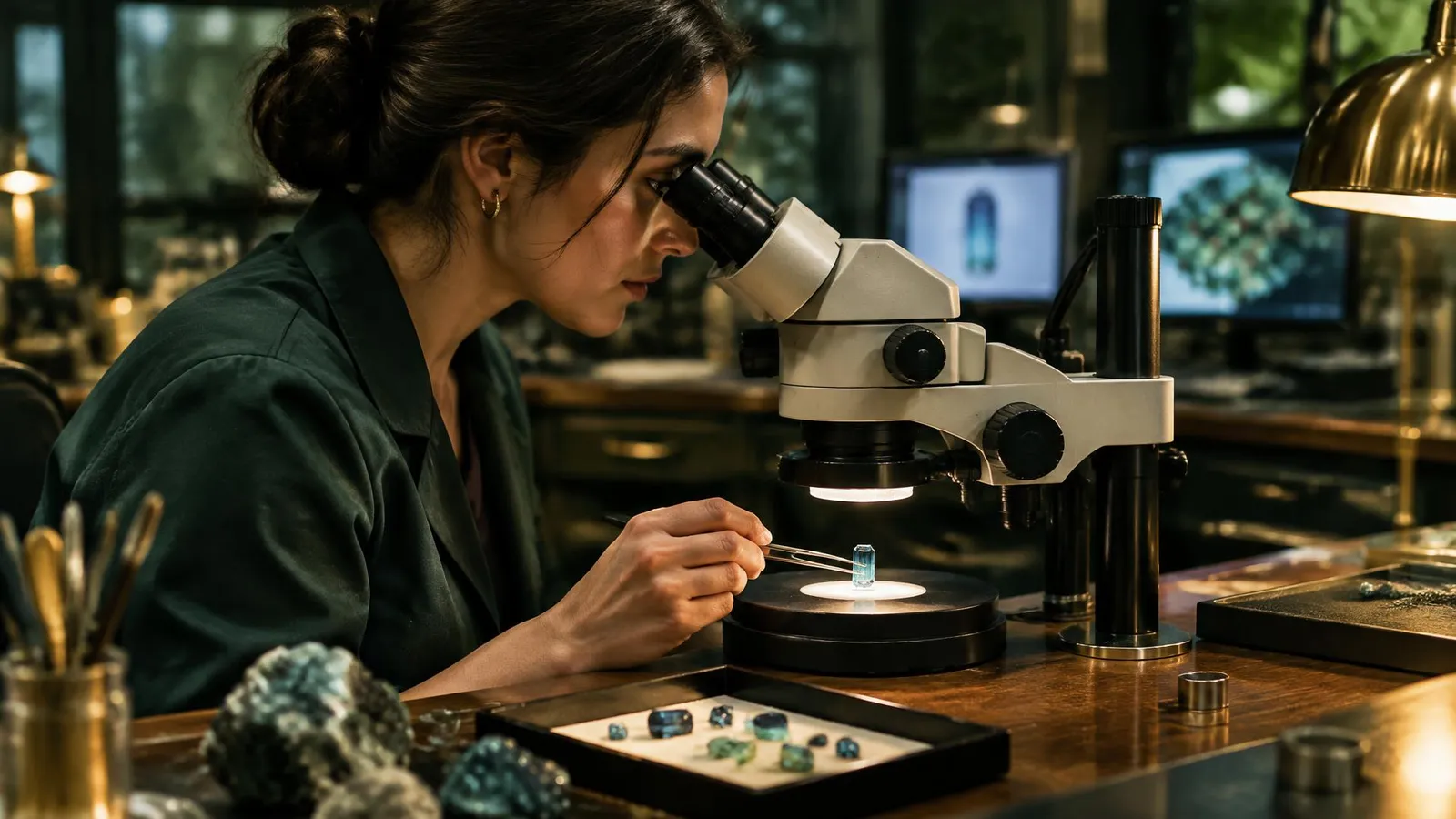
Yes. African Paraíba tourmaline is real Paraíba tourmaline under the definitions the main laboratories use. The LMHC describes Paraíba tourmaline as blue to green tourmaline of medium-light to high saturation and tone, coloured mainly by copper and manganese, of whatever geographical origin. The CIBJO Blue Book takes the same line.
What the name does not tell you is origin. A laboratory report will typically state the variety, Paraíba tourmaline, and then, as a separate opinion, the geographic origin if the client asks for it and the data allows it. Those are two different statements, and a seller who quotes only the first one while charging for the second is overreaching.
What the variety name proves
- The stone is tourmaline.
- Its colour is caused mainly by copper and manganese.
- Its colour falls in the blue-to-green range with enough saturation.
What it does not prove
- That the stone is Brazilian.
- That it came from a specific mine.
- That it has not been heat-treated, which is stated separately.
This distinction protects honest African producers as much as Brazilian ones. Mozambican Paraíba tourmaline is a legitimate, attractive product with its own market. The problem is only when African material is sold, or valued, as Brazilian.
§ 02 · Sources
Brazil, Mozambique and Nigeria: how do the three sources differ?
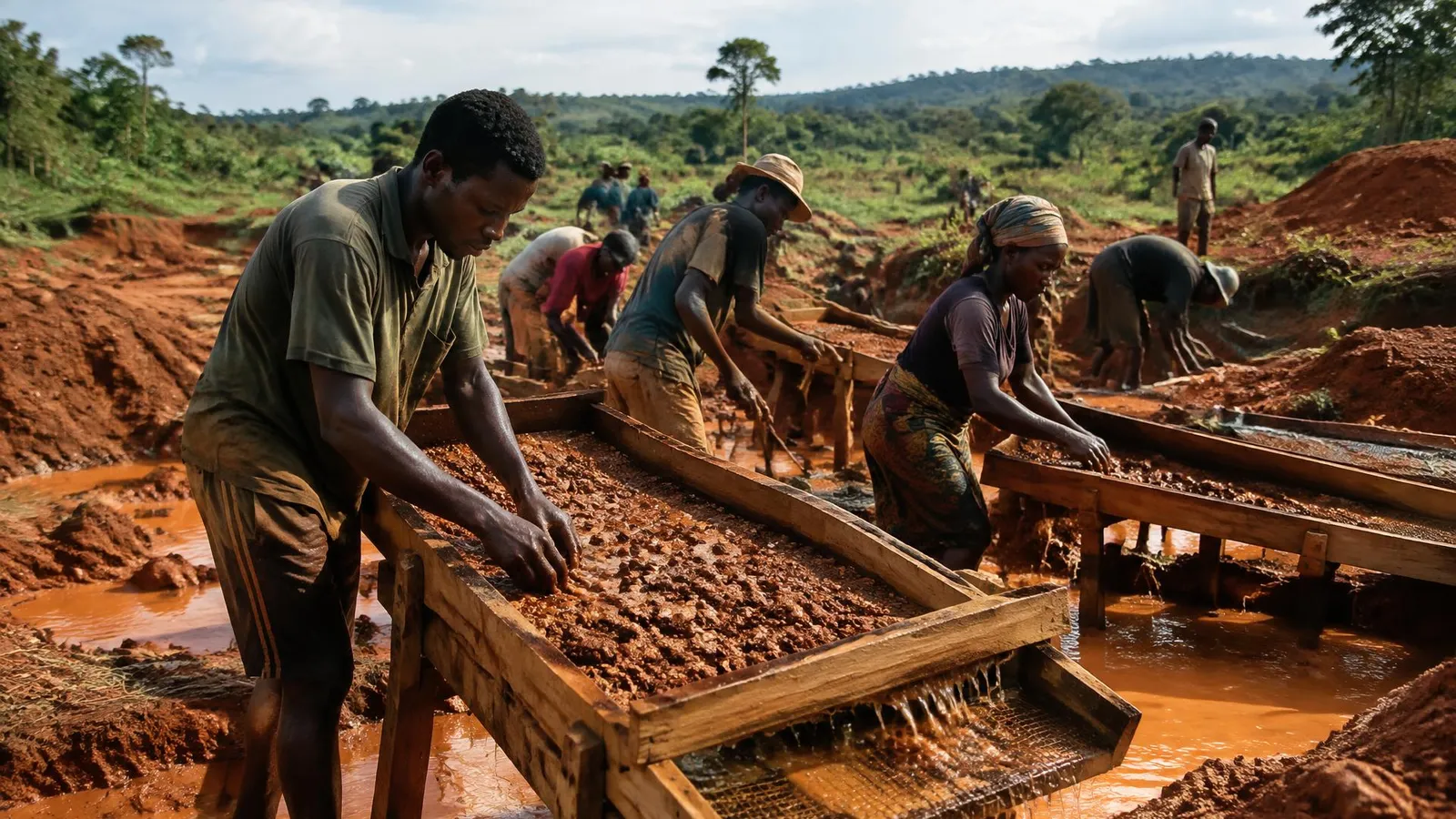
The three sources differ in geology, size of stones, typical chemistry and price. Brazil has the history and the highest prices; Mozambique has the volume and the larger stones; Nigeria was the first African source but has been a smaller, more irregular supplier.
| Brazil | Mozambique | Nigeria | |
|---|---|---|---|
| When found | Late 1980s (first blue stone 1987) | First recovered 2001; copper recognised 2003; widely sold by 2005 | Around 2000 |
| Where | Pegmatites near São José da Batalha (Paraíba) and the Parelhas area (Rio Grande do Norte) | Mavuco area, Alto Ligonha region | Pegmatite-related deposits; few public locality details |
| Typical stones | Mostly small; clean stones over a few carats are rare | Often larger; 5 to 20+ carat stones reach the market | Generally less saturated than Brazilian |
| Copper (GIA averages) | About 11,400 ppm | Under 2,000 ppm (African samples) | Under 2,000 ppm (African samples) |
| Market position | Highest prices; collector and high-jewellery demand | Main commercial supply; more accessible prices | Smaller share of current supply |
Size is where African material changed the market. Large Brazilian Paraíba tourmalines are extraordinarily rare, so the big centre stones seen in high jewellery today are frequently Mozambican. A buyer looking for a 10-carat neon blue stone at a realistic budget will usually be shown African material, and should expect to be told so.
Supply patterns also differ. Brazilian production comes from hand-dug tunnels and small garimpos, in bursts, when a pocket is hit. Mozambican production has come largely from secondary deposits, where weathering freed the crystals from their host rock and miners recover them from gravels and soils. That difference explains part of why African stones reach the market in larger quantities and sizes, and why a single Brazilian find can still make news in the trade.
For buyers in the Gulf and Asia, where demand for coloured stones in high jewellery has grown, this means two distinct products under one name. Mozambican Paraíba tourmaline is the practical choice for larger, bolder pieces. Brazilian Paraíba tourmaline is the collector's choice, bought for provenance, often in smaller sizes, and priced stone by stone.
§ 03 · The science
How do laboratories determine Paraíba tourmaline origin?
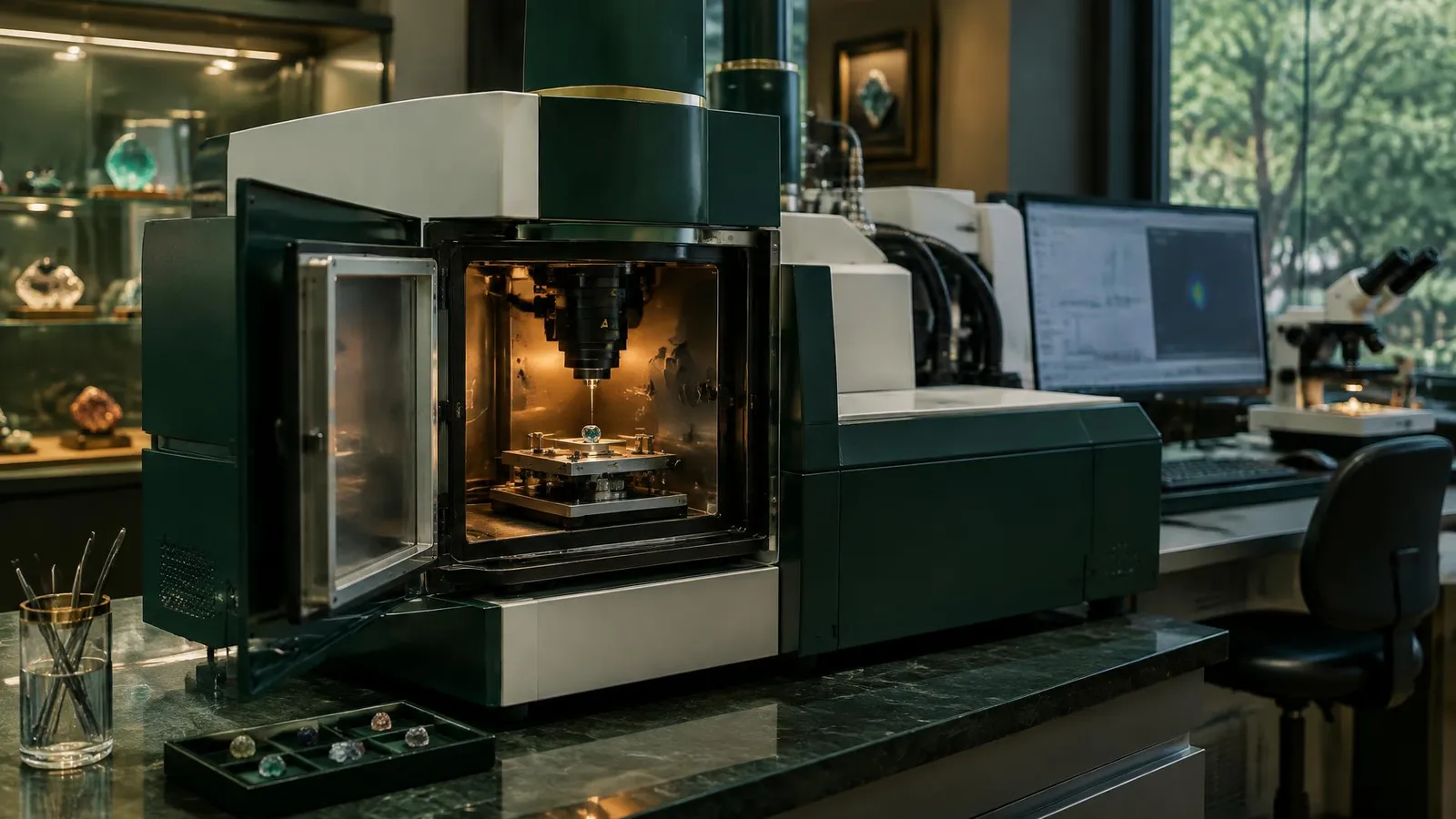
Laboratories determine Paraíba tourmaline origin by measuring trace elements and comparing the results with reference stones from known localities. GIA's published method uses laser ablation inductively coupled plasma mass spectrometry (LA-ICP-MS), which removes a microscopic amount of material from the stone, too small to see, and measures dozens of elements in parts per million.
Standard gemological testing, the refractive index, the microscope, the spectrometer, cannot establish origin. Neither can a qualitative chemical scan. What works is quantitative data compared against several hundred reference samples.
No single element pair is enough. Laboratories combine several elements, typically copper, zinc, gallium, strontium, tin and lead, and look at where a stone falls relative to each locality's field. Stones that fall where the fields overlap receive an inconclusive result. That is not a failure of the laboratory; it is an honest statement that the chemistry does not decide the question.
§ 04 · Price
Why does Brazilian Paraíba tourmaline cost more?
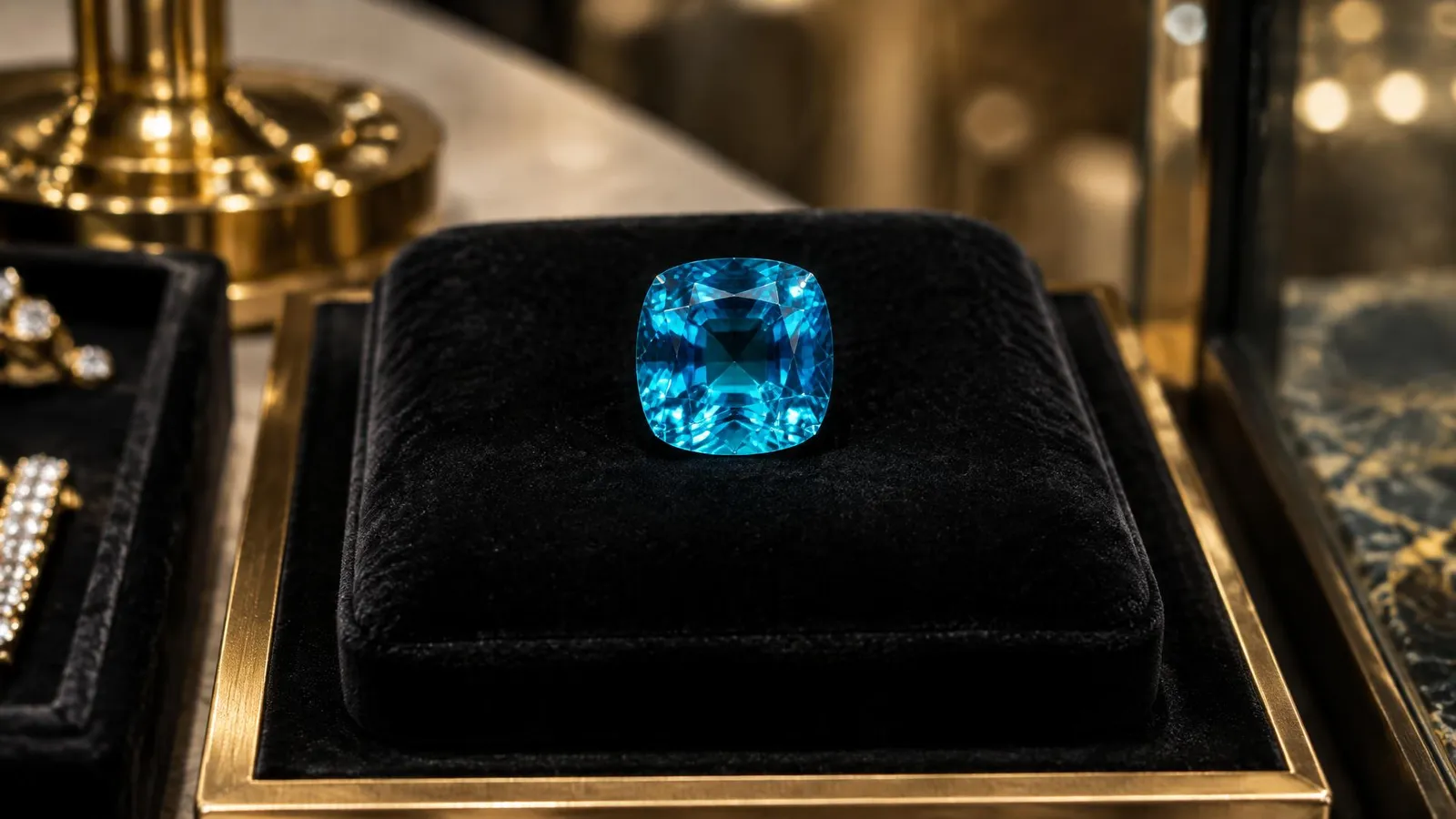
Brazilian Paraíba tourmaline costs more for three reasons: it was first, it is scarce, and at its best its colour is more saturated than material from other sources. Dealers interviewed by Rapaport described Brazilian supply as close to nil and said they had not seen non-Brazilian stones match the vibrancy of the best Brazilian colour. A German laboratory director quoted in the same piece said Brazilian specimens are worth significantly more than African ones.
- History. The neon blue that made the stone famous in 1989 and 1990 was Brazilian, and collectors pay for the original.
- Scarcity. The best zones of the original Batalha mine were largely worked out by the mid-1990s, and new Brazilian production is small and irregular.
- Chemistry. Higher copper contents in Brazilian stones are associated with the intense saturation the market rewards most.
- Size scarcity. Clean Brazilian stones above a few carats are rare enough that each one is priced individually.
How large is the gap? There is no public price index, and anyone who gives you a single multiplier is guessing. Price depends on colour first, then size, clarity and cut, and only then on origin. What can be said is that the same quality of stone will be priced materially higher with a credible Brazilian origin report than without it. Dealers have reported asking prices above US$100,000 per carat for exceptional Brazilian stones, a level African material rarely approaches.
| Rank | Factor | What buyers look for |
|---|---|---|
| 1 | Colour | Neon blue to blue-green, strong saturation, medium tone. Strong green secondary hues lower the price. |
| 2 | Size | Prices rise sharply with weight, because large clean stones are rare from every source and rarest from Brazil. |
| 3 | Origin | A credible Brazilian origin opinion adds a premium; an inconclusive result removes it. |
| 4 | Cut | A well-cut stone shows colour across the face. Poor cutting leaves dark or washed-out areas. |
| 5 | Clarity and treatment | Most stones have inclusions; eye-visible ones reduce value somewhat. Untreated stones of equal quality are worth more. |
§ 05 · Documents
How should you read a Paraíba tourmaline laboratory report?
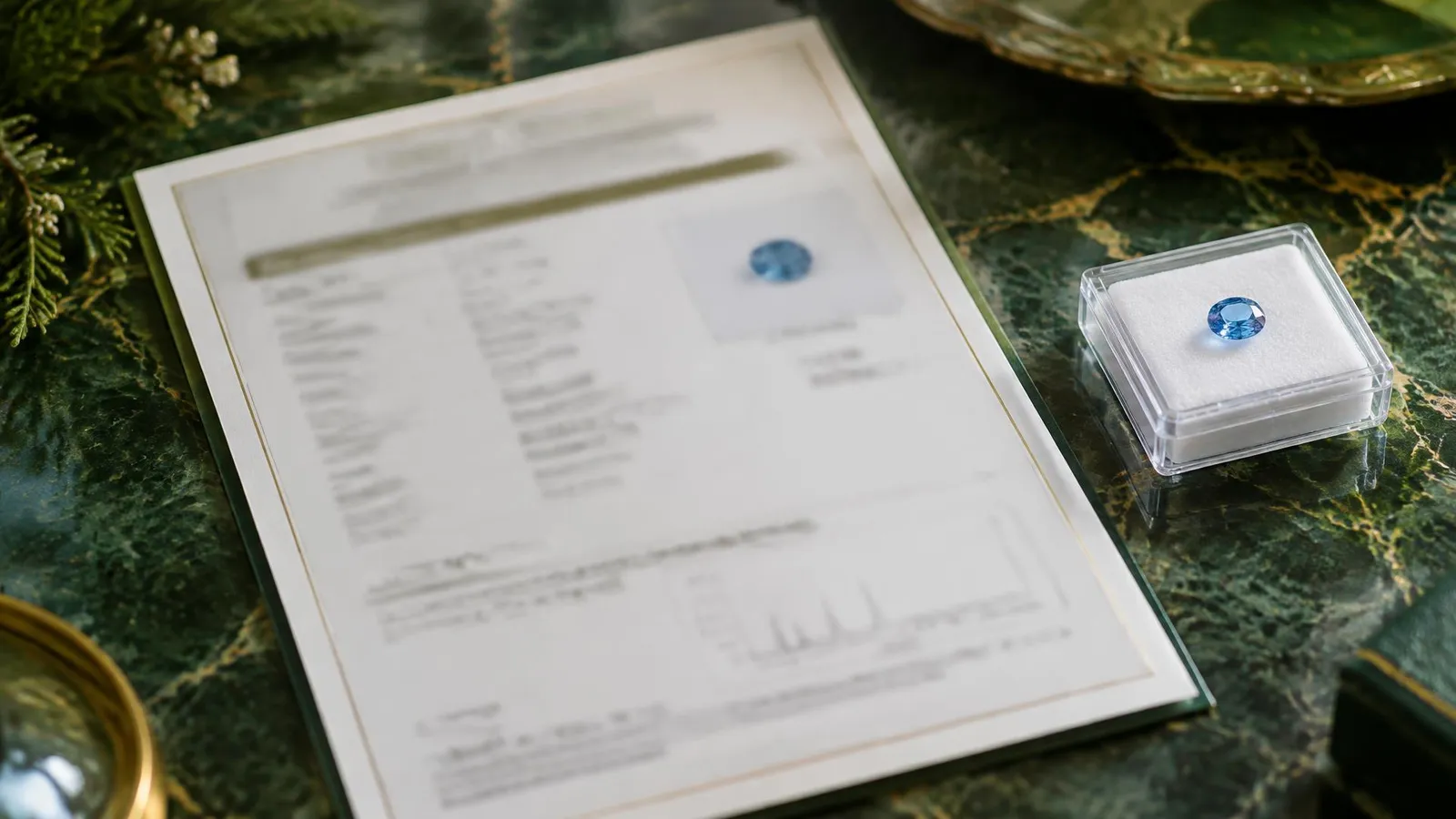
Read a Paraíba tourmaline report for four statements: the species and variety, the origin opinion, the treatment statement and the identity of the stone. Each one answers a different question, and the price you pay should follow what the report actually says, not what the seller says about it.
- 01
Verify the report number
Major laboratories let you check a report online. If the number does not verify, the report does not exist for you.
- 02
Match the stone
Weight, measurements, shape and colour description must match the stone in front of you to the hundredth of a carat.
- 03
Read the variety line
It should say tourmaline, with a comment or variety stating Paraíba tourmaline or copper-bearing. Without it, the stone is not sold as Paraíba.
- 04
Read the origin line
Brazil, Mozambique, Nigeria, or inconclusive. If there is no origin line, the report is silent on origin, and so should the price be.
- 05
Read the treatment line
Heat treatment is common and accepted in Paraíba tourmaline, but it must be disclosed. Laser drilling and filling are less common and reduce value further.
Pay attention to the date. Laboratories refine their reference collections, and an older report may predate current methods. For an important stone, a fresh report from a laboratory you choose costs little compared with the price difference at stake.
Keep the report and the stone together through every sale. A report that travels without its stone, or a stone that has been recut since the report was issued, no longer proves anything. Recutting changes weight and measurements, and the report then describes a stone that no longer exists. Serious buyers will ask for a new report after any recut, and you should too.
§ 06 · For mine buyers
What does origin mean for someone buying a Paraíba tourmaline mine?
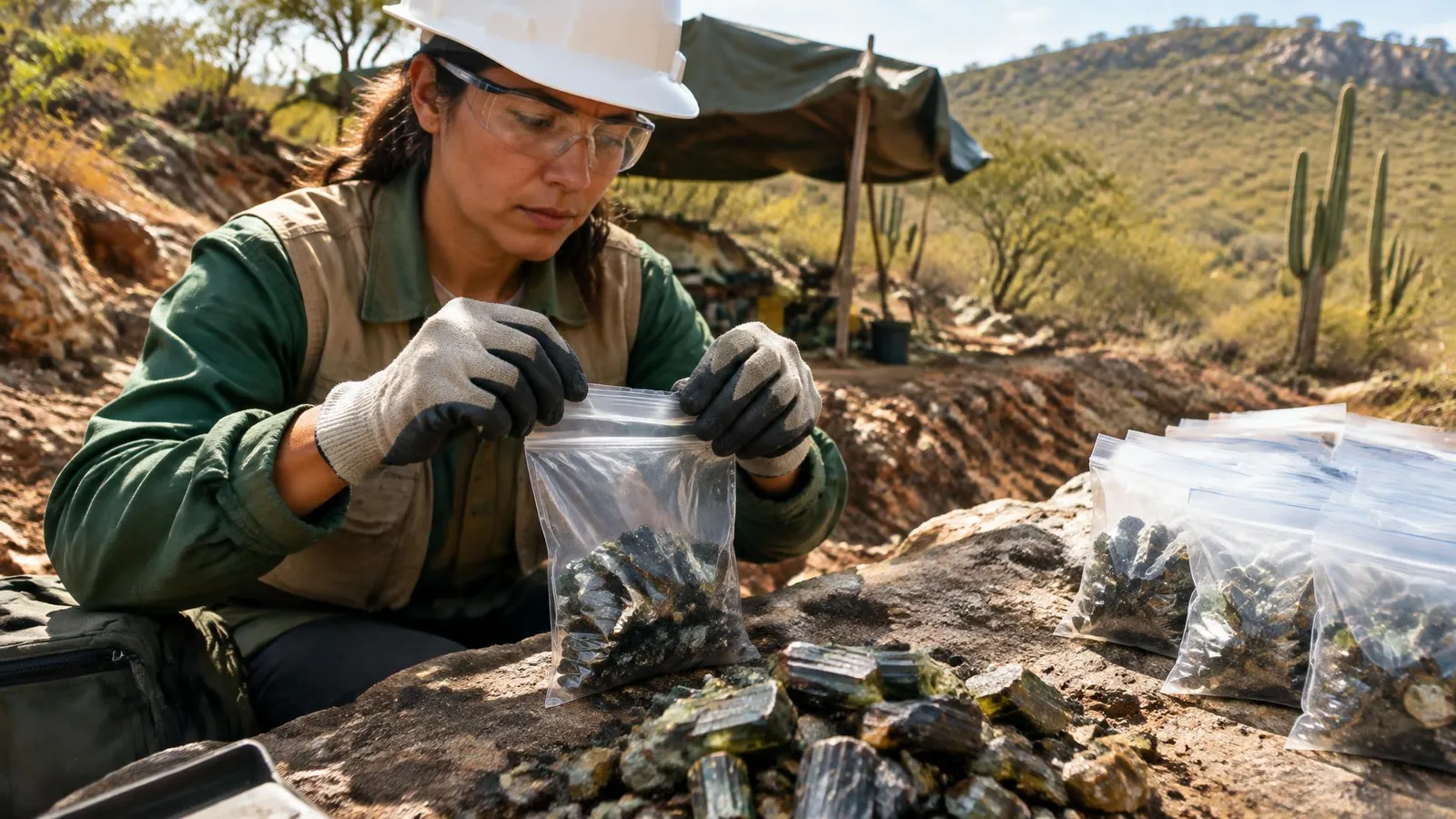
For a mine buyer, origin is the asset. A Brazilian Paraíba tourmaline mine is worth more than an African one of similar output only if its stones can be proven Brazilian and traced to that mine. That proof has to be built at the mine, not added at the end.
Controlled sampling
Stones selected from pockets in the presence of the buyer's representative, sealed and numbered at the mine.
Independent reports
Sealed samples sent directly to a laboratory chosen and paid by the buyer, with origin and treatment opinions requested.
Paper trail
Production log, sales invoices and royalty payments that match the dates and quantities of what the mine says it produced.
Title link
Every document refers to the same ANM process number and the same holder, so the stones, the paperwork and the title connect.
Without that chain, a mine seller can show you beautiful Brazilian reports on stones that may have come from anywhere, including from other mines or from old inventory. With it, you can value the deposit on what it actually produces. The title side of that chain is covered in our guides on how foreigners can own a Brazilian mine and on PLG versus mining concession.
Origin evidence to request from a Brazilian mine seller
- Laboratory reports with origin opinions, verifiable online, for stones produced at this mine
- Dates and quantities of each production batch, matched to invoices
- CFEM royalty receipts for the same periods
- Permission for your representative to witness extraction and sealing of samples
- The ANM process number that appears on every document
Consider a typical case, described here as a hypothetical example. A seller offers a small Brazilian mine and shows a folder of laboratory reports with Brazilian origin, all on fine stones. The buyer asks for invoices: there are a few, for small parcels of rough, at prices far below what the reported stones would fetch. The CFEM receipts are sporadic. The reports turn out to be on stones from the seller's personal inventory, bought over many years. None of this proves fraud, but it shows that the mine's real, documented output is modest, and that is what the buyer should value.
§ 07 · Red flags
What are the warning signs of origin misrepresentation?
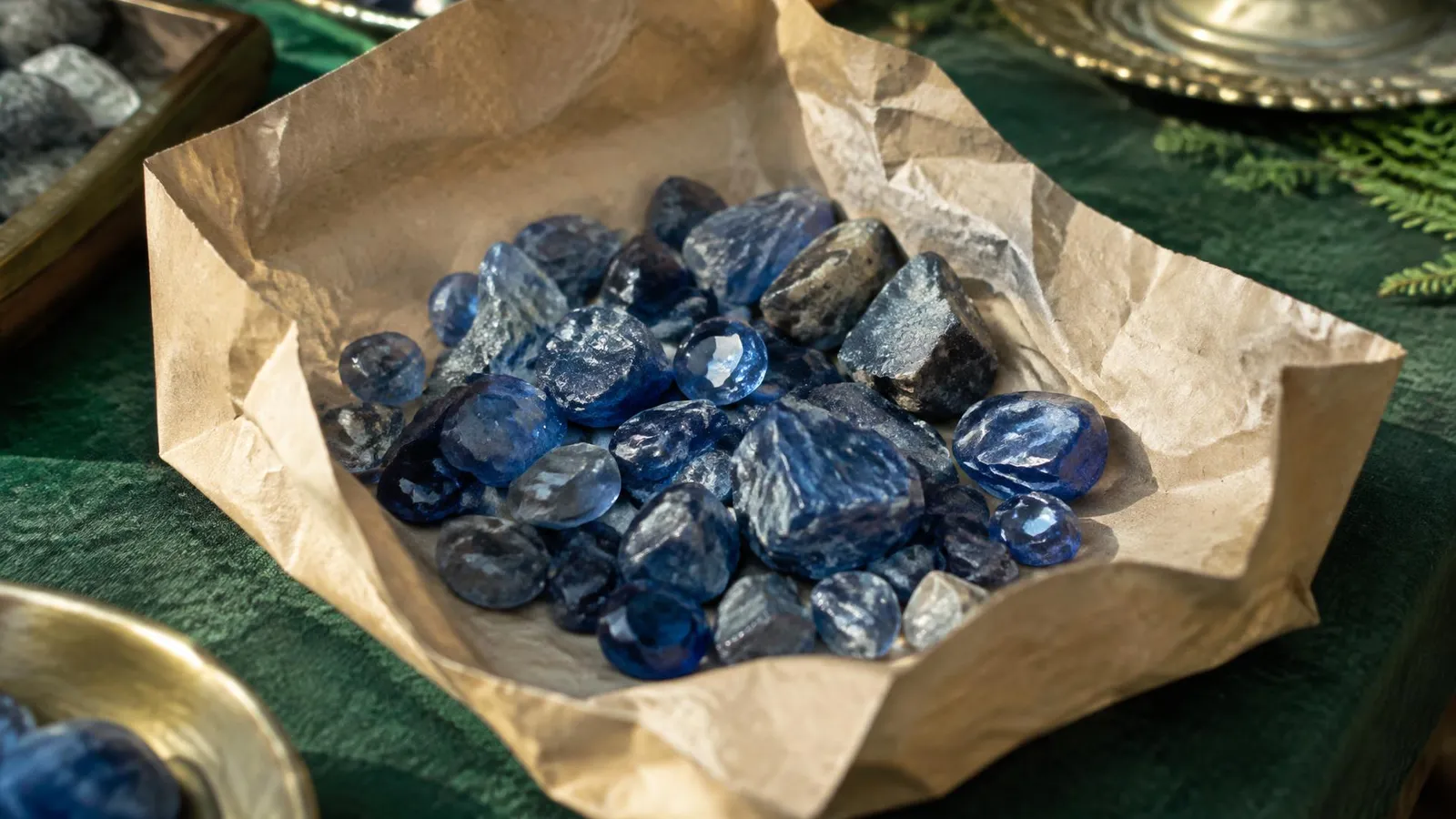
The warning signs of origin misrepresentation are mostly about what the seller avoids. Honest sellers of African stones say so. Honest sellers of Brazilian stones welcome a laboratory. The risk sits with sellers who blur the two.
Mixed parcels deserve a specific mention. A parcel can contain Brazilian and African stones together, especially when it passes through several traders. Testing a sample of the parcel tells you about the sample. For a high-value parcel, buyers either test every important stone or price the parcel as African unless proven otherwise.
The same logic applies to mines. If a Brazilian mine seller's best evidence is a handful of stunning stones with Brazilian reports, ask where those stones were found, when, by whom, and what invoice recorded their sale. A mine is valued on its repeatable production, not on its best photograph.
The reverse risk exists too. Some sellers of genuine Brazilian material lose value because they never documented it. Old stock without invoices, stones sold informally for years and reports kept in nobody's name all weaken a real asset. If you are a Brazilian producer, the cheapest way to raise the value of your mine is to start documenting production now: invoice every sale, pay the royalty on it, and send representative stones to a recognised laboratory.
§ 08 · Our method
How BRAZIL MINE handles origin in gemstone transactions

We treat origin as a document question before it becomes a price question. When we present a Brazilian gemstone asset, the title, the licence and the production paper trail come first. Laboratory work is commissioned by the buyer, on samples the buyer's representative sees come out of the ground.
- KYC and NDA first, so both sides know who they are dealing with.
- ANM title verification before any discussion of stones or price.
- Buyer-chosen laboratory and buyer-witnessed sampling for origin work.
- No advance fees, at any stage.
Evaluating a Brazilian Paraíba tourmaline asset?
Send us the ANM process number or a description of what you have been offered. We will tell you what the title says and what origin evidence you should ask for.
Request a confidential reviewFor the wider picture of Brazilian deposits, titles and value drivers, read our Paraíba tourmaline investor's guide, and for buying a gem mine of any kind, our guide on how to buy a gemstone mine in Brazil.
§ FAQ
Frequently asked questions
Is Mozambique Paraíba tourmaline fake?
No. Copper-bearing tourmaline from Mozambique is legitimately sold as Paraíba tourmaline under the definitions adopted by the laboratories in 2006. It is simply not Brazilian, and it is usually priced lower.
Can you tell Brazilian from African Paraíba tourmaline by eye?
No. Colour, inclusions and appearance overlap. Origin is determined by laboratories using trace-element chemistry compared with reference stones, and even then some stones receive an inconclusive result.
Which laboratories give origin opinions for Paraíba tourmaline?
GIA, SSEF, Gübelin, AGL and GRS are among the laboratories whose origin opinions the trade commonly relies on. Ask the laboratory in advance whether it will issue an origin opinion for your stone.
How much more is Brazilian Paraíba tourmaline worth?
There is no public index. For the same colour, size and clarity, a credible Brazilian origin report raises the price materially. Colour still comes first: a dull Brazilian stone is worth less than a vivid African one.
Is heat treatment acceptable in Paraíba tourmaline?
Heat treatment is common and accepted in the trade when disclosed. Laboratory reports state it. Untreated stones of the same quality are generally worth more.
Why are large Paraíba tourmalines usually African?
Brazilian deposits mostly produce small stones, and large clean Brazilian stones are extremely rare. Mozambican deposits have produced many larger stones, so big centre stones are often Mozambican.
What does an inconclusive origin result mean?
The stone's chemistry falls in a range shared by more than one locality, so the laboratory will not commit to an origin. It should be priced without an origin premium.
Does origin matter if I am buying a mine rather than stones?
Yes, it matters even more. A Brazilian mine is worth a Brazilian premium only if it can prove, through sampling, reports and invoices, that its own production is Brazilian Paraíba tourmaline.
Mathematician, Land Surveyor and Licensed Real Estate Broker · CRECI-TO 4631
BRAZIL MINE — Mining & Minerals
Keep reading